
Table of Contents
- What a Professional Cleaning Service Actually Covers
- Standard vs Deep Cleaning Checklist: Which Do You Need?
- House Cleaning Cost Estimates: What Shapes the Price
- Vetting a Cleaning Service: Background Checks, Bonding, and Insurance
- Cleaning Supply Safety and Chemical Transparency
- How to Prepare for a House Cleaner: A First-Visit Checklist
- Cost-Saving Maintenance Tips Between Professional Visits
- Conclusion
Last Updated: August 23, 2026
What a Professional Cleaning Service Actually Covers
Hiring a cleaning service for the first time raises an obvious question: what exactly are you paying for? The answer varies more than most people expect, and the gap between a thorough professional visit and a rushed surface wipe-down is significant. At North Shore Maids, we’ve spent nearly two decades refining what a professional cleaning visit should include, and the difference shows in every home we maintain.
A professional cleaning service is a structured, systematic approach to maintaining a home’s hygiene and livability, performed by trained staff using professional-grade equipment and products. It goes well beyond what a quick personal tidy-up covers.
Standard Cleaning: What’s Included Every Visit
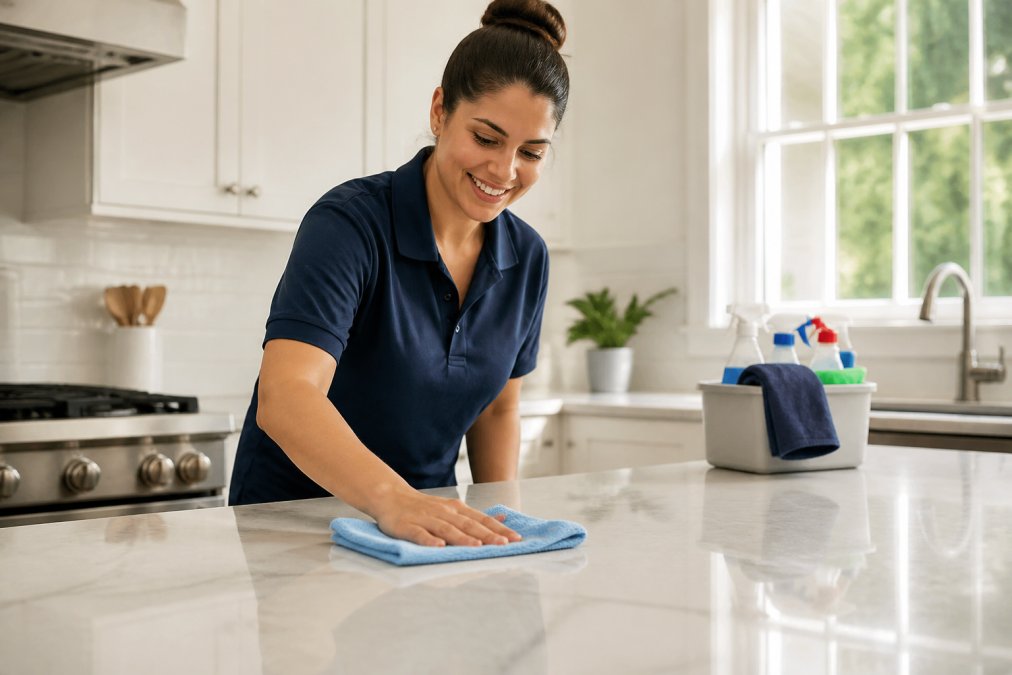
A standard cleaning visit covers the tasks that keep a home consistently clean between deeper sessions. Expect your team to handle:
- Kitchen: Wiping countertops, cleaning the stovetop exterior, cleaning the sink and fixtures, wiping cabinet fronts, cleaning the exterior of appliances, and mopping the floor
- Bathrooms: Scrubbing the toilet, sink, and shower or tub; wiping mirrors; cleaning fixtures; mopping the floor
- Living areas and bedrooms: Dusting surfaces, vacuuming carpets, mopping hardwood floors, wiping down accessible furniture, emptying trash
- Throughout the home: Blind dusting, vacuuming upholstery, cleaning light switches and door handles, and general tidying
What standard cleaning does NOT typically include: interior appliance cleaning, inside cabinets, baseboards, or window interiors. Those fall under deep cleaning or add-on services.
Recurring Service Plans: Weekly, Bi-Weekly, and Monthly
Recurring service is where professional housekeeping earns its value. A home maintained on a weekly or bi-weekly schedule stays in a fundamentally different condition than one cleaned monthly or less.
Weekly service is best for households with children, pets, or high foot traffic. Bi-weekly is the most popular plan for dual-income families who want consistent results without daily effort. Monthly recurring service suits smaller households or those who supplement with their own light maintenance in between.
The practical advantage of a recurring plan is consistency: the same team learns your home’s specific needs, your preferences, and the areas that need extra attention. That institutional knowledge is something a one-time booking simply cannot replicate.
Standard vs Deep Cleaning Checklist: Which Do You Need?
The difference between standard and deep cleaning comes down to scope and frequency. Standard cleaning maintains a home that’s already in reasonable shape. Deep cleaning is a thorough reset, addressing areas that accumulate grime over weeks or months.
Use this checklist to decide which service fits your situation:
| Task | Standard Cleaning | Deep Cleaning |
|---|---|---|
| Countertop wiping | ✓ | ✓ |
| Stovetop exterior | ✓ | ✓ |
| Inside oven or microwave | , | ✓ |
| Inside refrigerator | , | ✓ |
| Baseboard scrubbing | , | ✓ |
| Cabinet interior cleaning | , | ✓ |
| Grout scrubbing | , | ✓ |
| Blind dusting | ✓ | ✓ |
| Drapery cleaning | , | ✓ |
| Under-furniture vacuuming | , | ✓ |
| Window interior cleaning | , | ✓ |
| Upholstery cleaning | , | ✓ (add-on) |
When to Schedule a Deep Clean
Schedule a deep clean when you’re moving into a new home, moving out of a previous one, returning from an extended absence, preparing for a major event, or coming off a period when regular cleaning wasn’t possible. Spring cleaning is another natural trigger: many households use an annual or semi-annual deep clean to reset before starting a recurring maintenance plan.
A common mistake is booking a standard cleaning when a home genuinely needs a deep clean first. The result is a visit that can’t cover the ground it needs to, leaving clients frustrated. If your home hasn’t had professional attention in more than two months, start with a deep clean.
House Cleaning Cost Estimates: What Shapes the Price
Pricing for a cleaning service depends on several concrete factors, and understanding them helps you compare quotes accurately. Flat-rate pricing and hourly pricing are the two most common models. Flat-rate pricing gives you a fixed cost per visit based on home size and scope. Hourly pricing charges by the time spent, which can vary significantly depending on the home’s condition.
The main variables that shape your quote:
- Square footage: Larger homes take more time and labor
- Number of bedrooms and bathrooms: Bathrooms are labor-intensive; each additional one increases cost
- Frequency of service: Recurring clients typically pay less per visit than one-time bookings
- Type of service: Deep cleaning, move-in/move-out cleaning, and post-construction cleaning cost more than standard maintenance visits
- Add-ons: Interior appliance cleaning, carpet care, and drapery cleaning are usually priced separately
- Current condition: A home that hasn’t been professionally cleaned recently will take longer
For an accurate estimate tailored to your home, the most reliable approach is to request a quote directly. North Shore Maids offers free estimates so you know exactly what to expect before committing.
Ask any cleaning service whether their quote is flat-rate or hourly, and whether it includes all supplies. Some providers charge extra for specialty products or equipment, knowing this upfront prevents billing surprises.
Vetting a Cleaning Service: Background Checks, Bonding, and Insurance
This is the part most people skip, and it’s the part that matters most.
Letting someone into your home while you’re at work requires a level of trust that goes beyond a good online review. A legitimate cleaning service will be bonded and insured, and their staff will have passed background checks. These aren’t optional niceties: they’re the baseline standard for any professional operation.
What to verify before hiring:
- Background checks: Ask whether all employees undergo criminal background screening before being hired. Some providers use third-party screening services; others handle it internally. Either is acceptable, but the screening must happen.
- Bonding: A bonded cleaning service carries a surety bond that protects clients if an employee causes damage or theft. Without it, your recourse is limited.
- Insurance: General liability insurance protects your property if something is damaged during a cleaning visit. Workers’ compensation insurance protects you from liability if a cleaner is injured in your home.
- Employee vs. contractor status: Companies that employ their cleaners directly (rather than using independent contractors) typically maintain better oversight, training standards, and accountability.
According to the U.S. Small Business Administration’s guide on bonding and insurance for service businesses, bonding and insurance are foundational requirements for any home service provider operating in a client’s property.
North Shore Maids is bonded and insured, with highly trained employees rather than contract workers. That distinction matters when something goes wrong.
Never hire a cleaning service that cannot provide proof of insurance on request. If a cleaner is injured in your home and the company lacks workers’ compensation coverage, you could be held liable. Always ask before the first visit.
Cleaning Supply Safety and Chemical Transparency
Most people never think to ask what products are being used in their home. They should.
Many conventional cleaning products contain volatile organic compounds, synthetic fragrances, and harsh disinfectants that linger on surfaces long after the cleaner has left. For households with children, pets, or anyone with respiratory sensitivities, this matters considerably. The Environmental Protection Agency’s Safer Choice program evaluates cleaning products for human health and environmental safety, and their database is a useful reference when evaluating what a cleaning service uses.
What to ask any cleaning service about their products:
- Do they bring their own supplies, or do you need to provide them?
- Are green cleaning or eco-friendly options available?
- Can they accommodate requests to avoid specific chemicals?
- Are their products safe for use around pets and children?
Green cleaning products use plant-based or biodegradable formulas that achieve effective sanitization and disinfection without the chemical load of conventional alternatives. They’re not just a marketing claim: the formulation difference is real, and the impact on indoor air quality is measurable.
North Shore Maids offers green cleaning products upon request, which is particularly valuable for clients with health sensitivities or households with young children and pets.
How to Prepare for a House Cleaner: A First-Visit Checklist
A common mistake first-time clients make is assuming the cleaning team will handle everything, including organizing clutter. Professional cleaners clean. They don’t sort your belongings, and they shouldn’t have to work around piles of items to reach the surfaces that need attention.
Preparing properly means your team can focus entirely on what they’re trained to do, which means better results in less time.
First-visit preparation checklist:
- Clear countertops of dishes, mail, and personal items
- Pick up clothing, toys, and items from floors
- Secure or put away valuables, medications, and sensitive documents
- Make sure pets are secured or arrangements are made for their care during the visit
- Identify any areas you want prioritized and communicate them in advance
- Confirm access: leave a key, code, or ensure someone is home
- Note any surfaces or materials requiring special care (natural stone, antique wood, etc.)
- Remove fragile items from areas that will be dusted or wiped
- Ensure the cleaning team has access to water and electricity

One thing nobody tells first-time clients: communicate your non-negotiables before the visit, not after. If you have specific preferences around product scents, areas to avoid, or tasks to prioritize, share them when you book. A good cleaning service will document these for every subsequent visit.
The more clearly you communicate your priorities before the first visit, the faster your cleaning team can dial in to your specific home. Most recurring clients find that quality improves noticeably after the second or third visit, once the team knows the space.
Cost-Saving Maintenance Tips Between Professional Visits
Professional cleaning works best as part of a system, not as a standalone rescue operation. The households that get the most value from their cleaning service are the ones that do a little light maintenance in between visits.
These habits don’t require much time, but they make a real difference in how your home looks and how efficiently your cleaning team can work:
Daily habits (5 minutes or less):
- Wipe down the stovetop after cooking while it’s still warm
- Rinse dishes immediately rather than letting food dry on them
- Do a quick bathroom sink wipe after morning routines
- Keep a small trash bag in each room to collect clutter
Weekly habits (15-20 minutes):
- Run a damp mop over high-traffic hardwood floor areas
- Vacuum carpets in rooms used most frequently
- Wipe down bathroom fixtures to prevent mineral buildup
- Empty all trash bins before your scheduled cleaning visit
Prevent the problems that cost extra:
- Grout discoloration is far easier to prevent than to restore. A squeegee on shower walls after each use dramatically slows buildup.
- Hardwood floor maintenance is mostly about preventing scratches. Entry mats and furniture pads do most of the work.
- Carpet care between visits means vacuuming weekly and treating stains immediately. Dried stains are significantly harder to remove.
According to the American Cleaning Institute’s home cleaning guidelines, consistent light maintenance between professional visits extends the life of flooring, fixtures, and surfaces meaningfully.
The practical benefit: when your cleaning team arrives, they spend less time on catch-up and more time on detail work. That’s where the real quality difference shows.
Frequently Asked Questions
What is the difference between a standard clean and a deep clean?
A standard clean covers the surfaces and tasks needed to maintain a home that's already in good shape: dusting, vacuuming, mopping, scrubbing bathrooms, and wiping kitchen surfaces. A deep clean goes further, targeting built-up grime in areas that regular visits skip, such as inside appliances, baseboards, cabinet interiors, and grout lines. Most providers recommend a deep clean for first-time clients or homes that haven't had a professional cleaning service in several months.
How much does a professional cleaning service cost?
Pricing depends on your home's size, the type of cleaning requested, and how frequently you schedule visits. Recurring service plans generally cost less per visit than one-time appointments. Specialty tasks like move-in/move-out cleaning or post-construction cleanup are typically priced separately. Because so many variables affect the final number, the most accurate approach is to request a free estimate directly from your cleaning service provider before committing to a plan.
Are professional cleaning services bonded and insured?
Reputable cleaning services carry both general liability insurance and a surety bond. Insurance protects you if property is accidentally damaged during a visit. A surety bond provides a financial backstop in the rare event of theft or misconduct. Before hiring any provider, ask for proof of both. Established companies, including those with nearly two decades in the industry, treat bonding and insurance as standard practice, not an optional add-on.
How often should I schedule a professional cleaning service?
The right frequency depends on your household size, lifestyle, and hygiene standards. Busy families or pet owners often benefit from weekly visits to stay on top of dusting, vacuuming, and bathroom hygiene. Smaller households or those who maintain tidiness between visits may find bi-weekly or monthly service sufficient. Many clients start with a deep clean, then switch to a recurring maintenance plan once the home reaches their baseline standard.
A well-maintained home doesn’t happen by accident, and finding a cleaning service you can trust with your space is harder than it should be. North Shore Maids brings nearly two decades of experience, a bonded and insured team, and a satisfaction guarantee to every visit across Essex County. Whether you need a one-time deep clean, a move-in or move-out service, or a flexible recurring plan, request a free quote and see what consistent, professional cleaning actually looks like.
This article was written using GrandRanker