
Table of Contents
- What Flexible Package Plans for Post-Construction Cleanup Offer
- Post-Construction Cleaning Checklist for Different Project Phases
- Understanding Post-Construction Cleaning Cost Estimates
- How Trade Sequencing Affects Your Cleanup Schedule
- Choosing the Right Flexible Plan for Your Project
- Step 1: Define Your Project Profile
- Step 2: Select Your Cleanup Phases
- Step 3: Structure Your Service-Level Agreement (SLA)
- Step 4: Assess Surface Types and Material Sensitivity
- Step 5: Define Your Budget and Priorities
- Step 6: Request a Detailed Project Assessment
- Building Your Flexible Plan Checklist
- Safety Protocols and PPE in Post-Construction Cleaning
- Liability, Insurance, and Service Agreements
- Frequently Asked Questions
Last Updated: September 2, 2026
What Flexible Package Plans for Post-Construction Cleanup Offer
Flexible package plans allow property owners and contractors to customize cleaning services based on project scope, timeline, and budget. Unlike rigid approaches, these plans adapt to construction delays, phased completion, and varying intensity levels across rough and final cleaning phases.
The core advantage is matching service intensity to actual project needs. Flexible plans eliminate overpaying for unnecessary services while ensuring nothing gets missed during critical transitions between trades. North Shore Maids understands that construction projects rarely follow exact timelines. Weather delays, supply chain interruptions, and trade sequencing changes mean cleanup needs shift constantly. Flexible plans allow clients to scale services up or down, add targeted deep cleaning for specific areas, and adjust frequency based on dust accumulation and debris removal rates.
These plans typically include options for rough cleaning (heavy debris removal), final cleaning (fine dust and detail work), and targeted touch-ups between phases. Scheduling adapts to contractor availability, material deliveries, and inspection windows rather than forcing projects into predetermined slots.
Post-Construction Cleaning Checklist for Different Project Phases
Post-construction cleaning breaks into distinct phases, each with specific priorities and requirements.
Rough Cleaning Phase
Rough cleaning occurs immediately after major construction work, before finishing trades begin. This phase focuses on removing bulk debris, construction waste, and protecting surfaces from further contamination.
Rough cleaning priorities include clearing debris piles, sweeping major dust accumulation, removing protective coverings, and cleaning HVAC intake areas to prevent dust circulation. The rough cleaning phase establishes a baseline for subsequent work. Incomplete rough cleaning forces final crews to spend excessive time on debris removal rather than detail work, increasing labor costs and project duration.
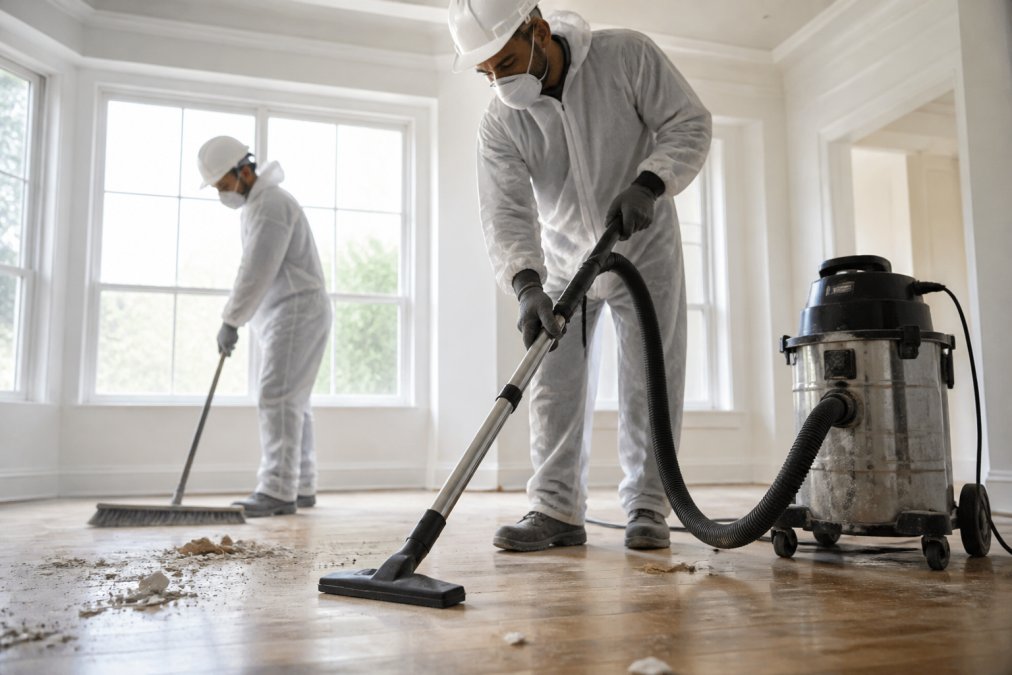
Common rough cleaning tasks include:
- Removing dust sheets and protective coverings
- Sweeping and vacuuming all surfaces with HEPA equipment
- Clearing construction waste and scrap materials
- Cleaning window tracks and sills
- Wiping down walls and surfaces of heavy dust
- Cleaning HVAC vents and returns
Final Cleaning Phase
Final cleaning occurs after all construction trades complete. This phase targets fine dust, paint overspray, grout haze, and surface details that rough cleaning missed.
Final cleaning requires attention to detail and specialized knowledge. Paint overspray removal, grout haze elimination, and fine dust cleanup demand different techniques than bulk debris removal. Crews must understand surface types, hardwood versus tile, painted drywall versus natural finishes, to avoid damage.
Final cleaning tasks typically include:
- Detailed dust removal from all surfaces, fixtures, and baseboards
- Paint overspray cleanup from windows, trim, and hardware
- Grout haze removal from tile and stone surfaces
- Floor polishing and final surface treatment
- Cleaning inside cabinets, drawers, and built-in storage
- Light fixture and ceiling fan cleaning
- Final window and mirror cleaning
- Disinfection of high-touch surfaces and bathrooms
Understanding Post-Construction Cleaning Cost Estimates
Post-construction cleaning cost estimates depend on project size, surface types, debris volume, and labor intensity. A comprehensive estimate considers square footage, site observations, and project-specific requirements.
Many property owners ask about cost per square foot, but estimates vary based on whether rough cleaning, final cleaning, or both are required. A site walkthrough allows professionals to assess actual conditions, dust levels, debris volume, surface damage, and accessibility challenges rather than relying on theoretical calculations.
Factors affecting costs include project scope (new construction versus renovation), timeline (phased versus continuous work), surface types (hardwood, tile, carpet, painted drywall), and debris volume. North Shore Maids provides free estimates accounting for your specific project conditions rather than applying generic formulas. Flexible package plans address cost concerns by allowing clients to prioritize high-impact cleaning while deferring lower-priority tasks, reducing overall costs while maintaining quality standards where they matter most.
How Trade Sequencing Affects Your Cleanup Schedule
Trade sequencing, the order in which different contractors complete their work, directly impacts cleanup requirements, labor costs, and the risk of expensive re-cleaning cycles.
The Re-Cleaning Cost Problem
Most property owners underestimate how often construction sites require re-cleaning when trades overlap. A typical scenario: rough cleaning occurs after framing, but drywall finishing begins before rough cleaning is complete. Fine drywall dust settles on previously cleaned surfaces, forcing crews to re-clean those areas before final finishing trades begin. Each re-cleaning cycle adds to total cleanup labor costs and extends project timelines.
Flexible package plans address this by coordinating cleanup timing with actual trade schedules rather than theoretical timelines. When drywall finishing extends longer than planned, rough cleaning defers until drywall work concludes. When a trade completes ahead of schedule, cleanup proceeds immediately to seal finished surfaces from subsequent dust generation.
Trade-Specific Cleanup Windows
Different trades generate different contamination profiles:
Framing and rough-in phase: Heavy debris and coarse dust dominate. Rough cleaning focuses on debris removal and HVAC intake protection after all rough trades finish.
Drywall finishing phase: Fine drywall dust is the primary contaminant and travels through HVAC systems, contaminating distant areas. Rough cleaning should occur after drywall finishing concludes but before paint application. Sealing HVAC returns before this phase prevents widespread contamination.
Paint and stain application: Paint overspray and volatile organic compounds are the concern. Plastic sheeting should isolate paint work. Final cleaning addresses overspray on windows, hardware, and adjacent surfaces after paint work completes.
Flooring installation: Dust from sanding hardwood or cutting tile creates fine particles. Flooring should be among the last trades before final cleaning. If flooring precedes cabinet or trim installation, targeted cleanup between trades prevents dust from settling on finished surfaces.
Cabinet and trim installation: These finishing trades generate sawdust and fine particles. Cleanup should occur after cabinet/trim work completes but before final cleaning. A phased cleanup approach, rough cleaning after framing, mid-phase cleaning after drywall, targeted cleaning after cabinets, prevents re-cleaning and reduces total project expense.
HVAC Management as a Cleanup Multiplier
Running HVAC during heavy dust generation (framing, drywall finishing, flooring work) circulates fine particles throughout the building, contaminating finished areas and increasing final cleaning labor. Flexible cleanup agreements should specify HVAC intake sealing or filter upgrades during rough trades, system shutdown during high-dust activities, intake cleaning before final cleaning, and return-air filter replacement before occupancy.
Building Trade Sequencing into Service Agreements
Flexible service agreements should address trade sequencing dependencies through contingency scheduling tied to trade completion rather than fixed dates, phased service options at logical break points, communication protocols requiring general contractor notification of trade completion, and scope adjustment clauses accommodating schedule shifts.
Calculating True Cleanup Costs with Trade Sequencing
A single “final cleaning” quote often assumes all trades have completed and no re-cleaning is needed. In reality, overlapping trades significantly increase final cleaning labor. Transparent estimates should account for the number of cleanup phases required, dust generation intensity during overlapping trades, HVAC management complexity, and risk of re-cleaning. A project with sequential trades might require 40 hours of final cleaning labor, while the same project with overlapping trades might require more hours due to re-cleaning.
Choosing the Right Flexible Plan for Your Project
Selecting an appropriate flexible package plan requires assessing project scope, timeline, trade sequencing, and specific cleaning requirements.
Step 1: Define Your Project Profile
Document your project type, scope, and timeline. New construction typically requires both rough and final cleaning phases. Renovations might focus primarily on final cleaning if rough work is minimal. Larger projects benefit more from phased cleaning because contamination spreads across greater distances. Compressed schedules require tightly coordinated cleanup. Extended projects benefit from periodic rough cleaning between major phases. Obtain the general contractor’s trade schedule and identify overlap points, as this sequencing directly determines cleanup timing.
Step 2: Select Your Cleanup Phases
Flexible plans typically offer three cleanup phases:
Rough cleanup (post-framing/rough-in): Occurs after framing, electrical rough-in, plumbing rough-in, and HVAC rough-in complete but before drywall begins. Removes bulk debris and protects HVAC intakes. Cost: typically 30-40% of total cleanup budget. Recommended for all new construction and major renovations.
Mid-phase cleanup (post-drywall/pre-finishing): Occurs after drywall finishing and paint application but before cabinet, trim, and flooring installation. Removes fine drywall dust and paint overspray. Cost: typically 20-30% of total cleanup budget. Recommended for projects where drywall finishing precedes cabinet/flooring installation by more than 1 week.
Final cleanup (post-all-trades): Occurs after all construction trades complete. Removes remaining dust and prepares the space for occupancy. Cost: typically 40-50% of total cleanup budget. Required for all projects before occupancy.
Step 3: Structure Your Service-Level Agreement (SLA)
Flexible plans use phased service agreements with built-in contingencies. Tie cleanup to trade completion milestones rather than locking dates. Example: “Rough cleanup occurs within 2 business days of drywall finishing completion, or by [date], whichever is later.” Clearly define what’s included in each phase. Specify what happens if trade schedules shift without penalty. Require the general contractor to notify the cleaning service when each major trade phase completes.
Step 4: Assess Surface Types and Material Sensitivity
Different surfaces require different approaches. Hardwood flooring requires careful dust removal and may need professional refinishing. Tile and stone require specialized grout haze removal and careful handling of natural stone. Painted drywall requires careful paint overspray cleanup. Carpet requires professional vacuuming with HEPA equipment. High-end finishes require more careful handling and detailed cleaning.
Step 5: Define Your Budget and Priorities
Flexible plans allow customization based on budget. Identify which areas or phases are most critical. Specify which services are essential versus optional (HVAC filter replacement, carpet cleaning, window washing, exterior cleanup). Determine which tasks you’ll handle in-house versus outsource.
Step 6: Request a Detailed Project Assessment
Before finalizing your plan, request a site walkthrough. A professional cleaning service should evaluate actual square footage and layout, dust generation intensity based on construction type, surface types and material sensitivities, HVAC system configuration and accessibility, debris volume and disposal requirements, accessibility challenges, and timeline realism based on trade sequencing.
Building Your Flexible Plan Checklist
Before committing, confirm:
- ☐ Project type, square footage, and timeline documented
- ☐ Trade sequencing schedule obtained from general contractor
- ☐ Cleanup phases selected (rough, mid-phase, final, or custom)
- ☐ Service-level agreement includes trigger-based scheduling and contingency procedures
- ☐ Surface types and material sensitivities communicated
- ☐ Budget and priorities clearly defined
- ☐ Communication protocol established with general contractor
- ☐ Site walkthrough completed and detailed proposal received
- ☐ Insurance and bonding verified
- ☐ Contract includes scope adjustment clause for schedule changes
Flexible cleanup plans succeed when both the cleaning service and property owner understand project realities and build agreements that accommodate construction variability. A well-structured flexible plan costs less overall than rigid one-time cleaning because it prevents re-cleaning, coordinates with trade sequencing, and adapts to delays without disputes.
Safety Protocols and PPE in Post-Construction Cleaning
Post-construction cleaning involves hazardous materials, dust exposure, and physical demands requiring comprehensive safety protocols and proper personal protective equipment.
Construction sites generate fine dust containing particles from drywall, insulation, concrete, and finishing materials (the CDC). Prolonged exposure causes respiratory issues and long-term health complications. HEPA vacuums and proper respiratory protection prevent dust inhalation.
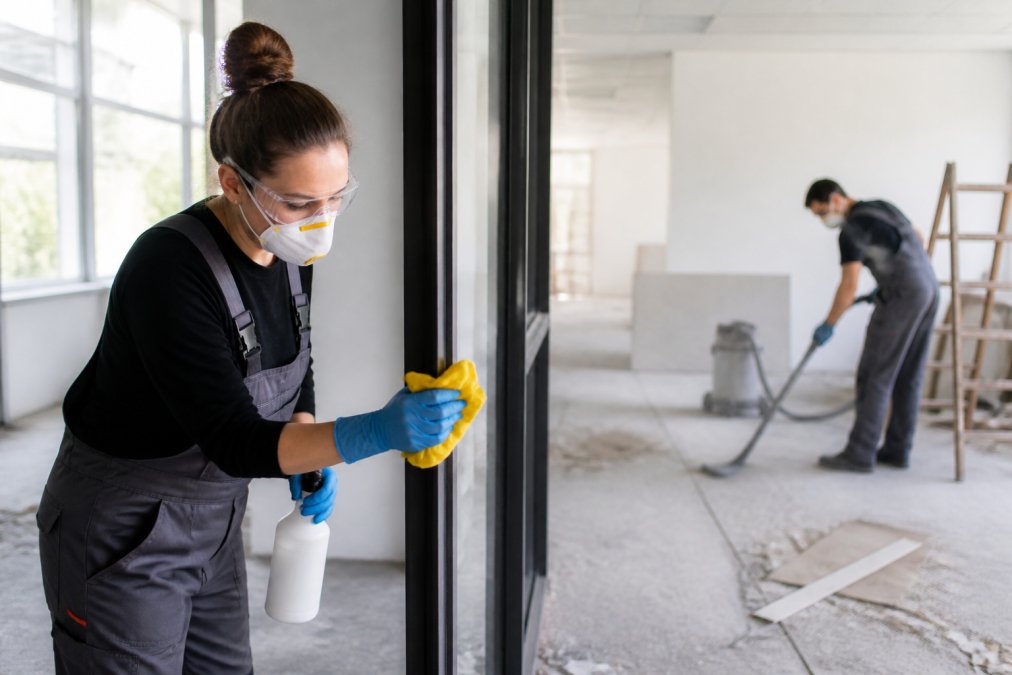
Essential PPE includes respiratory protection (N95 masks or powered air-purifying respirators for heavy dust), safety glasses or face shields, nitrile or latex gloves, steel-toed boots, long sleeves and pants, and hard hats in areas with overhead hazards (osha.gov).
Comprehensive safety protocols address specific hazards. Lead dust in older construction requires specialized containment and disposal (the EPA). Asbestos-containing materials demand professional remediation before standard cleaning. Biological hazards from water damage or mold require specialized treatment. HVAC management during cleanup prevents hazardous dust circulation. Proper waste disposal prevents environmental contamination and regulatory violations.
Liability, Insurance, and Service Agreements
Professional post-construction cleaning involves liability considerations that must be addressed through proper agreements and insurance coverage.
Service agreements should clearly define scope of work, scheduling, cleanup phases, and responsibilities. Detailed agreements prevent misunderstandings about what’s included and what constitutes completion. Specific agreements addressing phased cleaning, trade sequencing coordination, and contingency procedures reduce disputes.
Insurance requirements protect all parties. Professional cleaning services carry liability insurance covering damage to property or injury to workers. Bonded cleaning professionals provide additional protection, covering losses from employee theft or dishonest acts. For residential properties with valuables or commercial projects with high-value materials, bonded services provide peace of mind.
North Shore Maids maintains comprehensive liability insurance and bonded employee coverage, ensuring protection throughout cleanup operations. Service agreements clearly outline scope, scheduling flexibility, and contingency procedures.
Post-construction cleanup represents a critical transition point where construction projects become occupancy-ready spaces. Flexible package plans address the reality that construction timelines shift, trade sequences change, and cleanup requirements vary by project. Rather than forcing projects into rigid service packages, flexible plans adapt to your actual needs and timeline. North Shore Maids combines nearly two decades of local experience with customizable service options, ensuring your project receives appropriate cleanup at each phase. Request a quote today to discuss your specific project requirements and discover how flexible cleanup packages can simplify your construction completion.
Frequently Asked Questions
Q: What’s included in a flexible package plan for post-construction cleanup?
A: Flexible package plans typically include rough cleaning (debris removal, surface protection cleanup, dust control) and final cleaning (fine dust removal, HEPA vacuuming, surface polishing, window track cleaning, grout haze removal). The specific scope depends on your project phase and chosen plan. Plans adapt to your construction timeline, allowing you to schedule multiple visits across different phases rather than one large cleanup. Contact North Shore Maids for a free estimate tailored to your project’s specific needs.
Q: How are post-construction cleaning cost estimates calculated?
A: Cost estimates depend on square footage, project scope, number of cleaning phases required, labor intensity, surface types involved, and timeline. Factors like HVAC intake cleaning, paint overspray removal, and specialized surface treatments affect pricing. Rather than fixed rates, flexible plans allow you to adjust scope and frequency based on construction progress and budget. Request a quote from North Shore Maids with details about your project size and phase to receive an accurate estimate.
Q: Can I customize a post-construction cleaning plan to fit my budget and timeline?
A: Yes. Flexible package plans are designed to adapt to your specific needs and construction schedule. You can schedule phased cleaning during different stages of construction, adjust the frequency of visits, and select specific services like HVAC system cleaning, disinfection, or specialized surface treatments. This trade sequencing integration ensures cleaning happens when it makes sense for your project, avoiding redundant work and controlling costs. North Shore Maids works with you to create a plan that matches your project scope and budget.
Q: What’s the difference between rough and final post-construction cleaning?
A: Rough cleaning occurs early in the construction process and focuses on debris removal, construction waste cleanup, and general dust control to protect ongoing trades. Final cleaning happens after construction is complete and involves fine dust removal, HEPA vacuuming, surface polishing, window cleaning, grout haze removal, and final disinfection to achieve turnkey readiness. Flexible plans allow you to schedule both phases separately, ensuring your space is safe during construction and pristine upon completion.
This article was written using GrandRanker