
Table of Contents
- What Move-In Cleaning Is and Why It Matters Before You Unpack
- What Is Included in a Move-In Clean: A Room-by-Room Breakdown
- Your Move-In Cleaning Checklist: Every Surface That Should Be Touched
- What Is Not Included and How to Request Add-On Services
- How Long Does Move-In Cleaning Take? Timing, Crew Size, and Home Condition
- How to Prepare for a Professional Move-In Cleaning
- Pricing Factors, Quality Checks, and What to Expect on Cleaning Day
- Conclusion: Booking Move-In Cleaning Services with Confidence
- Frequently Asked Questions
Last Updated: October 7, 2026
What Move-In Cleaning Is and Why It Matters Before You Unpack
Move-in cleaning is a professional deep clean performed on an empty home before furniture and belongings arrive, covering areas routine cleaning never reaches.
Boxes hide dust. Once stacked against walls, baseboards, closet shelves, and window sills become unreachable for months.
This guide from North Shore Maids covers what a move-in clean includes room by room, how long it takes, and what most companies leave out.
Move-in cleaning is not a heavier version of routine housekeeping. It’s a one-time reset of a vacant property, and it only works if it happens before the movers arrive.
What Is Included in a Move-In Clean: A Room-by-Room Breakdown
A standard move-in clean covers every room, with the heaviest time in kitchens and bathrooms. Most providers structure the service room by room rather than by task, making scope easier to compare between quotes.
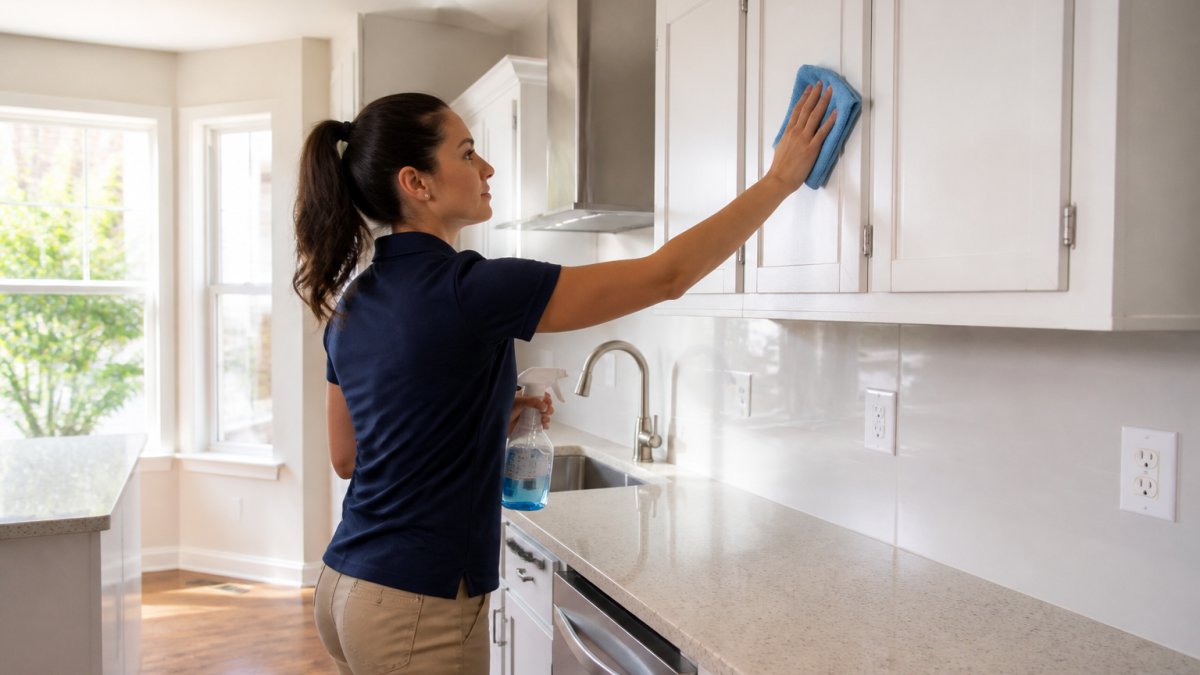
Kitchen and Bathroom Deep Cleaning
Kitchen cleaning and sanitizing typically includes wiping countertops, cleaning cabinet fronts and interiors, degreasing the stovetop and range hood, and cleaning inside the refrigerator and microwave when listed in scope. Sinks get scrubbed and disinfected, and appliance exteriors are wiped of fingerprints and grease film.
Bathroom deep cleaning and disinfecting covers scrubbing and sanitizing toilets inside and out, cleaning showers, tubs, and sinks, wiping vanity cabinets, and polishing mirrors and fixtures.
Bedrooms, Living Areas, and High-Touch Surfaces
Bedroom and living-area work is lighter on scrubbing and heavier on dust removal. Crews dust shelves, window sills, ceiling fans, light fixtures, and blinds, then vacuum carpets and clean floors. High-touch surfaces like light switches, door handles, and stair railings get wiped with disinfectant.
Closets are easy to overlook. A good crew wipes closet shelves and rods so clothes aren’t hung in a dusty space.
Ask specifically whether closet interiors and cabinet interiors are included. Many providers treat them as add-ons, and it’s far easier to confirm before the crew arrives than to negotiate afterward.
Your Move-In Cleaning Checklist: Every Surface That Should Be Touched
A move-in cleaning checklist is the fastest way to confirm a provider’s scope matches what the home needs. Walk the property with this list before signing off on any quote.
- Countertops and backsplashes wiped and sanitized
- Cabinet fronts and interiors wiped
- Inside refrigerator, oven, and microwave cleaned
- Sinks scrubbed and disinfected
Cleaning removes visible soil and grime; disinfecting reduces germs (the CDC). A move-in clean should do both, with disinfecting concentrated on high-touch points like handles, switches, and bathroom fixtures.
What Is Not Included and How to Request Add-On Services
Standard move-in cleaning excludes exterior windows, walls above reach, garage sweeping, and anything requiring a ladder or specialty equipment, plus biohazard cleanup, pest treatment, and repairs.
Add-ons are usually available on request and priced separately: interior window cleaning, inside-oven and inside-fridge detailing, wall spot-cleaning for scuffs, and balcony or patio cleaning. Request them when booking, not on cleaning day, because crews are scheduled to a fixed window with no slack for extra work.
Requesting add-ons on arrival is the most common reason a move-in clean runs short. The crew finishes the agreed scope and leaves, and the extra tasks don’t happen.
How Long Does Move-In Cleaning Take? Timing, Crew Size, and Home Condition
Move-in cleaning typically takes two to five hours for an average home, depending on square footage, crew size, and how dirty the property is. An empty home cleans faster than a furnished one because there’s nothing to move.
Three variables drive the timeline:
| Factor | Faster Clean | Slower Clean |
|---|---|---|
| Home size | Under 1,000 sq ft | Over 2,000 sq ft |
| Crew size | Three or more cleaners | Single cleaner |
| Condition | Recently renovated | Years of buildup |
| Occupancy | Completely empty | Leftover items present |
Condition is the most underestimated variable. A home vacant for months collects dust on every horizontal surface, and heavy kitchen grease or bathroom mineral buildup can double the time estimate.
How to Prepare for a Professional Move-In Cleaning
Preparing for a professional move-in cleaning takes about fifteen minutes and prevents most scheduling problems. The goal is an empty, accessible home with working utilities. Most friction comes from three things: no water or power, no crew access, and furniture arriving before the clean is finished. Solve those three and the rest is routine.
A Practical Timeline
- One to two weeks before: Book the clean and confirm the written scope. Ask about the re-clean policy, cancellation window, and whether supplies are included.
- Three to five days before: Confirm the appointment, the arrival window, and the crew size. Arrange access, lockbox, key handoff, or building code.
- One to two days before: Turn on water, electricity, and heat or air conditioning. Confirm the home is empty, including closets and the garage.
- Day before: Clear the driveway or parking area. Send a short note listing any areas of concern, such as a stained tub or a greasy range hood.
- Day of: Unlock the property or complete the key handoff. Be reachable by phone in case the crew has a question.
Coordinating With Movers and Utilities
Cleaning and moving on the same day works only if the clean is scheduled first, with a buffer. If movers arrive mid-clean, the crew works around furniture and boxes, and the areas underneath never get touched.
Utilities are the other coordination point. Water and power must be on before the crew arrives, since a move-in clean uses both heavily. For a new build or vacant home, confirm accounts are active rather than assuming service transferred.
Access, Leftover Items, and Special Situations
If you cannot be present, arrange access in advance: a lockbox with a code, a key left with a neighbor or building manager, or a smart lock code shared with the provider.
Leftover items are a common snag. If the previous occupant left furniture, boxes, or debris, the crew may not be able to clean around them, and some providers won’t remove trash as part of a standard clean.
Pets should be secured or off-site on cleaning day, for their safety and because cleaning products and open doors create hazards.
Pricing Factors, Quality Checks, and What to Expect on Cleaning Day
Pricing for move-in cleaning depends on square footage, home condition, number of bathrooms, and add-ons. Providers typically quote per job rather than per hour, because time varies more than scope.
The factors that move a quote up or down are predictable once you know what to look for:
| Pricing Factor | What Raises the Quote | What Lowers It |
|---|---|---|
| Square footage | Larger homes, multiple levels, finished basements | Compact single-level layouts |
| Condition | Heavy grease, mineral buildup, post-renovation dust | Recently cleaned or newly built |
| Bathrooms | Three or more full baths | One bath |
| Add-ons | Inside oven, inside fridge, interior windows, wall spot-cleaning | Standard scope only |
| Access | Stairs, elevators, tight parking, long carries | Ground-floor, easy parking |
Comparing quotes requires matching scope, not just totals. A lower quote that excludes cabinet interiors, inside-oven cleaning, and baseboards isn’t cheaper; it’s a smaller job. Send the same checklist to three providers and ask each to mark what’s included, excluded, and extra.
A few questions separate a thorough quote from a thin one:
- Is the price flat or does it change if the home is dirtier than described?
- Are supplies and equipment included, or is there a materials fee?
- Is there a trip charge or minimum for the area?
- What is the cancellation or rescheduling window, and is there a fee?
- Is the crew bonded and insured, and can that be shown in writing?
How to Verify Quality and Handle Missed Areas
Quality checks work best as a room-by-room walkthrough with the crew lead before they pack up, not a glance from the doorway.
If something is missed, point it out while the crew is still on site; most providers correct it on the spot, avoiding a return trip.
Disputes usually arise from scope mismatches, not poor cleaning. If the quote excluded interior windows and the client expected them cleaned, no re-cleaning resolves it.
What to Expect on Cleaning Day, From Arrival to Final Walkthrough
On cleaning day, expect the crew within the scheduled window. A crew lead usually walks the home with the client or a designated contact, confirms scope, and notes concerns before work starts.
Work proceeds room by room, often starting at the top and working down, or finishing in the kitchen and bathrooms last so high-traffic areas stay clean while equipment is packed.
A final walkthrough follows, your chance to point out anything missed before the crew leaves.
Homeowners and renters who want the clean finished before the moving truck arrives, and who need a provider that will confirm scope in writing up front.
Conclusion: Booking Move-In Cleaning Services with Confidence
The hard part of move-in cleaning isn’t the cleaning itself. It’s timing, scope, and knowing which tasks a standard service leaves out. Get those three right and the rest follows.
North Shore Maids has cleaned homes across Essex County for nearly two decades, and every job is backed by a satisfaction guarantee, bonded and insured staff, and flexible plans including one-time deep cleans for relocations.
Request a free estimate from North Shore Maids and schedule the clean before the boxes arrive.
Frequently Asked Questions
What is typically included in a move-in clean?
A standard move-in clean covers kitchen cleaning (countertops, cabinet exteriors, appliance exteriors, sink), bathroom deep cleaning (toilets, tubs, showers, sinks, mirrors), dusting of shelves and fixtures, vacuuming and mopping all floors, and wiping doors, door frames, baseboards, and trim. Some services include inside-oven or inside-fridge cleaning as an add-on. Before booking, confirm the exact service scope with your provider so there are no surprises on move-in day.
Is move-in cleaning different from regular house cleaning?
Yes. Move-in cleaning is a one-time deep clean designed for an empty home before your belongings arrive. It focuses on grime, scuffs, and buildup left by previous occupants, including inside cabinets and closets. Regular house cleaning maintains an already-occupied home on a recurring schedule.
Should I clean before or after moving my belongings in?
Clean before your belongings arrive. An empty home lets the cleaning team reach floors, baseboards, closets, and cabinet interiors without moving boxes or furniture. It also prevents dust and cleaning fumes from settling on your items. Schedule the move-in cleaning a day or two before move-in day, and coordinate with your movers so the two appointments do not overlap.
How long does a move-in cleaning usually take?
Most move-in cleans take between three and six hours, depending on square footage, the number of bathrooms, and how much buildup is present. A small apartment may finish in three hours, while a larger single-family home with heavy grime can take six or more. Crew size also matters: a two- or three-person team finishes faster than a solo cleaner. Ask your provider for a time estimate when you book.
What is usually not included in a move-in cleaning service?
Common exclusions include inside ovens, inside refrigerators, interior windows, garages, patios, and wall washing. Some providers also charge extra for heavy buildup, pet hair removal, or cleaning inside cabinets. If you need any of these, request them as add-on services when you book. Getting the exclusions in writing prevents confusion on cleaning day and helps you compare quotes fairly.
How should I prepare for a professional move-in cleaning?
Clear the home of boxes and personal items before the team arrives. Confirm parking and building access, especially in apartment buildings with locked entries or elevators. Note any areas of concern, such as scuffed baseboards or sticky cabinets, and share them with the provider. If you have pets or allergies, mention them so the team can choose appropriate products. Finally, plan to do a walkthrough after the clean to check the work.
Why should I choose a bonded and insured cleaning service?
A bonded and insured service protects you if something is damaged or stolen during the clean. Bonding covers theft, and insurance covers property damage. It also signals that the company vets its employees and carries liability coverage. For move-in cleaning services, where the team works in an empty home, this protection matters. Always ask for proof of bonding and insurance before booking.
U.S. Environmental Protection Agency guidance on safe cleaning and disinfecting
U.S. Department of Housing and Urban Development information for new homeowners
U.S. Centers for Disease Control and Prevention guidance on cleaning and disinfecting surfaces