
Table of Contents
- Professional Cleaning vs DIY Move Out Cleaning: Which Gets Your Deposit Back?
- Move Out Cleaning Comparison: DIY vs. Hiring a Pro
- The Average Cost of Move Out Cleaning Explained
- How Long Does a Move Out Clean Take?
- The DIY Failure Risks: What Landlords Notice
- Your Move Out Cleaning Checklist: DIY vs. Pro Standards
- What to Ignore: Common Move Out Cleaning Myths
- Conclusion: Making the Right Choice for Your Move
- Frequently Asked Questions
Last Updated: September 8, 2026
Professional Cleaning vs DIY Move Out Cleaning: Which Gets Your Deposit Back?
The decision between professional cleaning vs DIY move out cleaning often comes down to one question: what will it take to pass the landlord inspection and secure the full security deposit return? This guide breaks down the true costs, time commitments, and failure risks of each approach so you can make a confident choice before your lease ends.
Move out cleaning is the process of returning a rental unit to a condition that meets the standards outlined in your lease agreement. Landlords and property management companies typically expect a “broom clean” at minimum, but many require a deeper standard to release the full damage deposit. The gap between what tenants think is clean and what inspectors expect is where deposits get lost.
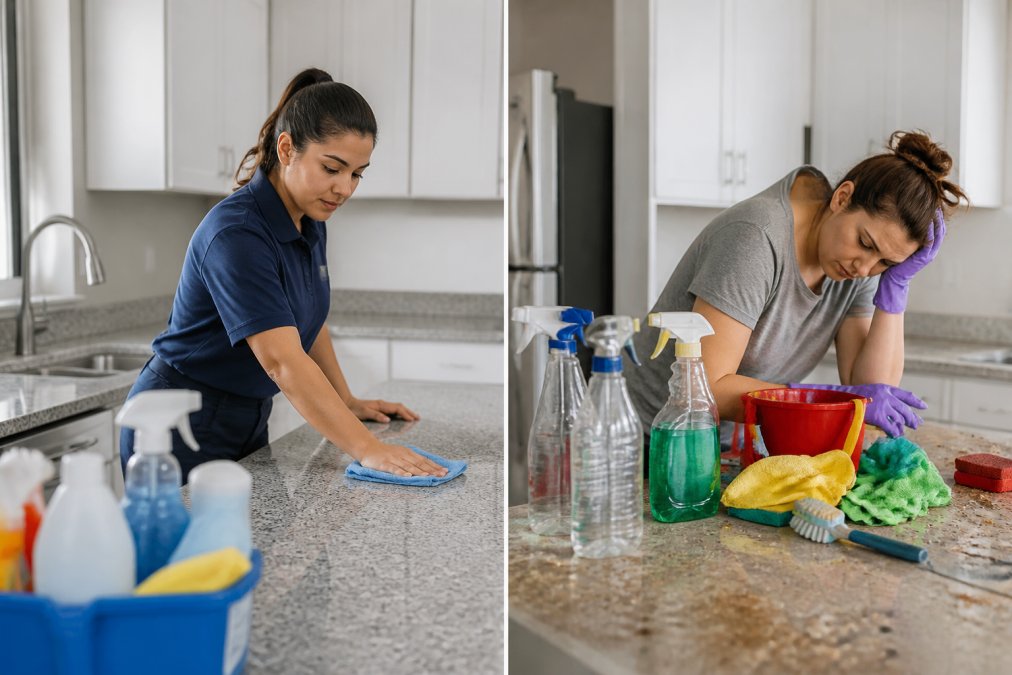
Move Out Cleaning Comparison: DIY vs. Hiring a Pro
The core difference between DIY and professional move out cleaning comes down to standards, equipment, and accountability. A professional service is accountable to a service guarantee, while a DIY effort depends entirely on your energy, time, and available tools.
Cost Comparison: DIY Supplies vs. Professional Rates
DIY cleaning requires an upfront purchase of supplies: all-purpose cleaners, glass spray, degreasers, scrub brushes, microfiber cloths, mop heads, and trash bags. Many households discover mid-clean that they lack a key tool, like a steam cleaner or an extendable duster, which adds another trip to the store.
Professional cleaning rates are typically quoted per hour or as a flat fee based on square footage (homeadvisor.com). Marketplaces like HireAHelper’s moving labor pricing guide show hourly rates that vary by local market demand. The true cost comparison isn’t just the invoice, though; it includes the value of your time spent on a labor-intensive task.
Time Investment and Opportunity Cost
A thorough move out clean is labor-intensive. Between defrosting the freezer, detailing the oven, scrubbing baseboards, and wiping down every cabinet interior, a full DIY session can consume an entire weekend. For a renter who works full time, those labor hours come at the expense of packing, coordinating the moving truck, or recovering from the stress of relocating.
The Average Cost of Move Out Cleaning Explained
Professional move out cleaning pricing typically falls into two models: hourly rates and flat-rate pricing based on square footage.
Hourly Rates vs. Flat-Rate Pricing
Hourly rates vary depending on your local market. A standard one-bedroom apartment usually requires 2 to 4 hours of professional time, while a three-bedroom home can take 6 to 10 hours.
Flat-rate pricing is more common for move out cleans because it gives both the tenant and the landlord a fixed number before the work begins. Flat fees are usually calculated per square foot. The wide range reflects the condition of the property, the presence of pets, and the specific requirements in your lease agreement.
What Drives the Price Up
Several factors push move out cleaning quotes above a standard recurring clean:
- Appliances: Detailing the inside of the oven, refrigerator, and dishwasher is almost always an add-on or a separate line item.
- Carpet cleaning: Most landlords require professional carpet cleaning, especially if the lease specifies it.
- Walls and baseboards: Removing scuffs, washing baseboards, and wiping down door frames adds labor time. This is often included in a flat-rate move out quote but billed separately in hourly arrangements.
- Pet damage: Urine odors, embedded hair, and scratched floors require specialized treatments.
- Window cleaning: Interior window tracks and sills are frequently overlooked by DIY cleaners but are a common inspection fail point. Professional crews typically include them, but confirm it in writing.
How to Read a Professional Quote
A reliable quote should itemize the work by room and by task. If a company gives you a single lump sum without a breakdown, ask for specifics. Key questions to ask before booking:
- Does the price include the inside of the oven and refrigerator?
- Is carpet cleaning included or is it a separate vendor?
- Are windows and window tracks part of the scope?
- What happens if the landlord fails the inspection, is there a re-clean guarantee?
A standard recurring clean is not the same as a move out clean. Recurring services focus on surface-level tidying; move out cleans cover appliance interiors, cabinet shelves, baseboards, and sanitization of high-touch areas. If a quote seems too low, it likely excludes the deep-cleaning tasks that matter most during a landlord walk-through.
Getting an Accurate Estimate
For budgeting purposes, request at least three quotes from local providers and compare them line by line. Be honest about the state of the unit, underestimating the mess can lead to surprise charges on the day of the clean.
A professional estimate should specify which areas are included so there are no surprises at the final walk-through. For accurate current pricing in your area, request a free estimate from a local service like North Shore Maids, which offers satisfaction-guaranteed cleaning tailored to move-out requirements. Pricing depends on quantity, dates, and delivery.
How Long Does a Move Out Clean Take?
The duration of a move out clean depends on the property size and its current condition. A small apartment that has been maintained regularly might take a professional team a few hours; a larger home, or one that has seen heavy use, will require more labor hours.
A DIY effort typically takes two to three times longer than a professional crew. Without professional-grade equipment like commercial vacuums and carpet extraction machines, tasks like removing pet hair or ground-in dirt take significantly more effort. When planning your moving timeline, add buffer time for the clean, the landlord walk-through, and any touch-ups the inspector might request.
The DIY Failure Risks: What Landlords Notice
DIY cleaning carries a real financial risk: the potential loss of the security deposit. The risk is not just about missing a spot of grime, it is about the specific language in your lease agreement and how landlords legally justify deductions.
The Legal Standard: ‘Broom Clean’ vs. ‘Professional Clean’
Most lease agreements contain a cleanliness clause, but the wording varies significantly (nolo.com). Two common standards appear in rental contracts across the United States:
- ‘Broom clean’, This is the minimum standard. It generally means the unit must be swept, trash removed, and surfaces wiped down. It does not require deep cleaning of appliances, carpets, or walls. If your lease says only ‘broom clean,’ a landlord may still try to charge for deeper cleaning, but you have a stronger legal position to dispute it.
- ‘Professional clean’ or ‘move-in ready’, This standard requires the unit to be returned in the same condition it was delivered, minus normal wear and tear. Many landlords interpret this as requiring a professional service, especially for carpets and appliances. Some leases explicitly state that a receipt from a professional cleaning company must be provided at move-out.
Before you decide between DIY and professional cleaning, read your lease’s cleanliness clause carefully. If it references ‘professional cleaning’ or ‘commercial-grade equipment,’ a DIY effort may not satisfy the contractual requirement, regardless of how thorough you are.
How Landlords Justify Deductions
When a landlord withholds part of a security deposit for cleaning, they must provide an itemized list of deductions. Common justifications include:
- Carpet staining or odor, Landlords often deduct for professional carpet cleaning or replacement if stains are deemed beyond cleaning.
- Appliance residue, A dirty oven or refrigerator can trigger a deduction for professional degreasing.
- Bathroom grime, Soap scum, hard water stains, or mold in grout lines may be cited as needing professional treatment.
- Trash left behind, Some landlords charge a haul-away fee if bags are left on the property.
These deductions are often based on invoices from professional cleaners the landlord hires after you move out. In many cases, you end up paying for professional cleaning anyway, but at a markup, with no control over the vendor.
The Hidden Cost of a Failed Inspection
A failed walk-through does not just cost you the deposit. It can also delay the return of your funds, trigger disputes that require small claims court filings, and damage your rental history.
A common pattern: a tenant spends on supplies and hours cleaning, misses the inside of the oven and the carpet edges, and the landlord deducts for a professional clean. The total financial loss often exceeds what a professional service would have cost upfront.
What Landlords Actually Check
Landlords and property managers have seen hundreds of move-out cleans, and they know where to look. The most frequently cited DIY failures include:
- Greasy range hoods and stove drip pans
- Dust on top of ceiling fan blades and door frames
- Soap scum behind faucet bases and on shower doors
- Pet hair embedded in carpet edges and under baseboards
- Fingerprints on light switches and outlet covers
- Dust inside HVAC vents and on return air grilles
- Residue inside microwave and dishwasher filters
A professional service is accountable to the standards in your lease, often with a service guarantee that protects the tenant if the landlord objects. A DIY cleaner has no such recourse, the only option is to go back, find the missed spot, and hope the landlord is willing to do another walk-through.
When DIY Makes Sense
DIY is not always the wrong choice. It makes sense when your lease specifies only ‘broom clean,’ when you have documented the unit’s condition with photos from move-in day, and when you have the time and equipment to meet the standard. But if your lease requires a ‘professional clean’ or the landlord has a reputation for strict inspections, the risk of DIY often outweighs the savings.
Before committing to DIY, ask your landlord or property manager directly: ‘What standard of cleanliness is required for a full deposit return, and will a receipt from a professional service be required?’ Getting the answer in writing protects you and clarifies whether the DIY route is even viable.
Your Move Out Cleaning Checklist: DIY vs. Pro Standards
A reliable move out cleaning checklist covers the same areas regardless of who does the work. The difference lies in execution and verification.
| Task | DIY Standard | Professional Standard | Deposit Risk if Missed |
|---|---|---|---|
| Kitchen (oven, fridge, cabinets) | Wipe visible surfaces | Degrease, detail inside appliances, sanitize | High |
| Bathrooms (tile, grout, fixtures) | Scrub sink and toilet | Descale, remove soap scum, polish fixtures | High |
| Floors (carpet, hard surfaces) | Vacuum and mop | Carpet extraction, baseboard detailing | Medium |
| Walls and trim | Spot clean | Wash scuffs, wipe baseboards and door frames | Medium |
| Final walk-through | Self-check | Landlord inspection ready | Critical |
A professional team follows this checklist to a “move-in ready” standard, meaning the next tenant could move in without cleaning. A DIY cleaner must be disciplined enough to reach that same level while managing the logistics of the move.
What to Ignore: Common Move Out Cleaning Myths
Several myths about move out cleaning lead renters astray. One is that a “broom clean” is sufficient; many leases specify a higher standard for the release of the full security deposit. Another is that minor wear and tear will be forgiven; landlords distinguish between normal wear and damage, but a dirty oven or stained carpet is often treated as a cleaning charge.
Renters should also ignore the assumption that professional cleaning is only for the wealthy. When weighed against the potential loss of a security deposit, the cost of a professional service is often the more cost-effective option.
Conclusion: Making the Right Choice for Your Move
The choice between professional cleaning vs DIY move out cleaning ultimately depends on how you value your time and your security deposit. DIY saves the invoice cost but risks losing more through a failed inspection. Professional cleaning offers accountability, efficiency, and the peace of mind that comes with a satisfaction guarantee.
For renters facing a tight timeline or a demanding landlord inspection, professional move out cleaning is the reliable path to a full deposit return. North Shore Maids brings nearly two decades of experience, bonded and insured professionals, and a satisfaction guarantee to every move-out project. Request a free estimate today and ensure your next walk-through is your last one.
Frequently Asked Questions
Is a move-out clean more than a regular clean?
Yes, a move-out clean goes deeper than standard maintenance cleaning. It targets the areas landlords and property managers inspect closely, such as inside ovens, refrigerator coils, baseboards, window tracks, and bathroom grout. The goal is to return the unit to a move-in ready state, not just a tidy one. A regular cleaning focuses on surface dirt, while a move-out clean addresses built-up grime and requires more labor hours to meet the cleaning standards in your rental agreement.
Are professional move-out cleaning services worth it?
For most renters, yes. The average cost of move out cleaning is often far less than the portion of your security deposit a landlord might withhold for inadequate cleaning. Professional cleaners have the equipment and expertise to handle labor-intensive tasks like carpet extraction and appliance detailing. They also save you significant time during an already stressful move. Weigh the cost against your deposit and your available time to decide if DIY is truly cost-effective.
What does a professional move-out clean include?
A professional move-out clean typically includes a detailed checklist covering all rooms. This includes wiping down walls and baseboards, cleaning inside and outside appliances, degreasing the stove and hood, scrubbing sinks and faucets, sanitizing toilets and showers, vacuuming and mopping floors, and removing dust from vents and light fixtures. It goes beyond a broom clean to ensure the property meets the standards for a full security deposit return and is ready for the next tenant.
How much does a professional move-out cleaning cost?
The average cost of move out cleaning varies based on your home’s square footage, condition, and location. Pricing depends on quantity, dates, and delivery, but you should get a free estimate from a local service for an accurate quote. Compare that figure against the cost of your own time, cleaning supplies, and equipment rental. The price often reflects the labor hours required to meet your landlord’s cleaning standards and avoid deductions from your damage deposit.