
Table of Contents
- How Residential Cleaning Services Prices Are Calculated
- Standard vs Deep Cleaning Price Difference
- House Cleaning Cost Per Square Foot Explained
- Average Cost of Recurring Maid Services
- What’s Included in a Standard Cleaning Quote
- Hidden Cost Factors: Tipping, Insurance, and Specialized Cleaning
- How to Get an Accurate Residential Cleaning Services Quote
- Frequently Asked Questions
Last Updated: September 14, 2026
How Residential Cleaning Services Prices Are Calculated
Residential cleaning services prices are calculated by combining a labor rate with the time a job takes, then adjusting for home size, condition, and service frequency. Most companies start with either an hourly rate or a flat-rate model, and the final quote reflects how those two numbers interact with the specifics of a home.
This guide from North Shore Maids breaks down what actually drives a quote, where standard and deep cleaning diverge, and which variables most homeowners overlook until the invoice arrives.
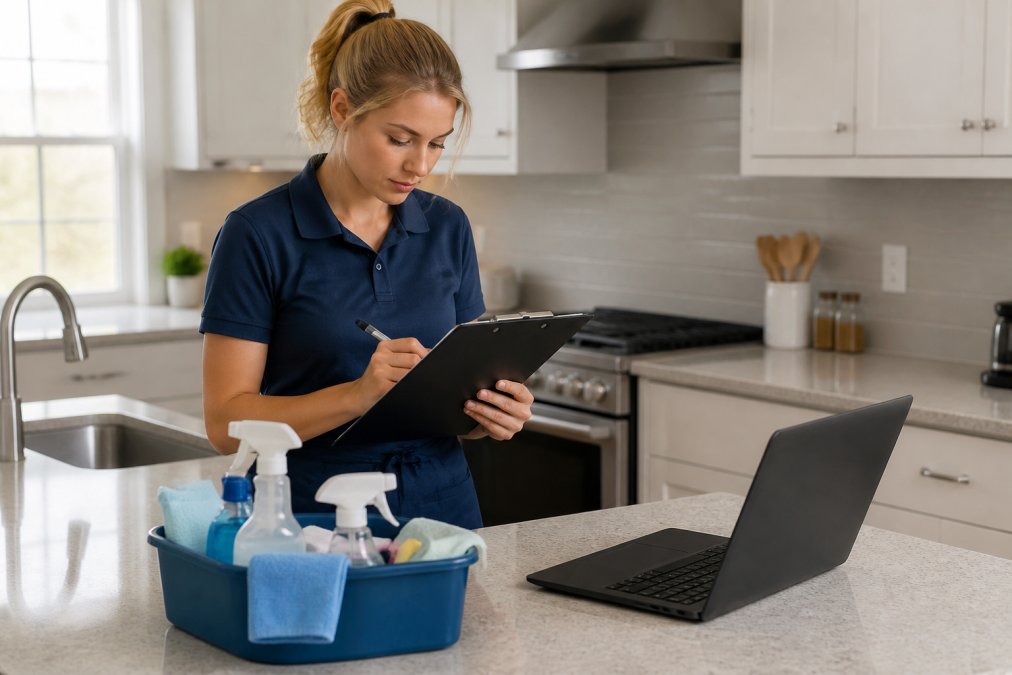
Hourly Rate vs. Flat-Rate Pricing Models
Hourly pricing charges for actual time on site, so the bill moves with how long the work takes. Flat-rate pricing quotes a fixed per-visit cost based on square footage, bedroom and bathroom count, and service type.
| Model | How It Works | Best For | Trade-Off |
|---|---|---|---|
| Hourly rate | Billed per hour worked | First-time or heavily soiled homes | Final cost varies |
| Flat rate | Fixed per-visit price | Recurring, predictable schedules | Less flexibility |
| Per square foot | Rate multiplied by area | Standardized homes | Ignores clutter and condition |
Per-visit cost under a flat-rate model stays consistent week to week, which makes budgeting for cleaning far easier. Hourly pricing suits one-time cleaning where the scope is uncertain. Many companies publish a cleaning estimate in both formats and let the homeowner choose.
Standard vs Deep Cleaning Price Difference
The standard vs deep cleaning price difference comes down to scope and time. A standard cleaning covers maintenance tasks: dusting, vacuuming, mopping, kitchen surfaces, and bathroom fixtures. A deep cleaning adds baseboards, inside appliances, vents, and areas skipped during routine visits, so it takes longer and costs more.
- Standard cleaning: recurring upkeep, typically the base for weekly or bi-weekly service
- Deep cleaning: first visit, seasonal reset, or pre-event prep
- Move-in cleaning: empty-home deep clean before belongings arrive
- Move-out cleaning: deep clean to prepare a home for turnover
A common mistake is booking a standard visit for a home that has not been professionally cleaned in months. The team runs out of time, the quality drops, and the homeowner blames the cleaner. A deep clean first, then a recurring plan, produces consistent results.
House Cleaning Cost Per Square Foot Explained
House cleaning cost per square foot is the most predictable pricing method, but it is also the most misunderstood. A company sets a rate per square foot, multiplies it by the home’s area, then adjusts for bathrooms, pets, flooring, and current condition. A 1,200-square-foot home and a 3,000-square-foot home rarely cost the same, even at identical service levels.
Most companies do not publish a single national rate because labor markets differ too much. What they do publish is a range. A common pattern across the industry is a base rate that falls as home size rises, because fixed costs like travel and setup are spread across more square footage. A small home might carry the equivalent of a higher per-square-foot rate than a large one, even though the large home costs more in total.
| Home Size | Typical Bed/Bath Mix | Relative Per-Square-Foot Rate | Why |
|---|---|---|---|
| Under 1,000 sq ft | 1-2 bed, 1 bath | Highest | Fixed costs spread over less area |
| 1,000-2,000 sq ft | 2-3 bed, 2 bath | Moderate | Most common tier, most competitive |
| 2,000-3,000 sq ft | 3-4 bed, 2-3 bath | Lower | Setup time amortized across more rooms |
| Over 3,000 sq ft | 4+ bed, 3+ bath | Lowest per sq ft, highest total | Often quoted as a custom flat rate |
Square footage is a starting point, not the whole formula. Two homes of equal size can quote differently because one has three bathrooms, hardwood throughout, and a shedding dog, while the other has one bathroom and minimal furniture. Bathrooms and kitchens carry the highest labor load per square foot, a bathroom is small in area but dense in fixtures, grout, glass, and sanitizing steps. That is why bedroom count alone is a poor predictor of cost, and why a per-square-foot quote without a bathroom count is incomplete.
Flooring type matters more than most homeowners expect. Carpet vacuums quickly; hardwood needs dry mopping and sometimes a separate finish-safe product; tile with heavy grout lines takes the longest. A home that is 80% carpet and a home that is 80% tile can differ by a meaningful margin at the same square footage.
When requesting a quote, give the square footage, the number of bathrooms, the dominant flooring type, and whether pets live in the home. Those four details move a cleaning estimate more than any other factor, and omitting them is the fastest way to get a quote that changes on arrival.
If a company quotes strictly by square footage with no walkthrough or intake questions, treat the number as a floor, not a final price. The most accurate per-square-foot estimates come from companies that combine the area calculation with a short condition assessment, either in person or through a structured phone or video intake.
Average Cost of Recurring Maid Services
The average cost of recurring maid services is lower per visit than one-time cleaning because the home stays maintained between visits. Frequency-based discounts reward consistency: weekly service carries the deepest discount, bi-weekly sits in the middle, and monthly costs the most per visit.
| Service Frequency | Relative Per-Visit Cost | Typical Use Case |
|---|---|---|
| Weekly | Lowest | Busy households, pets, allergies |
| Bi-weekly | Moderate | Most dual-income families |
| Monthly | Highest | Light-use homes, seasonal upkeep |
| One-time | Premium | Move-in, move-out, events |
Recurring service also shortens each visit. A home cleaned every two weeks needs less catch-up work than one cleaned quarterly, so labor costs drop even when the rate per hour stays the same. That is the real reason frequency discounts exist, not marketing, but the physics of how much soil accumulates between visits. A weekly home may take two hours; the same home on a monthly schedule may take four, because the cleaner is removing buildup rather than maintaining a clean surface (pubmed.ncbi.nlm.nih.gov).
The first visit is almost always a deep clean. Most companies price the initial appointment at the deep-clean rate regardless of the recurring schedule the homeowner signs up for, then drop to the recurring rate from visit two onward. Homeowners who compare a one-time quote to a recurring quote without accounting for this are comparing two different scopes.
Hidden costs that change the real per-visit number. The advertised recurring rate is rarely the full cost of ownership. Three variables move it:
- Tipping. Tipping is optional and not built into most quotes. A common approach is a modest gratuity for one-time or deep cleans, and a smaller recurring amount or a holiday tip for regular service. Teams that receive consistent tips tend to stay with a client longer, which matters for reliability.
- Insurance and bonding. A bonded and insured company protects the homeowner if something breaks or a worker is injured on site. Bonding covers theft, and insurance covers damage and liability. This coverage costs the company money, which is why bonded and insured services rarely advertise the cheapest rates. The U.S. Small Business Administration guidance on business insurance explains why licensed and insured service providers carry higher operating costs than unvetted independent workers.
- Specialized cleaning surcharges. Eco-friendly products often carry a small surcharge because plant-based supplies cost more than conventional chemicals. Pet-heavy homes need extra time for hair removal, dander, and odor treatment, and should flag animals at booking so the recurring quote reflects reality.
Hiring the lowest recurring quote without confirming insurance is the most expensive mistake in this category. If an uninsured cleaner damages a countertop or is injured in the home, the homeowner can be held responsible for the cost. Always ask for proof of bonding and insurance before the first visit.
When comparing recurring quotes, ask each company for the same three numbers: the first-visit (deep clean) price, the ongoing per-visit price, and the cancellation or skip policy. A lower ongoing rate paired with a high first-visit charge and a strict skip fee can cost more over a year than a slightly higher flat recurring rate with flexible scheduling.
What’s Included in a Standard Cleaning Quote
A standard cleaning quote should list every task in writing before the first visit. Most include dusting of accessible surfaces, vacuuming and mopping of floors, kitchen counter and exterior appliance wipe-down, bathroom fixture cleaning, and trash removal. Anything outside that list is an add-on.
- Dusting of reachable surfaces and furniture
- Vacuuming and mopping of all floors
- Kitchen counters and appliance exteriors
- Bathroom sinks, toilets, tubs, and mirrors
- Trash removal and bed making
Add-on services such as inside-oven cleaning, interior fridge cleaning, inside cabinets, and baseboard detailing are quoted separately because they add significant time. Homeowners with specific needs should ask for a customized cleaning checklist rather than assume these tasks are included.
Hidden Cost Factors: Tipping, Insurance, and Specialized Cleaning
The variables that surprise homeowners most are rarely on the quote. Tipping etiquette, liability coverage, and specialized cleaning requirements all affect the true cost of hiring professional cleaners.
Tipping. Tipping is optional and not built into most quotes. A common approach is a modest gratuity for one-time or deep cleans, and a smaller recurring amount or a holiday tip for regular service. Teams that receive consistent tips tend to stay with a client longer, which matters for reliability.
Liability and insurance. A bonded and insured company protects the homeowner if something breaks or a worker is injured on site. Bonding covers theft, and insurance covers damage and liability. This coverage costs the company money, which is why bonded and insured services rarely advertise the cheapest rates. The U.S. Small Business Administration guidance on business insurance explains why licensed and insured service providers carry higher operating costs than unvetted independent workers.
Eco-friendly cleaning. Green cleaning products often carry a small surcharge because plant-based supplies cost more than conventional chemicals. Many companies offer green cleaning products upon request.
Pet-specific cleaning. Homes with pets need extra time for hair removal, dander, and odor treatment. Pet owners should flag animals at booking so the quote reflects reality.
Hiring the lowest quote without confirming insurance is the most expensive mistake in this category. If an uninsured cleaner damages a countertop or is injured in the home, the homeowner can be held responsible for the cost. Always ask for proof of bonding and insurance before the first visit.
How to Get an Accurate Residential Cleaning Services Quote
An accurate quote starts with a walkthrough or a detailed phone consultation. Reputable companies ask about square footage, bathroom count, flooring types, pets, and current condition, then send a written cleaning estimate with the scope defined.
- Request a free estimate and share square footage, bedrooms, and bathrooms
- Disclose pets, allergies, and any mobility or health needs
- Confirm whether the first visit is a deep clean or standard cleaning
- Ask what is excluded from the base price and what counts as an add-on
- Verify bonding, insurance, and employee screening in writing
- Review the service agreement before the first appointment
North Shore Maids provides free estimates and flexible package plans across weekly, bi-weekly, monthly, and seasonal schedules, with nearly two decades of local experience and a satisfaction guarantee. For homeowners comparing residential cleaning services prices, a written quote with a defined cleaning checklist is the only reliable way to compare offers. A lower number with vague scope almost always costs more by the third visit.
The cheapest quote is rarely the lowest total cost. A written scope, verified insurance, and a consistent recurring schedule protect both the home and the budget better than any advertised rate.
Comparing residential cleaning services prices is really a question of what a homeowner values: a rock-bottom rate with unpredictable quality, or a defined scope with a team that shows up when promised. North Shore Maids has spent nearly two decades serving Essex County with bonded and insured crews, free estimates, green cleaning products on request, and flexible weekly, bi-weekly, monthly, or seasonal plans backed by a satisfaction guarantee. Request a quote from North Shore Maids and get a written estimate that reflects what the home actually needs.
Frequently Asked Questions
How much should I pay someone per hour to clean my house?
Hourly rates for residential cleaning services prices typically range based on your location, the cleaner’s experience, and the scope of work. Most professional companies charge per visit or by square footage rather than by the hour, which gives you a predictable total. Independent cleaners may quote hourly, but the final cost depends on how long the job takes. For a firm quote based on your home’s size and condition, request a free estimate from a bonded and insured company.
Is there a difference in price between standard and deep cleaning?
Yes. The standard vs deep cleaning price difference usually reflects extra labor and time. A standard cleaning covers dusting, vacuuming, mopping, and bathroom and kitchen surfaces. A deep cleaning adds baseboards, inside appliances, behind furniture, and detailed scrubbing of buildup. Because deep cleans take longer, they cost more per visit. Many companies recommend a one-time deep clean before starting recurring service, then standard visits to maintain the results.
How do cleaning companies calculate their service rates?
Most companies calculate house cleaning cost per square foot, the number of bedrooms and bathrooms, and the level of cleaning needed. Frequency also matters: weekly and bi-weekly clients often pay less per visit than one-time customers because the home stays cleaner between appointments. Additional factors include pet hair, add-on services like inside-oven or inside-fridge cleaning, and whether green cleaning products are requested. A written service agreement should list exactly what is included.
Should I expect to pay more for recurring cleaning services?
No, the opposite. The average cost of recurring maid services is typically lower per visit than a one-time cleaning because the home requires less work each time. Weekly plans usually offer the lowest per-visit rate, followed by bi-weekly, then monthly. If you are relocating or need a move-in or move-out cleaning, that is a one-time deep clean and priced higher. Ask for a quote that shows the per-visit cost for each frequency option so you can compare.