
Table of Contents
- Weekly vs Bi-Weekly Cleaning: Key Differences
- Factors Affecting House Cleaning Frequency
- What Is Included in a Standard Professional Cleaning
- Benefits of Weekly Professional Cleaning
- When Bi-Weekly Cleaning Works Best
- How to Prepare for a House Cleaner
- Budget and Cost-Effectiveness Comparison
- Maintaining Cleanliness Between Professional Visits
- Frequently Asked Questions
Last Updated: September 21, 2026
Weekly vs Bi-Weekly Cleaning: Key Differences
Choosing between weekly vs bi-weekly cleaning depends on lifestyle, budget, and how quickly dust and grime accumulate. Weekly service provides professional attention every seven days; bi-weekly service spaces visits two weeks apart. This gap affects cleanliness standards and maintenance demands significantly.
Weekly cleaning maintains consistently high cleanliness standards with minimal dust accumulation. Bi-weekly cleaning works best for households generating less mess or facing budget constraints, though maintenance checklists between visits become essential to prevent grime buildup.
Factors Affecting House Cleaning Frequency
Household size is the primary factor. A family of five generates significantly more dirt and clutter than a single professional, with more high-touch surfaces (doorknobs, light switches, countertops) requiring regular sanitization.
Pet ownership dramatically changes cleaning needs, dogs and cats shed fur, track dirt, and create odors that intensify over time. Young children create sticky surfaces and spilled food that builds quickly between visits.
Work-from-home environments generate more daytime mess and dust from constant activity, causing high-traffic areas to accumulate dirt faster than in homes where residents are away during the day.
What matters is density of use, not total size. A smaller apartment may need weekly service because mess concentrates in limited space, while a larger home may function with bi-weekly service as dirt spreads across more area.
Lifestyle demands round out the picture. Entertaining guests frequently, managing allergies that require consistent sanitization, or dealing with health issues that limit your ability to clean yourself all point toward weekly service.
What Is Included in a Standard Professional Cleaning
A standard professional cleaning typically includes vacuuming, dusting, bathroom cleaning (toilets, sinks, mirrors, tubs/showers), wiping kitchen counters and appliances, mopping floors, trash removal, and basic tidying.
Standard cleaning typically excludes: inside refrigerators/ovens, cabinet interiors, windows, baseboards, and carpet shampooing, these fall under deep cleaning services or cost extra.
At North Shore Maids, the team works with each household to customize what gets prioritized during each visit. Some clients request focus on high-touch surfaces and bathrooms. Others prioritize kitchen and living areas. This flexibility means your service schedule can be tailored to what matters most for your lifestyle.
Weekly service allows cleaners to maintain consistent quality across all areas. Bi-weekly service often requires clients to prioritize specific rooms or tasks due to time constraints.
Benefits of Weekly Professional Cleaning
Weekly professional cleaning delivers consistent results, keeping your home in a continuously maintained state rather than cycling between clean and cluttered. This reduces stress and prevents accumulated grime disasters.
Weekly sanitization reduces allergens and bacteria buildup, improving air quality, especially important for families with allergies or respiratory sensitivities, since dust accumulation over two weeks is avoided.
Weekly service reclaims hours each week for family time, work focus, or rest, a genuine quality-of-life improvement for busy dual-income families.
Weekly cleaning prevents grime buildup that becomes harder to remove and damages surfaces over time, extending the life of flooring, furniture, and fixtures.
A consistently clean home reduces mental clutter and stress; research shows people function better in clean, organized spaces.
When Bi-Weekly Cleaning Works Best
Bi-weekly cleaning works for smaller households with minimal mess generation, single professionals or couples without children or pets who maintain daily tidying discipline.
Budget constraints often make bi-weekly the practical choice; paired with consistent personal maintenance, it can deliver acceptable results for tight-budget households.
Homes with lower foot traffic benefit from bi-weekly schedules; less activity means less dust, fewer spills, and slower grime buildup.
Smaller square footage favors bi-weekly service; concentrated space makes mess more visible and easier to manage between visits.
Bi-weekly service works best when residents commit to maintenance checklists during off-weeks. Without personal effort between visits, bi-weekly frequency often feels insufficient for busy households.
How to Prepare for a House Cleaner
Declutter surfaces before the cleaner arrives, clear countertops, move items off bathroom sinks, and put away personal items. Cleaners work faster when not moving things around.
Close off areas you don’t want cleaned. If certain rooms are off-limits or you want to save money by skipping them, communicate this clearly. Most professional services can adjust their focus based on your priorities.
Secure valuables and personal documents. While professional cleaners are trustworthy, North Shore Maids is bonded and insured, it’s smart practice to store jewelry, cash, and sensitive documents out of sight.
Communicate any special instructions or concerns. Mention fragile items, specific cleaning products you prefer or need to avoid, or surfaces that require special care. If you have allergies or health sensitivities, let your cleaner know so they can prioritize those areas.
Ensure access to cleaning supplies and equipment. Most professional services bring their own, but confirm this beforehand. Ask about green cleaning product options if that matters to your household.
Finally, make sure someone is home or provide clear access instructions. A reliable professional service respects your time and shows up on schedule, but they need to actually get into your home to do the work.
Budget and Cost-Effectiveness Comparison
The financial difference between weekly and bi-weekly service extends far beyond the service invoice. A complete cost-effectiveness analysis must account for service pricing, supplemental deep cleaning, and the hidden labor cost of personal maintenance.
Service pricing and annual cost: Service pricing varies depending on home size, location, and service scope. Request a free estimate for both weekly and bi-weekly service to understand the specific costs for your home.
However, this comparison is incomplete without accounting for what happens between visits.
The deep-cleaning cost hidden in bi-weekly schedules: Bi-weekly service often requires supplemental deep cleaning 2-4 times per year to address buildup that weekly visits prevent. Deep cleaning (baseboards, inside cabinets, carpet shampooing, window washing) can add to the true annual cost, reducing the savings.
Personal labor cost, the decisive factor: This is where most cost comparisons fail. Between bi-weekly professional visits, busy households must invest personal time in maintenance:
- Daily tidying and dishes: 15 minutes/day × 7 days = 1.75 hours/week
- Weekly vacuuming, sanitizing, mopping: 2 hours/week
- Total personal labor for bi-weekly service: ~3.75 hours/week or 195 hours/year
Valuing that time:
- Valuing that time at a conservative estimate for a busy professional’s time can result in significant opportunity cost.
True cost comparison with labor included:
- Weekly service: $10,400 service cost + minimal personal maintenance (30 min/day tidying) = $10,400 +
$1,300 (labor) = **$11,700/year** - Bi-weekly service: $6,500 service cost + $800 deep cleaning + $4,875-$14,625 personal labor = $12,175-$21,925/year
For households where personal time is valued at $50+/hour, weekly professional service is often the more cost-effective choice despite the higher service fee.
Quality-of-life ROI: Beyond pure dollars, consider what weekly service delivers:
- Elimination of weekend cleaning tasks (reclaim 4-6 hours/week for family, rest, or income-generating work)
- Reduced stress and mental load from managing household cleanliness
- Consistent allergen and pathogen control (health benefit for families with sensitivities)
- Prevention of surface degradation from grime buildup (extends life of flooring, fixtures)
For a busy household, the quality-of-life improvement from weekly service often justifies the cost difference.
When bi-weekly service makes financial sense:
- Single professionals or couples without children who can realistically commit to weekly personal maintenance
- Households where the annual savings is material and personal time is less monetarily valuable
- Remote workers with flexible schedules who can spread maintenance tasks throughout the week without time pressure
- Homes with minimal mess generation (low foot traffic, no pets, no young children)
When weekly service is the better investment:
- Dual-income households where both partners work full-time and value personal time highly
- Families with young children or pets that generate significant mess
- Households where any household member has allergies or respiratory sensitivities
- Homes where the psychological benefit of consistent cleanliness reduces stress-related costs (healthcare, productivity loss)
Getting accurate numbers for your situation: Service pricing varies significantly by region, home size, and scope. Request a free estimate for both weekly and bi-weekly service, then calculate your personal labor cost by estimating realistic weekly maintenance hours and multiplying by your hourly rate. This gives you a true cost-effectiveness comparison rather than relying on service price alone.
Maintaining Cleanliness Between Professional Visits
The gap between professional cleaning visits requires a maintenance strategy that prevents grime accumulation, but the real question is whether your household can realistically sustain that effort, and whether it’s worth the health trade-offs.
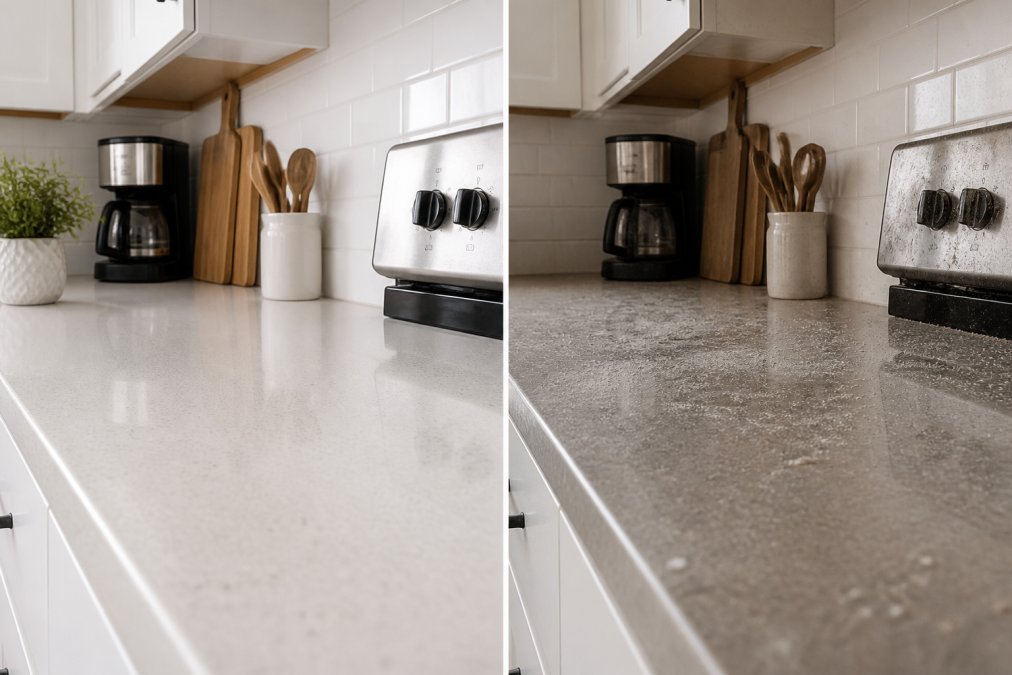
Daily maintenance tasks (10-15 minutes): Wipe kitchen counters and stovetop after meals, load the dishwasher, quick sweep of high-traffic areas if you have pets, and a bathroom sink wipe-down. These prevent visible mess from building but do little to address dust, dander, and allergen accumulation that occurs passively over two weeks.
Weekly maintenance tasks for bi-weekly service (1-2 hours): Vacuum main living areas, sanitize bathroom surfaces, wipe down mirrors and light switches, mop kitchen floors, and dust horizontal surfaces.
Realistic maintenance by frequency:
- Weekly service: Light daily tidying (dishes, quick sweep, surface wipe) is sufficient. Professional cleaners handle dust, allergens, and deep sanitization.
- Bi-weekly service: Requires consistent weekly effort plus daily tidying. Without this commitment, the home typically feels noticeably dirtier by day 10-12 of the cycle.
Frequently Asked Questions
Should I do weekly or bi-weekly cleaning for a busy household?
The choice depends on your household size, lifestyle, and budget. Weekly professional cleaning maintains consistent cleanliness and prevents grime buildup, ideal for families with pets, children, or high-traffic areas. Bi-weekly cleaning works well for smaller households or those with lower traffic patterns, provided you maintain surfaces between visits. Consider your work schedule, home size, and cleaning standards to decide which frequency aligns with your needs.
How does household size impact the need for cleaning frequency?
Larger households generate more dust, pet dander, and clutter, making weekly professional cleaning more beneficial. More family members mean more high-touch surfaces, higher-traffic areas, and faster accumulation of dirt. Smaller households or those with fewer occupants often find bi-weekly service sufficient. The number of children and pets also increases daily wear, making weekly service more cost-effective for maintaining your home’s condition over time.
What factors should I consider when budgeting for home cleaning services?
Budget depends on home square footage, household size, service frequency, and specific cleaning needs. Weekly service costs more monthly but prevents costly deep cleaning later. Bi-weekly service reduces monthly expenses but may require more maintenance effort between visits. Request a free estimate from North Shore Maids to understand pricing based on your specific situation. Factor in the value of reclaimed personal time and reduced stress when comparing total cost-effectiveness.
What is included in a standard professional cleaning service?
Standard professional cleaning typically covers dusting, vacuuming, mopping, bathroom sanitization, kitchen surface cleaning, and trash removal. High-touch surfaces receive attention in both weekly and bi-weekly visits. Deep cleaning tasks like baseboards, inside appliances, or under furniture may be part of a comprehensive plan or available as add-ons. Confirm what’s included in your service package with North Shore Maids, as customization options are available to match your household’s specific needs.