
Table of Contents
- What a Professional Move In Cleaning Actually Covers
- Move In Cleaning Checklist: What Should Be Cleaned Before You Unpack
- How Long Does a Move In Clean Take?
- Move In Cleaning vs Deep Cleaning: What Is the Difference?
- How to Prepare Your Home Before the Cleaning Crew Arrives
- Post-Cleaning Walk-Through: What to Inspect and How to Handle Issues
- DIY vs Professional Move In Cleaning: A Cost-Benefit Look
- Frequently Asked Questions
Last Updated: September 28, 2026
What a Professional Move In Cleaning Actually Covers
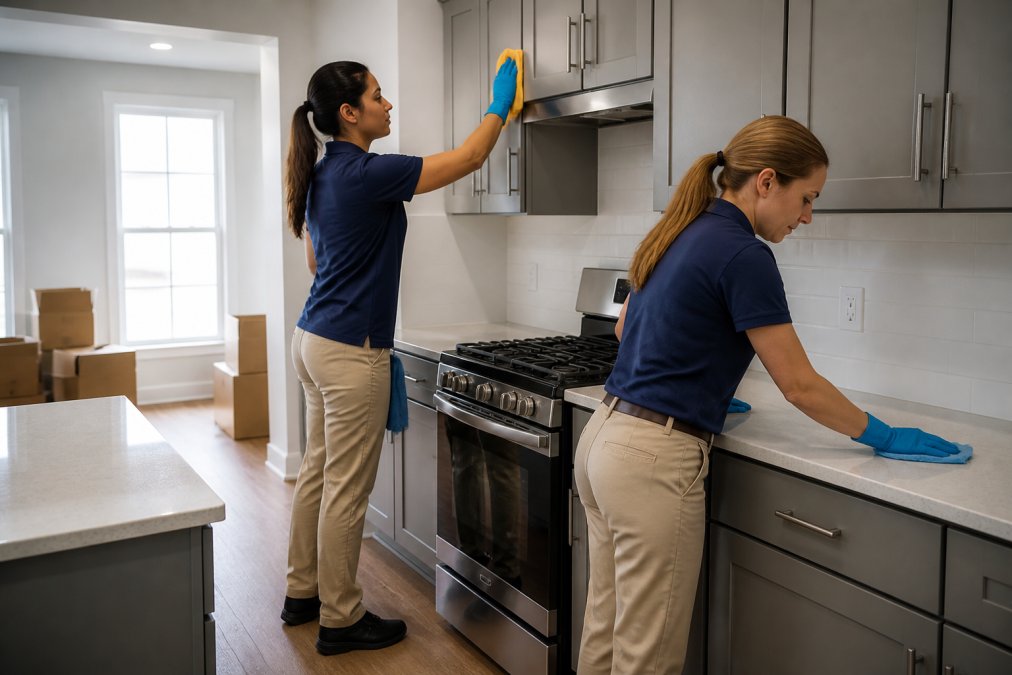
A professional move in cleaning is a top-to-bottom service that prepares an empty home for new occupants. It goes far beyond a routine tidy-up. The goal is to remove dust, residue, and grime left behind by the previous residents, movers, and construction crews.
Rooms and Surfaces Included in the Scope
Most move in services touch every livable space in the home. The list below shows what a typical visit includes:
- Kitchen: countertops, cabinet interiors, appliance exteriors, sink, backsplash
- Bathrooms: toilets, tubs, showers, tile grout, mirrors, vanities
- Bedrooms and living areas: dusting surfaces, vacuuming, mopping, baseboards, light switches
- Entryways and hallways: door handles, window tracks, floors
What Usually Costs Extra
Some tasks fall outside a base package. Ask about these before booking:
- Inside the oven or refrigerator
- Carpet extraction and upholstery cleaning
- Interior windows and blinds
- Garage, basement, or patio areas
Move In Cleaning Checklist: What Should Be Cleaned Before You Unpack
A move in cleaning checklist keeps the job organized and prevents missed spots. New homeowners should confirm each item with their cleaning crew before the first box comes through the door.
Kitchen and Bathroom Priorities
These two rooms carry the highest hygiene standards. Any residue left behind here affects daily life fast.
- Sanitize all countertops and sinks with a disinfectant
- Scrub tile grout and re-seal if needed
- Wipe cabinet interiors and drawer fronts
- Clean inside the microwave and oven
- Disinfect toilets, tubs, and shower walls
High-Touch Points and Overlooked Spots
Small details get missed most often. A good crew hits these without being asked:
- Light switches, outlet covers, and door handles
- Baseboards and crown molding
- Window tracks and blinds
- Ceiling fans and light fixtures
- Closet shelves and hanging rods
Walk the home with a flashlight before the crew arrives. It reveals dust and stains that normal lighting hides, especially in corners and under cabinets.
How Long Does a Move In Clean Take?
A move in clean usually takes two to five hours for an empty home. The exact time depends on square footage, the number of bathrooms, and how dirty the property is.
Move In Cleaning vs Deep Cleaning: What Is the Difference?
Move in cleaning and deep cleaning overlap, but they serve different goals. A deep clean refreshes a home that is already occupied. A move in clean prepares an empty property for new residents.
The table below shows the key differences:
| Factor | Move In Cleaning | Deep Cleaning |
|---|---|---|
| Home status | Empty | Occupied |
| Focus | Residue removal, sanitization | Buildup, grime, neglected areas |
| Typical scope | Cabinets, appliances, fixtures | Baseboards, vents, behind furniture |
| Frequency | One-time | Seasonal or annual |
How to Prepare Your Home Before the Cleaning Crew Arrives
Preparation speeds up the job and improves results. A few simple steps before the crew arrives make a real difference.
- Clear all boxes and personal items from floors and counters.
- Turn on utilities so cleaners have water and power.
- Secure pets in a separate room or off-site.
- Point out problem areas, like stains or damaged fixtures.
- Share access details, such as gate codes or parking notes.
Skipping the pre-clean walk-through is a common mistake. Without it, crews may miss agreed-upon tasks, and disputes over the final bill become harder to resolve.
Post-Cleaning Walk-Through: What to Inspect and How to Handle Issues
A post-cleaning walk-through confirms the work matches the service agreement. Do it before the crew leaves, while they can still fix problems on the spot. Most top-ranking guides stop at “check the bathrooms and kitchen”, this section gives you a usable inspection framework you can print or copy into your phone notes.
The Room-by-Room Inspection Checklist
Work through the home in the same order the crew cleaned it. That way, if something was skipped, you catch it before the crew moves on to the next job.
Kitchen
- Cabinet interiors: run a finger along the bottom shelf, no grit, no sticky residue
- Oven interior: no baked-on grease on the door glass or racks
- Refrigerator interior (if included): no crumbs in door gaskets, no odor
- Backsplash and sink: no film or water spots
- Range hood filter: visibly degreased, not tacky
Bathrooms
- Toilet base and bolts: no dust ring or splash residue
- Tub and shower grout: no pink or black discoloration
- Exhaust fan cover: dust-free
- Mirror edges and vanity drawers: no streaks or hair
Bedrooms and living areas
- Baseboards: wipe a section with a white cloth, it should come back clean
- Ceiling fan blades and light fixtures: no visible dust layer
- Window tracks: no grit when you run a finger along the channel
- Closet shelves and rods: no dust film
Floors
- Corners and under furniture edges: no debris line
- Hard floors: no sticky patches or streaks
- Carpet edges: no visible pile of dust where the vacuum missed
How to Document Issues in Real Time
If something is missed, point it out right away. A simple documentation routine protects both sides:
- Take a dated photo of the missed area before the crew leaves.
- Note the room and the specific task on your service agreement.
- Ask the crew lead to initial the note.
- Confirm the fix timeline in writing (text or email is fine).
Liability and Damage Protocols
Damage during a clean is rare, but it happens. Bonded and insured companies cover accidental breakage or property damage.
Here is how to handle it:
- Document any damage with photos before the crew leaves
- Report it to the company within 24 hours
- File a claim under the company’s insurance policy
- Keep the service agreement handy for reference
Snap a photo of each room before the crew starts and again after the walk-through. The before-and-after set is the fastest way to resolve any dispute about what was or was not cleaned.
DIY vs Professional Move In Cleaning: A Cost-Benefit Look
Choosing between DIY and a professional cleaning service comes down to time, tools, and risk. Most guides wave at this trade-off without doing the math. Here is a realistic breakdown.
The Real Time Cost of DIY
A move in clean on an empty home is not a two-hour job. Based on typical room counts:
- Studio or one-bedroom apartment: 6-10 hours of focused work for one person
- Two- to three-bedroom home: 12-20 hours
- Four-bedroom home with heavy buildup: 25+ hours, often spread over multiple days
Tools and Supplies You Will Need
A DIY move in clean requires more than a bucket and spray bottle:
- Extendable duster for ceiling fans and crown molding
- Grout brush and tile-safe cleaner
- Degreaser for the oven and range hood
- Carpet cleaning machine (rental runs roughly $30-$50 per day at most hardware stores, plus cleaning solution)
- Microfiber cloths, mop, vacuum with attachments
- Disinfectant, glass cleaner, stainless polish
What Professionals Bring That You Cannot Rent
- Commercial-grade extraction equipment that pulls more dirt from carpet than consumer units
- Trained crews who work in parallel, cutting total time dramatically
- Insurance and bonding, which matters if something breaks
- A documented scope of work you can hold them to
A Simple Decision Framework
Ask yourself three questions:
- How many hours can you realistically give up this week? If the answer is fewer than the estimate above, hire out.
- Does the home have heavy buildup, pet residue, or post-construction dust? Those jobs need commercial equipment.
- Is the cost of a mistake acceptable? Scratching a hardwood floor or damaging a fixture during DIY is on you. With a bonded and insured crew, it is on their policy.
For a busy household, the trade-off usually favors hiring out. For a small apartment with light dirt, DIY may be enough. The U.S. Environmental Protection Agency’s guidance on safer cleaning products is a helpful starting point when comparing chemical-heavy options against eco-friendly ones, a factor that matters more if you plan to occupy the home immediately after cleaning.
The real cost of DIY is time plus equipment rental plus risk. A professional move in clean frees up a full day during one of the most stressful weeks of the year, and shifts liability off your shoulders.
Frequently Asked Questions
What should a move-in clean include?
A professional move-in clean typically covers dusting all surfaces, vacuuming and mopping floors, sanitizing bathrooms and kitchens, wiping baseboards, light switches, and door handles, cleaning inside cabinets and appliances, and removing residue from tile grout and window tracks. Some services include carpet extraction or upholstery cleaning for an additional fee. Always confirm the scope in your service agreement before booking.
How long does a professional move-in cleaning typically take?
Most move-in cleans take between three and six hours for a standard one- to three-bedroom home, depending on square footage, condition, and whether add-ons like inside-oven or inside-fridge cleaning are requested. Larger homes or heavily soiled properties can take longer. A professional cleaning service should give you a time estimate when you book so you can plan your move accordingly.
Do professional cleaners provide their own supplies and equipment?
Most professional cleaning services bring their own supplies and equipment, including vacuums, mops, microfiber cloths, and disinfectants. If you prefer eco-friendly or fragrance-free products, ask in advance. Some companies offer green cleaning options upon request. If you have specialty surfaces like marble or hardwood, let the company know so they can use the right products and avoid damage.
Should I be present during a move-in cleaning service?
You do not need to stay for the entire cleaning, but being present for the initial walk-through and the final inspection is helpful. Point out any areas of concern before the crew starts and review the results together at the end. If you cannot attend, arrange a key handoff or lockbox and request a post-cleaning checklist or photos to confirm the work was completed.
Moving into a new home is stressful enough without spending your first weekend scrubbing tile grout. North Shore Maids handles the entire job with a trained, bonded, and insured team, backed by nearly two decades of local experience and a satisfaction guarantee. Flexible plans cover one-time move in cleans or ongoing weekly and bi-weekly service, with green cleaning products available on request. Request a free quote from North Shore Maids and start your move with a genuinely clean home.