
Table of Contents
- Why Eco-Friendly Cleaning Matters for Your Family
- 5 Eco-Friendly House Cleaning Alternatives for Families
- DIY Natural Cleaning Recipes You Can Make Today
- Surface Compatibility Warnings and Storage Safety
- Eco-Friendly Cleaning for Allergy and Asthma Households
- EPA Safer Choice Label Explained: What to Look For
- DIY vs. Refillable Products: A Practical Cost Comparison
- Conclusion
Last Updated: August 25, 2026
Most conventional cleaning products contain volatile organic compounds that linger in indoor air long after you’ve finished scrubbing. At North Shore Maids, we’ve worked with families across Essex County for nearly two decades, and one of the most common requests we hear is: "Can you clean without all those harsh chemicals?" The answer is yes. Below, you’ll find recipes, surface warnings, and cost comparisons that most green cleaning guides skip entirely.
TL;DR:
- Baking soda handles scrubbing without scratching most surfaces
- Distilled white vinegar cuts through grease and mineral deposits on glass
- Castile soap works as a plant-based, biodegradable multi-purpose cleaner
- Lemon juice brightens and deodorizes naturally
- Plant-based concentrate systems with refillable bottles reduce plastic waste significantly
- Surface compatibility matters: vinegar and lemon juice can damage natural stone
Why Eco-Friendly Cleaning Matters for Your Family
Green cleaning is a measurable health decision for households with children, pets, or anyone managing allergies or asthma. According to the EPA’s guidance on indoor air quality, indoor air can be two to five times more polluted than outdoor air, and household cleaning products are a significant contributor. Plant-based surfactants break down quickly after use, leaving no harmful residue on surfaces or in wastewater. They’re also microplastic-free and free from synthetic fragrances that commonly trigger respiratory responses.
The assumption that chemical-free cleaning means weaker cleaning is inaccurate. Baking soda’s mild abrasive action, vinegar’s acetic acid content, and castile soap’s plant-based surfactants handle the majority of everyday household tasks.
5 Eco-Friendly House Cleaning Alternatives for Families
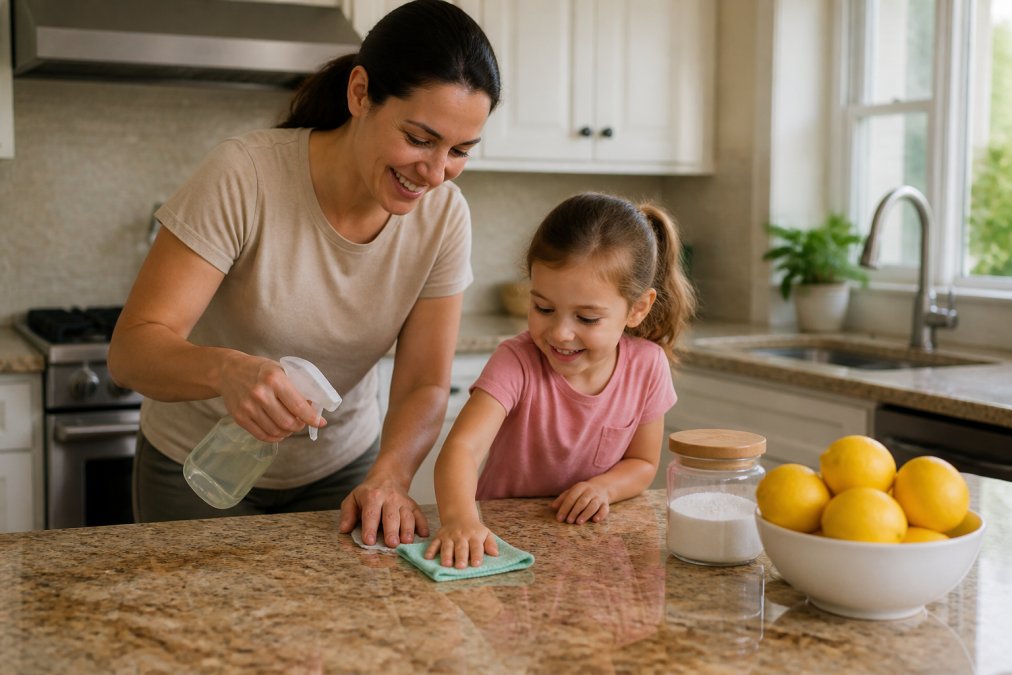
These five alternatives are safe enough for children to be nearby during use, effective enough for real household grime, and affordable enough to replace most of what’s under your sink.
1. Baking Soda: The Mild Abrasive That Does Heavy Work
Baking soda (sodium bicarbonate) is a food-safe, alkaline powder that acts as a mild abrasive, deodorizer, and grease-cutting agent without synthetic chemicals.
Its scrubbing power comes from its gritty texture, which lifts stains and grime without scratching most surfaces. The alkaline pH helps break down fatty acids in grease, making it useful for stovetops, sinks, and oven interiors. As a natural deodorizer, it absorbs odors rather than masking them.
Best uses: Sink and tub scrubbing, stovetop grime, refrigerator odors, carpet deodorizing, toilet bowl cleaning when combined with vinegar.
Surface warning: Baking soda is safe on porcelain, stainless steel, ceramic tile, and most sealed surfaces. Avoid using it on aluminum cookware, as the alkalinity can cause discoloration over time.
Pros:
- Extremely affordable and available at every grocery store
- Non-toxic and food-safe, safe for use around children and pets
- Versatile across dozens of cleaning applications
Cons:
- Not a disinfectant on its own
- Requires mixing or pairing with other ingredients for most tasks
For tough oven grime, spread a thick paste of baking soda and water across the interior surfaces, leave it overnight, then wipe away with a damp cloth.
2. Distilled White Vinegar for Glass and Hard Surfaces
Distilled white vinegar diluted with water is one of the most effective glass cleaners available, costing a fraction of commercial options. Vinegar’s acetic acid content dissolves mineral deposits, hard water stains, and soap scum. A standard dilution ratio of one part vinegar to one part water works for most applications.
Best uses: Windows, mirrors, glass shower doors, chrome fixtures, countertops (sealed surfaces only), and coffee maker descaling.
Surface compatibility warning: Vinegar’s acidity makes it unsuitable for natural stone surfaces like granite, marble, and travertine. It will etch the surface over time. It’s also not recommended for cast iron, waxed wood floors, or unsealed grout.
Pros:
- Streak-free results on glass when properly diluted
- Effective against mineral deposits and hard water stains
- Natural antifungal and antibacterial properties
Cons:
- Strong odor during use (dissipates as it dries)
- Damaging to natural stone, cast iron, and some wood finishes
3. Castile Soap for Multi-Purpose Cleaning
Castile soap is a plant-based, biodegradable soap made from vegetable oils with no synthetic preservatives or detergents. Dr. Bronner’s Pure-Castile Liquid Soap is the most widely recognized product in this category. A common dilution for general surface cleaning is one tablespoon of castile soap per quart of water.
What makes castile soap useful for families is its hypoallergenic profile. It’s free from synthetic fragrances and harsh surfactants that trigger skin reactions, making it safe for households with sensitive skin or chemical sensitivities.
Best uses: Floor mopping, dish washing, bathroom surfaces, laundry pre-treatment, general countertop cleaning.
Pros:
- Organic and fair trade ingredients in leading products
- Gentle on skin, safe for babies when properly diluted
- Truly biodegradable and environmentally friendly
Cons:
- Requires dilution; the concentrate is too strong for most surfaces
- Can leave a film on glass if not rinsed
Never mix castile soap and vinegar in the same spray bottle. The acid in vinegar breaks down the soap’s surfactants, leaving you with a greasy, ineffective liquid. Use vinegar for glass and mineral deposits; use castile soap for general surface cleaning.
4. Lemon Juice for Natural Bleaching and Fresh Scent
Lemon juice’s citric acid content gives it mild bleaching properties, making it effective for whitening grout, brightening cutting boards, and removing light rust stains. The scent leaves surfaces smelling clean without synthetic fragrance, which matters for households managing asthma or fragrance sensitivities.
Best uses: Cutting board sanitizing and deodorizing, grout brightening, copper and brass polishing, microwave interior cleaning.
Surface warning: Like vinegar, lemon juice is acidic and will damage natural stone surfaces. Keep it away from marble, granite, and travertine. It can also bleach colored fabrics if left in contact too long.
Pros:
- Natural bleaching action without chlorine
- Pleasant, non-synthetic scent
- Effective on copper, brass, and light rust
Cons:
- Weaker cleaning action than vinegar for mineral deposits
- Shorter shelf life than other ingredients
5. Plant-Based Concentrate Systems with Refillable Bottles
Plant-based concentrate systems let you buy one product and dilute it into multiple cleaners, dramatically reducing plastic waste and household clutter.
Branch Basics Concentrate is a fragrance-free, non-GMO, biodegradable concentrate that dilutes into an all-purpose cleaner, streak-free spray, bathroom cleaner, laundry solution, and floor cleaner from a single bottle. It comes with labeled refillable bottles for each application.
Blueland’s Clean Essentials Kit uses dissolvable cleaning tablets that you add to water in a reusable bottle. The tablets are compact, low-waste, and non-toxic, eliminating single-use plastic entirely.
| System | Format | Best For | Refillable | Key Benefit |
|---|---|---|---|---|
| Branch Basics | Liquid concentrate | Sensitive families | Yes | One concentrate, multiple cleaners |
| Blueland | Dissolvable tablets | Zero-waste households | Yes | No single-use plastic |
| DIY (vinegar + baking soda) | Pantry staples | Budget-focused families | Yes (your own bottles) | Lowest cost, maximum control |
Plant-based concentrate systems are the best choice for families who want a complete eco-friendly cleaning system without the guesswork of DIY recipes, especially those with multiple chemical sensitivities.
DIY Natural Cleaning Recipes You Can Make Today
These three recipes cover the cleaning tasks most families encounter weekly.
All-Purpose Spray
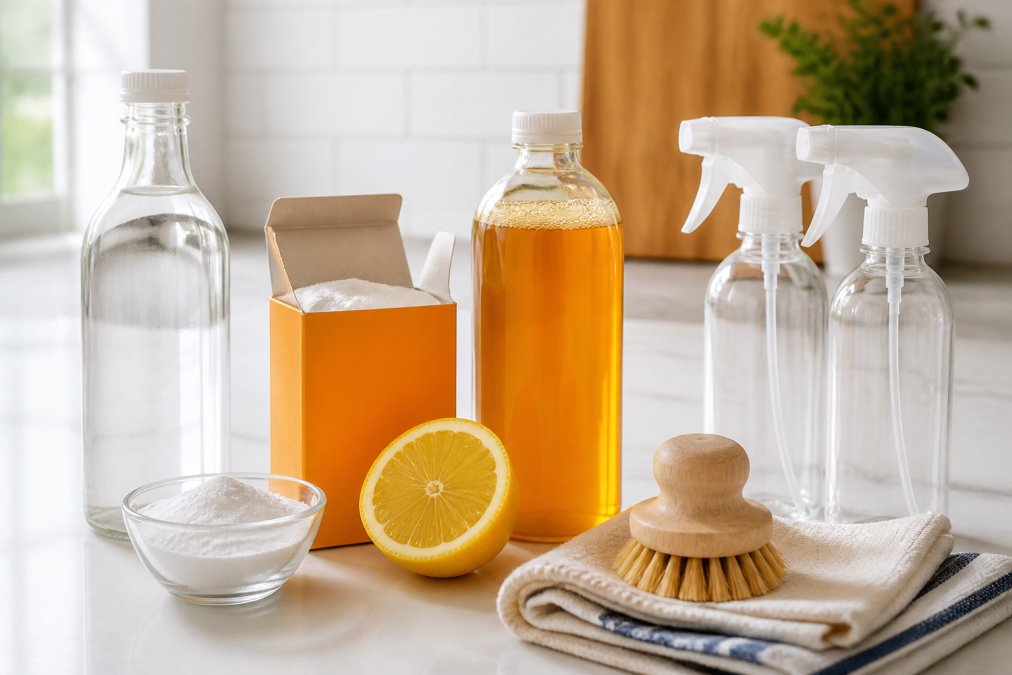
This recipe handles countertops, appliance exteriors, bathroom surfaces, and most hard surfaces in the home.
Ingredients:
- 1 cup distilled white vinegar
- 1 cup water
- 15 drops tea tree or lavender essential oils (optional)
Instructions: Combine in a labeled glass or BPA-free spray bottle. Shake gently before each use. Apply, let sit for 30 seconds, then wipe with a reusable microfiber cloth.
Do not use on: Natural stone, cast iron, waxed wood floors, or unsealed grout.
Scrubbing Paste for Sinks and Tubs
This paste handles soap scum, rust rings, and stained grout without scratching porcelain or ceramic.
Ingredients:
- 1/2 cup baking soda
- Enough liquid castile soap to form a thick paste (approximately 2-3 tablespoons)
- 10 drops lemon essential oil (optional)
Instructions: Mix in a small bowl. Apply with a damp sponge or cloth. Scrub in circular motions, then rinse thoroughly with warm water. Make fresh each time.
Streak-Free Glass Cleaner
Ingredients:
- 2 cups distilled white vinegar
- 2 cups water
- 1/2 teaspoon liquid castile soap
Instructions: Combine in a spray bottle. Spray onto glass, wipe with a lint-free cloth or crumpled newspaper in circular motions. Label clearly and keep separate from your all-purpose spray.
Surface Compatibility Warnings and Storage Safety
Surfaces where natural cleaners cause damage:
- Natural stone (granite, marble, travertine, slate): Both vinegar and lemon juice will etch these surfaces. Use only pH-neutral castile soap diluted in water.
- Cast iron cookware: Vinegar’s acidity strips the seasoning. Clean with hot water and a stiff brush only.
- Waxed or oiled wood floors: Vinegar degrades the wax finish. Use diluted castile soap instead.
- Aluminum: Baking soda’s alkalinity can discolor aluminum surfaces.
- Unsealed grout: Acidic cleaners can weaken it over time.
Storage and shelf-life safety:
- All-purpose vinegar spray: stable for up to 2 weeks
- Baking soda paste: mix fresh each time
- Castile soap dilutions: use within 1-2 weeks
- Lemon juice solutions: use within 24-48 hours
- Essential oil blends: stable for 6 months in dark glass bottles
Label every bottle with contents and date mixed. Store all cleaning solutions out of reach of children.
Eco-Friendly Cleaning for Allergy and Asthma Households
Many commercial cleaners contain synthetic fragrances and volatile organic compounds that directly irritate airways. Switching to chemical-free, fragrance-free alternatives removes one of the most common indoor triggers. According to the Asthma and Allergy Foundation of America’s guidance on indoor triggers, fragrances and cleaning product chemicals rank among the most frequently reported asthma triggers in household environments.
Specific recommendations for allergy and asthma households:
- Choose fragrance-free castile soap and fragrance-free concentrate systems
- Use HEPA-filter vacuums before wet cleaning to capture allergens
- Ventilate rooms during and after cleaning; open windows for at least 15 minutes
- Avoid mixing any cleaning ingredients in enclosed spaces
- Wash reusable cleaning cloths in hot water after each use
The EPA Safer Choice program is a useful filter for families in this situation. Products carrying the Safer Choice label have been reviewed for safety to human health and the environment, including assessment of fragrance components.
EPA Safer Choice Label Explained: What to Look For
The EPA Safer Choice label identifies cleaning products formulated with ingredients that are safer for human health and the environment. Every ingredient must be evaluated against EPA’s Safer Chemical Ingredients List, assessing not just acute toxicity but also chronic health effects, environmental persistence, and aquatic toxicity.
According to the EPA Safer Choice program overview, the label covers more than 2,000 products across cleaning, laundry, and personal care categories.
What the label tells you:
- Ingredients have been screened for health and environmental safety
- Fragrance components have been reviewed
- The product meets minimum performance standards
What it doesn’t guarantee:
- The label doesn’t mean a product is 100% fragrance-free
- It doesn’t replace surface compatibility testing for your specific materials
For families building an eco-conscious cleaning routine, the Safer Choice label is a reliable starting point for evaluating commercial products beyond what DIY recipes can provide, particularly for disinfection tasks.
DIY vs. Refillable Products: A Practical Cost Comparison
DIY approach: A large box of baking soda, a gallon of distilled white vinegar, and a bottle of castile soap covers most household cleaning needs for multiple months. You’ll need reusable spray bottles, a one-time expense.
Refillable concentrate systems: Branch Basics and Blueland require a higher initial investment for starter kits. The ongoing refill cost is lower per cleaning session than buying individual conventional products, but the break-even point takes several months.
Conventional products: Buying separate all-purpose cleaner, glass cleaner, bathroom cleaner, and scrubbing powder adds up quickly with almost entirely single-use plastic packaging.
| Approach | Upfront Cost | Ongoing Cost | Plastic Waste | Best For |
|---|---|---|---|---|
| DIY (pantry staples) | Very low | Very low | Minimal (reuse bottles) | Budget-focused, hands-on families |
| Plant-based concentrate | Moderate | Low | Very low (refillable) | Families wanting a complete system |
| Conventional products | Low per item | High over time | High | Convenience over sustainability |
The real cost advantage of DIY cleaning is the reduction in products you need to buy, store, and dispose of. Families who commit to a core set of three or four natural ingredients typically spend less annually than they did on a cabinet full of single-use commercial cleaners.
The most sustainable cleaning routine is the one you’ll actually maintain. For many families, a hybrid approach works best: DIY recipes for everyday tasks, a plant-based concentrate system for convenience, and EPA Safer Choice products for disinfection when needed.
For families who want the benefits of green cleaning without the time investment of mixing their own solutions, professional cleaning services that offer green product options are worth considering. North Shore Maids offers green cleaning products upon request, giving clients the option of a professionally cleaned home without conventional chemical exposure. With nearly two decades of experience and a bonded and insured team, it’s a practical alternative for households where time is the real constraint.
As the American Lung Association’s guidance on cleaning products and lung health notes, reducing exposure to harsh cleaning chemicals is one of the most actionable steps families can take to improve indoor respiratory health, whether they clean themselves or hire professionals who use safer products.
| Ingredient | Primary Use | Surface Warning | Shelf Life (DIY) |
|---|---|---|---|
| Baking soda | Scrubbing, deodorizing | Avoid aluminum | Mix fresh each time |
| Distilled white vinegar | Glass, mineral deposits | Avoid natural stone, cast iron | 2 weeks |
| Castile soap | Multi-purpose, floors, dishes | Avoid mixing with vinegar | 1-2 weeks diluted |
| Lemon juice | Brightening, deodorizing | Avoid natural stone, colored fabrics | 24-48 hours |
| Plant-based concentrate | Full-home cleaning system | Check product label | Per product instructions |
Frequently Asked Questions
Are homemade natural cleaners as effective as store-bought products?
For everyday dirt, grease, and odors, DIY eco-friendly cleaners made from baking soda, vinegar, and castile soap perform comparably to most conventional all-purpose sprays. The gap shows up with disinfection: vinegar reduces some bacteria but does not meet EPA disinfectant standards. For surfaces that need certified germ-killing action, look for store-bought plant-based options carrying the EPA Safer Choice label, such as those using thymol as the active botanical disinfectant.
What ingredients should I avoid in household cleaning products?
Avoid products containing synthetic fragrances, ammonia, chlorine bleach, and volatile organic compounds (VOCs). These chemicals off-gas into your indoor air, irritate airways, and can trigger allergy or asthma flare-ups. Phthalates, often hidden under the label 'fragrance,' are also worth avoiding around children. Instead, choose fragrance-free or essential-oil-scented formulas that list every ingredient, or look for the EPA Safer Choice certification, which screens each ingredient for human and environmental safety.
Are eco-friendly cleaning products safe for pets and children?
Most plant-based, biodegradable cleaners are significantly safer than conventional products for kids and pets, particularly when they are fragrance-free and free from harsh surfactants. Castile soap, diluted vinegar, and baking soda are all low-toxicity options. Always allow surfaces to dry before children or pets contact them, and keep any concentrate, even natural ones, stored out of reach. For households with very young children or pets that lick surfaces, fragrance-free and pH-neutral formulas are the safest choice.
How do I transition to a zero-waste cleaning routine?
Start by replacing one product at a time rather than overhauling everything at once. Swap paper towels for reusable microfiber cloths, then replace your all-purpose spray with a DIY vinegar-and-castile-soap solution in a refillable glass bottle. When existing products run out, replace them with concentrate-based or tablet-based systems that eliminate single-use plastic. Storing bulk baking soda and white vinegar cuts packaging waste further and costs less per use than most conventional cleaners.
Can I deep clean my home without harsh chemicals?
Yes. A baking soda paste handles soap scum and oven grime through mild abrasive action. A 1:1 vinegar-and-water solution cuts through hard water deposits and leaves glass streak-free. Castile soap diluted in warm water cleans floors, counters, and bathroom fixtures effectively. For disinfection, plant-based products using thymol or hypochlorous acid kill 99.9% of common household germs without bleach or ammonia. Pairing these with reusable tools and good ventilation gives you a thorough clean with no harsh chemical exposure.
Switching to eco-friendly cleaning is straightforward in principle but easy to get wrong without the right information on surface compatibility and storage. North Shore Maids provides green cleaning products upon request as part of its flexible service plans, backed by nearly two decades of experience and a satisfaction guarantee. If you’d rather leave the cleaning to a bonded and insured team that takes indoor air quality seriously, request a free quote and let us handle it.
This article was written using GrandRanker