
Table of Contents
- Is Deep House Cleaning Worth It for Move Out? The Short Answer
- Deep Cleaning vs Basic Cleaning: What the Extra Cost Actually Buys
- Professional Move-Out Cleaning Cost: What Drives the Price
- Your Move-Out Cleaning Checklist: What Landlords Actually Inspect
- DIY Move-Out Cleaning: Time, Supplies, and the Real Trade-Off
- Move-Out Cleaning Time: How Long a Deep Clean Really Takes
- How to Decide: A Framework Based on Your Home and Lease
- Frequently Asked Questions
Last Updated: October 13, 2026
Is Deep House Cleaning Worth It for Move Out? The Short Answer
For most renters, deep house cleaning is worth it for move out because it protects the security deposit and removes the burden of a task that can take days to finish alone.
A deep clean goes further than a basic one. It targets the grime that builds up over months: inside appliances, behind fixtures, and along baseboards.
The stakes are real. Deposit deductions for cleaning are one of the most common disputes between tenants and landlords, and many leases spell out specific cleaning expectations in writing.
Deep Cleaning vs Basic Cleaning: What the Extra Cost Actually Buys
Deep cleaning costs more than basic cleaning because it covers surfaces and fixtures that a routine clean skips. The difference is scope, not effort.
Basic cleaning is maintenance work. It covers the surfaces a household touches every week: vacuuming floors, wiping counters, cleaning toilets and sinks, dusting open surfaces, and taking out trash. A basic clean keeps a lived-in home presentable.
Deep cleaning resets a space. It adds the tasks that only come up occasionally:
- Inside the oven, refrigerator, and microwave
- Inside cabinets, drawers, and closets
- Baseboards, door frames, and window sills
Where Basic Cleaning Stops and Deep Cleaning Starts
The dividing line is buildup. If a surface has accumulated dirt, grease, or residue over time, it falls into deep-cleaning territory. Basic cleaning maintains a home that is already reasonably clean. Deep cleaning restores a home that has seen months or years of regular use.
For a move-out, the inspection standard is closer to deep cleaning than basic cleaning. A landlord compares the unit against how it looked at move-in, not against a weekly tidy.
Professional Move-Out Cleaning Cost: What Drives the Price
Professional move-out cleaning cost depends on the size of the home, its condition, and any add-on tasks requested. There is no single flat rate, and quotes vary by provider, region, and season. What matters for your decision is understanding which levers move the number, so you can sanity-check any quote you receive.
Pricing factors that most cleaning companies weigh:
- Square footage: Larger homes take more labor and time. Cost scales with the size of the space, though not perfectly linearly, a second bathroom adds more than an extra 200 square feet of open floor.
- Condition: A home with heavy buildup, pet hair, or grease takes longer than one that was maintained regularly. This is often the single biggest swing factor.
- Add-ons: Inside-oven, inside-fridge, inside-cabinet, and garage cleaning are frequently priced separately rather than bundled.
How Quotes Are Usually Structured
Most providers build a quote from a base rate tied to bedroom and bathroom count, then layer add-ons on top. A common pattern is a per-room base plus flat fees for high-labor items like oven interiors, refrigerator interiors, and interior windows. Some companies quote a flat rate after a walkthrough or a photo review; others quote hourly with an estimated range.
When you request an estimate, ask specifically:
- Is the quote flat-rate or hourly, and what happens if the job runs long?
- Which items are included versus priced as add-ons?
- Is there a trip charge or a minimum booking fee?
- What is the cancellation and rescheduling policy if your move date shifts?
- Does the price include supplies and equipment, or is there a separate charge?
Why Regional Rates Vary So Much
Labor costs, local demand, and the age and density of the housing stock all push rates up or down. Older buildings with original tile, cast-iron fixtures, and painted trim take longer to clean than newer construction with smooth surfaces. Dense metro areas with high turnover tend to command higher rates than rural markets. Because of this spread, a generic national range is close to useless for budgeting, a specific quote for your unit is the only reliable number.
The most useful thing you can do is get two or three itemized quotes for your exact unit, then compare them line by line rather than on the bottom-line total. A cheaper quote that excludes the oven and fridge is not actually cheaper.
Because rates vary so widely by region and provider, the most reliable step is to request a free estimate. North Shore Maids provides free estimates and flexible package plans, so renters can get a specific number for their unit rather than guessing from a generic range.
Your Move-Out Cleaning Checklist: What Landlords Actually Inspect
A move-out cleaning checklist should cover every surface a landlord will look at during the inspection. Most inspections focus on the kitchen, bathrooms, and the areas that show wear.
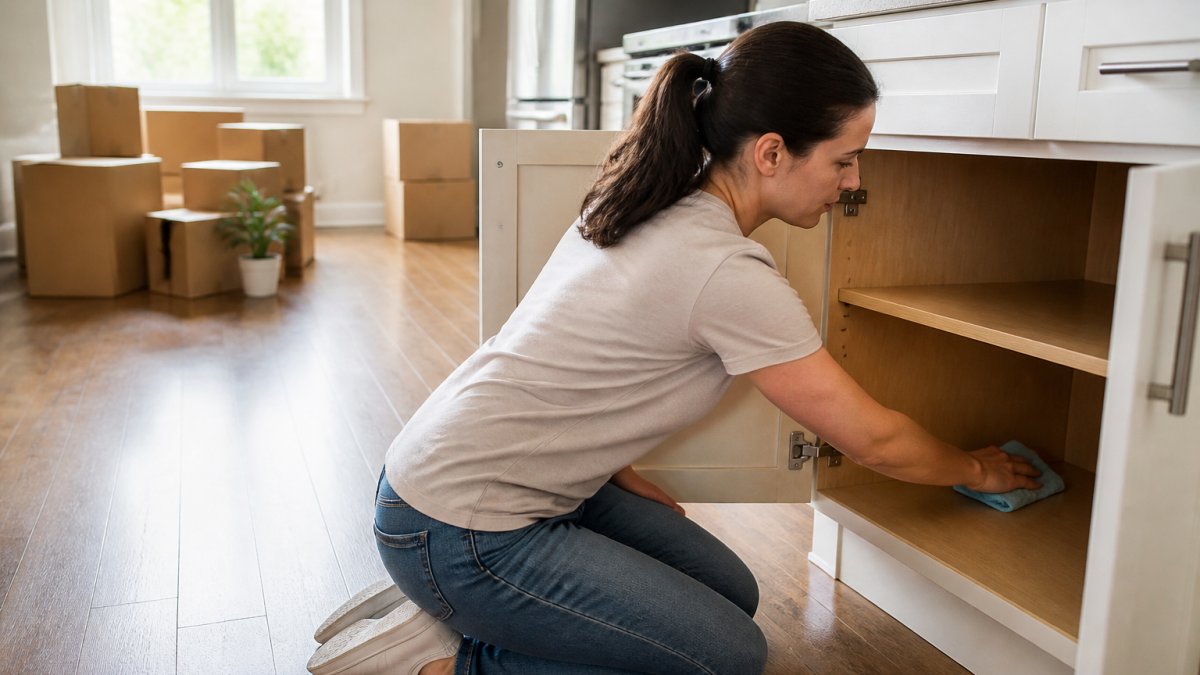
The checklist below reflects the areas that most commonly appear in lease cleaning clauses and inspection reports:
- Oven interior, racks, and door glass
- Refrigerator interior, shelves, and freezer
- Microwave interior and exterior
Skipping the oven or refrigerator interior is one of the most common reasons a deposit gets docked. These two items appear on nearly every move-out inspection, and they are the hardest to clean after the fact.
DIY Move-Out Cleaning: Time, Supplies, and the Real Trade-Off
DIY move-out cleaning saves the service fee but costs time, supplies, and energy during an already busy move. The trade-off is worth examining honestly.
Cleaning a home for move-out is not a one-afternoon job. It involves the same tasks a professional team performs, but without the equipment, supplies, or practice.
A realistic DIY supply list includes:
- All-purpose cleaner and degreaser
- Bathroom cleaner and grout brush
- Glass cleaner
The hidden cost is opportunity. Every hour spent scrubbing is an hour not spent packing, coordinating movers, or resting before a workday.
Move-Out Cleaning Time: How Long a Deep Clean Really Takes
Move-out cleaning time varies with the size and condition of the home, but a deep clean of an empty unit typically takes several hours to a full day for a professional team. Doing it alone usually stretches across multiple days.
The table below gives a rough sense of how scope and condition affect the effort required:
| Scenario | Typical Effort | Main Time Drivers |
|---|---|---|
| Small, well-maintained apartment | Half a day or less | Few add-ons, light buildup |
| Average apartment, some buildup | Most of a day | Oven, fridge, and bathroom grout |
| Larger home with heavy buildup | A full day or more | Square footage, grease, pet hair |
| Home with add-ons requested | Adds hours on top | Inside cabinets, garage, windows |
Condition matters more than size in many cases. A neglected kitchen can take longer than an entire bedroom wing that was kept clean.
Book the clean for after the home is fully empty but before the final walkthrough. Cleaning around furniture leaves the exact spots inspectors check, like the floor under the refrigerator, untouched.
How to Decide: A Framework Based on Your Home and Lease
The keyword question, is deep cleaning worth it for move out, is really a cost-versus-value question. Answer it by comparing three numbers: what the clean costs, what your time is worth, and what you stand to lose from the deposit. Most renters never run this comparison explicitly, which is why the decision feels arbitrary.
Step 1: Read Your Lease Before You Decide Anything
Lease language controls what you are actually required to do. Look for phrases like “professionally cleaned,” “returned to the condition at move-in,” or “normal wear and tear excepted.” These are not interchangeable:
- “Professionally cleaned” usually means the landlord can require a receipt from a licensed or insured service. If your lease says this, DIY may not satisfy the clause regardless of how clean the unit is.
- “Condition at move-in” means you are compared against your documented move-in state, not a showroom standard. Your move-in checklist and photos are your defense here.
- “Normal wear and tear excepted” is the phrase that protects you. Scuffed paint, worn carpet in traffic paths, and faded grout are typically wear and tear, not cleaning failures.
If your lease is silent on professional cleaning, you are generally held to a reasonable-cleanliness standard, and a thorough DIY clean can satisfy it.
Step 2: Score Your Home’s Condition
Condition drives both the price of a professional clean and the difficulty of doing it yourself. Use this rough scoring:
- Light: Lived in for under a year, no pets, cleaned regularly. A basic clean likely suffices.
- Moderate: One to three years of tenancy, some kitchen grease, bathroom soap scum, dust on baseboards. A deep clean is usually worth it.
- Heavy: Long tenancy, pets, smoking, or deferred cleaning. DIY is impractical; hire a deep clean.
Step 3: Compare the Three Costs
Put the numbers side by side:
| Factor | DIY | Professional Deep Clean |
|---|---|---|
| Out-of-pocket cost | Supplies only | Service fee |
| Time cost | Several days around packing and moving | Zero, you hand off the task |
| Risk of missed items | Higher, no checklist discipline | Lower, crews work from a standard scope |
| Documentation for deposit | Photos only | Receipt plus photos |
| Physical toll | High during an already exhausting move | None |
The trade-off usually tips toward hiring when the deposit at risk is meaningfully larger than the cleaning fee, when the lease requires professional cleaning, or when your schedule is already saturated with moving tasks. It tips toward DIY when the unit is small, lightly used, and the lease is lenient.
Step 4: Protect the Deposit Either Way
Whether you clean it yourself or hire out, documentation is what wins deposit disputes. Do this regardless of which path you choose:
- Photograph every room, appliance interior, and closet after cleaning, with timestamps.
- Keep your move-in inspection report and move-in photos handy for comparison.
- If you hire a service, keep the itemized receipt and the provider’s contact information.
A verbal “it looks fine” at the walkthrough is not proof. Deposit deductions are frequently upheld when the tenant has no dated photos or receipts. Build the paper trail before you hand back the keys.
For renters who want documentation, a professional service can provide a receipt that shows the work was done. That receipt is useful if a landlord later questions the condition of the unit.
North Shore Maids serves renters and homeowners across Essex County with deep local knowledge of the area’s housing stock, from older buildings to newer units. The team is bonded and insured, and green cleaning products are available on request.
Frequently Asked Questions
What does a move-out deep cleaning include that a standard clean does not?
A deep clean for move-out goes past surface work. It typically covers inside cabinets, closets, and appliances such as the oven and refrigerator, plus baseboards, window tracks, vents, and areas behind and under furniture once the home is empty. Standard cleaning usually handles floors, counters, bathrooms, and visible surfaces only. Because the home is vacant, a deep clean can reach built-up residue and grime that routine visits skip. Confirm the exact scope in writing before you book, since inclusions vary by provider.
Is a professional move-out cleaning worth the cost?
It depends on your lease, the condition of the home, and what your time is worth. If your lease requires professional cleaning or your deposit is larger than the cleaning bill, hiring out usually makes financial sense. If your home is already close to spotless, a DIY effort may be enough.
How long does it take to deep clean a house before moving out?
Move-out cleaning time varies with size and condition. A small apartment in good shape might take one person four to six hours, while a larger home with heavy buildup can run a full day or more, especially once you factor in appliances, cabinets, and floors. Professional teams work faster because they arrive with the right supplies and split tasks. If you are cleaning alone while also packing and coordinating movers, plan for it to take longer than you expect.
Can a move-out cleaning help me get my security deposit back?
It can reduce the odds of deductions tied to cleanliness, but it does not guarantee a full refund. Landlords typically compare the home’s condition at move-out to its condition at move-in, minus normal wear. A thorough deep clean addresses the dirt, grime, and built-up residue that show up during a move-out inspection. Keep your receipt and take dated photos after cleaning so you have proof if a dispute arises over the deposit.
Should I hire a cleaner before moving out or clean the home myself?
Hiring makes sense when your lease requires professional cleaning, your schedule is packed with packing and moving tasks, or the home has heavy buildup in kitchens and bathrooms. DIY move-out cleaning works if you have time, the right supplies, and a home that is already fairly clean. Weigh the hours you would spend against your hourly wage and the deposit at risk.
Moving out is stressful enough without spending days scrubbing an empty home. A professional move-out clean removes that burden and gives renters a documented, inspection-ready result. North Shore Maids offers nearly two decades of experience, a satisfaction guarantee, and flexible package plans for one-time or ongoing needs. Request a free estimate from North Shore Maids and hand back a clean home with confidence.