
Table of Contents
- What Is Residential Cleaning?
- Standard vs Deep Cleaning Checklist
- What Is NOT Included in a Standard Clean
- How to Prepare Your Home for Cleaning Service
- Average Cost of Residential Cleaning
- Choosing the Right Cleaning Plan for Your Needs
- Frequently Asked Questions
Last Updated: September 19, 2026
What Is Residential Cleaning?
Residential cleaning is the professional service of maintaining a home or apartment by removing dust, dirt, allergens, and clutter from living spaces. It focuses on the areas and surfaces residents interact with daily: kitchens, bathrooms, bedrooms, living rooms, and floors. The goal is to create a sanitized, organized environment without requiring the homeowner to perform the labor themselves.
Many busy professionals and families turn to residential cleaning services to reclaim time for work, family, and personal priorities. What separates a standard residential cleaning from a deep clean comes down to scope and frequency. Standard cleanings address visible dirt and high-touch surfaces on a recurring basis, while deep cleanings tackle neglected areas and hidden spaces that accumulate dust and allergens over months.
North Shore Maids provides residential cleaning services tailored to individual household needs, offering flexible weekly, bi-weekly, monthly, or seasonal plans. Understanding what’s included in each service type helps homeowners choose the right plan and set realistic expectations before their first appointment.
Standard vs Deep Cleaning Checklist
Standard residential cleaning focuses on maintaining your home’s everyday cleanliness and hygiene. These recurring services keep surfaces sanitized, floors clear of debris, and bathrooms functional. Deep cleaning, by contrast, targets areas that don’t need attention during standard visits and tackles buildup that accumulates over time.
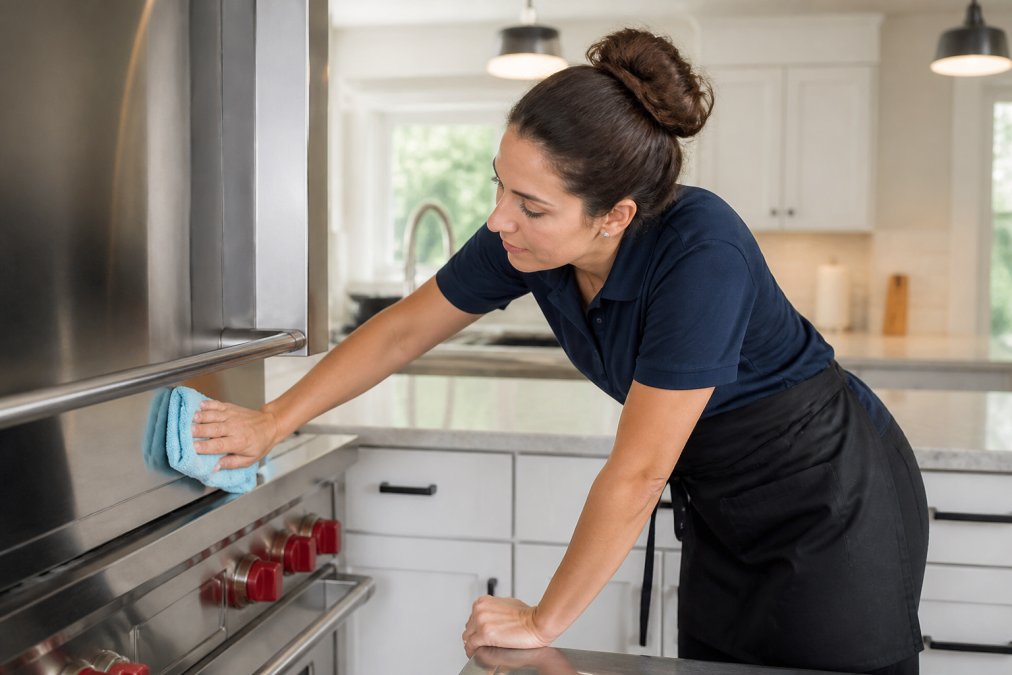
Standard Cleaning Tasks
A standard residential cleaning typically includes these core tasks performed during each visit:
- Kitchen: Wiping countertops, cleaning sink fixtures, wiping down appliance exteriors, and clearing visible clutter from surfaces
- Bathrooms: Sanitizing toilets, tubs, and showers; wiping mirrors and fixtures; and mopping floors
- Living areas: Dusting surfaces, vacuuming upholstered furniture, and tidying common spaces
- Bedrooms: Dusting nightstands and dressers, vacuuming floors, and changing bed linens (if included in the plan)
- Floors: Vacuuming carpeted areas and mopping hard floors to remove dust and debris
- Trash removal: Emptying trash cans throughout the home
These tasks address high-touch surfaces and visible dirt that accumulate between visits. Standard residential cleaning keeps your home looking presentable and maintains basic hygiene standards without requiring deep intervention into neglected spaces.
Deep Cleaning Tasks
Deep cleaning goes beyond standard maintenance. These services are typically offered as one-time projects or less frequent (quarterly or semi-annual) additions to a regular plan. Deep cleaning includes:
- Inside cabinets and drawers: Removing items, wiping interiors, and reorganizing contents
- Baseboards and trim: Detailed wiping of baseboards, door frames, and crown molding to remove dust buildup
- Interior appliances: Cleaning inside the refrigerator, oven, microwave, and dishwasher
- Cobweb removal: Clearing cobwebs from corners, ceiling fans, and light fixtures
- Under furniture: Moving and cleaning beneath beds, sofas, and other large pieces
- Window cleaning: Washing windows, sills, and frames inside and out
- Upholstery deep clean: Detailed cleaning of fabric furniture to remove dust mites and allergen buildup
- Carpet shampooing: Deep cleaning carpets beyond regular vacuuming
Deep cleaning addresses allergen reduction and tackles areas that standard cleanings don’t reach.
Schedule a deep clean every 6-12 months to prevent dust mite and allergen accumulation. If household members have allergies or respiratory sensitivities, quarterly deep cleaning can significantly improve indoor air quality.
What Is NOT Included in a Standard Clean
Understanding boundaries prevents misunderstandings about service scope. Standard residential cleaning does not typically include:
- Interior appliance cleaning: The insides of ovens, refrigerators, or dishwashers require separate deep cleaning services
- Laundry or linen washing: While some services change bed linens, washing and folding laundry is usually an add-on
- Pet cleanup: Removing pet waste, bathing animals, or detailed pet-related odor removal falls outside standard scope
- Yard work or exterior cleaning: Landscaping, pressure washing, or gutter cleaning are outside residential cleaning
- Organizing or decluttering: Moving items, organizing closets, or arranging spaces goes beyond cleaning
- Repairs or maintenance: Fixing broken fixtures or addressing plumbing issues is not part of cleaning service
- Specialized treatments: Mold remediation, pest control, or biohazard cleanup requires specialized contractors
Cleaning Supplies: Who Provides What?
Cleaner-provided supplies are standard for most professional residential cleaning services. The cleaning team brings their own EPA-registered disinfectants, microfiber cloths, vacuums, mops, and equipment. This approach ensures:
-
Consistent quality and product safety across all visits
-
No need for homeowners to purchase or store cleaning chemicals
-
Professional-grade products that are more effective than consumer alternatives
-
Liability protection, the cleaner uses products they know and trust
-
Budget-conscious or discount cleaning services may ask you to supply basic cleaners
-
Specialized requests (e.g., “only use vinegar-based products”) may require you to provide approved alternatives
-
Some services offer a discount if you supply your own materials
-
Whether the cleaner’s standard products are pet-safe (many are, but some disinfectants can be harmful to animals)
-
Whether pet hair removal requires specialized equipment or additional time
-
If enzymatic cleaners for pet accidents are included or cost extra
-
Whether the cleaner can safely navigate around pet gates, toys, or sensitive areas
Assuming laundry, pet care, organizing, or supply provision is included in standard service often leads to disappointment. Confirm the exact scope and supply ownership in writing before scheduling to avoid service gaps and unexpected costs.
How to Prepare Your Home for Cleaning Service
Proper preparation maximizes cleaning efficiency and ensures the service team can focus on actual cleaning rather than moving clutter. Homeowners should:
- Clear surfaces: Remove personal items, mail, toys, and clutter from countertops, tables, and floors
- Secure valuables: Lock away jewelry, important documents, and electronics in a safe location
- Communicate access: Provide clear instructions for entry, alarm codes, and any pets that need containment
- Note specific concerns: Point out areas needing extra attention, such as high-traffic zones or problem spots
- Remove obstacles: Ensure hallways and stairs are clear so cleaners can move safely and efficiently
- Disclose hazards: Inform the team about loose rugs, fragile items, or areas with limited access
Liability, Insurance, and Damage Protection
Before inviting a cleaning service into your home, understanding liability and insurance protections is essential for peace of mind. This is one of the most important, and often overlooked, aspects of hiring professional cleaners.
What happens if something breaks?
- Broken items (lamps, mirrors, decorative pieces)
- Damage to surfaces (scratched countertops, stained upholstery)
- Water damage from equipment malfunction
- Accidental spills or stains caused by cleaning products
Before hiring, verify:
- The service carries current general liability insurance (ask for a certificate of insurance)
- The coverage amount is adequate for your home’s contents (typically $300,000-$1 million)
- The policy covers employee negligence, not just accidents
- You are listed as an additional insured on the policy if required
What if something goes missing?
- The company has undergone background checks on all employees
- A surety bond is in place to reimburse you for theft up to a specified amount (often $5,000-$25,000 per incident)
- You have a clear claims process if theft occurs
Before hiring, ask:
- Is the company bonded? (Request proof)
- What is the bond coverage amount?
- What is the process for filing a theft claim?
- How long does the company retain employee records?
Your responsibility:
- Secure high-value items (jewelry, cash, electronics, important documents) in a locked safe or drawer
- Don’t leave credit cards, passwords, or personal information visible
- Provide a list of any fragile or valuable items the cleaner should handle with extra care
- Document your home’s condition with photos before the first visit (optional but helpful)
If damage occurs:
- Document immediately: Take photos or video of the damage
- Report promptly: Notify the cleaning service within 24 hours
- Provide evidence: Share photos and a detailed description of what happened
- File a claim: The service will file a claim with their insurance carrier
- Follow up: Expect resolution within 2-4 weeks, depending on the insurance company
Always verify that your cleaning service carries general liability insurance and is bonded. Request proof before your first appointment. This protects you if accidental damage occurs and ensures the company takes accountability seriously.
Average Cost of Residential Cleaning
Residential cleaning pricing varies based on home size, frequency of service, and local market conditions. Factors affecting cost include:
- Square footage: Larger homes require more time and labor
- Service frequency: Weekly service typically costs less per visit than one-time deep cleans
- Add-on services: Pet cleanup, laundry, or interior appliance cleaning increase the price
- Regional location: Urban areas and affluent neighborhoods often have higher rates than rural areas
- Cleaning condition: Homes requiring extra attention due to heavy soiling may incur additional charges
Pricing depends on home size, service frequency, and add-ons. Request a free estimate to get accurate numbers for your specific situation rather than relying on generic averages.
Choosing the Right Cleaning Plan for Your Needs
Weekly cleaning suits busy professionals and families who want consistent maintenance and minimal buildup. Homes stay constantly ready for guests or family activities. This frequency works well for larger households with multiple occupants or those with pets.
Frequently Asked Questions
What’s the difference between standard cleaning and deep cleaning?
Standard residential cleaning covers high-touch surfaces, dusting, vacuuming, mopping, and bathroom sanitizing on a regular basis. Deep cleaning includes scrubbing baseboards, inside cabinets, under furniture, and detailed polishing of fixtures. Deep cleaning typically takes longer and addresses areas not covered in standard service. Most households benefit from standard cleaning weekly or bi-weekly, with deep cleaning quarterly or annually.
How should I prepare my home for a cleaning service?
Clear clutter from surfaces, floors, and furniture so cleaners can access all areas efficiently. Secure valuables and pets in a safe space. Leave a key or ensure access if you won’t be home. Communicate any specific areas needing attention, like baseboards or appliance exteriors. Removing personal items also protects your belongings and speeds up the cleaning process.
What does a standard residential cleaning typically include?
Standard cleaning covers dusting surfaces, vacuuming carpets, mopping hard floors, sanitizing bathrooms and kitchens, wiping down countertops and fixtures, and removing trash. Tasks focus on high-traffic areas and visible spaces. Specific inclusions vary by service provider, so confirm your cleaning checklist before scheduling. Most standard cleans take 2-4 hours depending on home size.
How often should I schedule residential cleaning service?
Frequency depends on household size, lifestyle, and budget. Busy families often benefit from weekly or bi-weekly standard cleaning to maintain hygiene standards and reduce allergen buildup. Monthly service works for smaller households or those with flexible schedules. Deep cleaning is typically scheduled quarterly or annually. A professional cleaner can recommend the best frequency based on your specific needs.