
Table of Contents
- Why Deep Cleaning Matters for Allergy Sufferers
- What You’ll Need Before Starting
- Step 1: Declutter and Reduce Household Dust Traps
- Step 2: Wash Bedding and Soft Furnishings in Hot Water
- Step 3: Vacuum with HEPA Filtration and Dust Properly
- Step 4: How to Remove Pet Dander from Furniture
- Step 5: Deep Cleaning Checklist for Asthma Sufferers
- Common Mistakes to Avoid During Deep Cleaning
- Frequently Asked Questions
Last Updated: September 25, 2026
Why Deep Cleaning Matters for Allergy Sufferers
Allergies affect millions of people, and home environment plays a major role in symptom severity. A deep clean for allergy relief removes the allergens that trigger respiratory symptoms, itchy eyes, and disrupted sleep.
Dust mites, pet dander, pollen, and mold spores accumulate in carpets, bedding, and furniture, triggering immune responses. A thorough deep clean targets these hidden allergen sources that regular vacuuming misses.
People who commit to regular deep cleaning report fewer allergy symptoms within weeks through hot water bedding, HEPA-filtered vacuums, and controlled humidity.
A comprehensive approach addresses dust mites in soft furnishings, pet dander on upholstery, and air quality management, the factors that improve how you feel at home.
Start by identifying your specific allergen triggers. Are you sensitive to dust mites? Pet dander? Pollen? Your answer determines which cleaning tasks deserve the most attention and frequency.
What You’ll Need Before Starting
Proper protective gear and equipment make the process safer and more effective.
Protective Gear and Safety Equipment
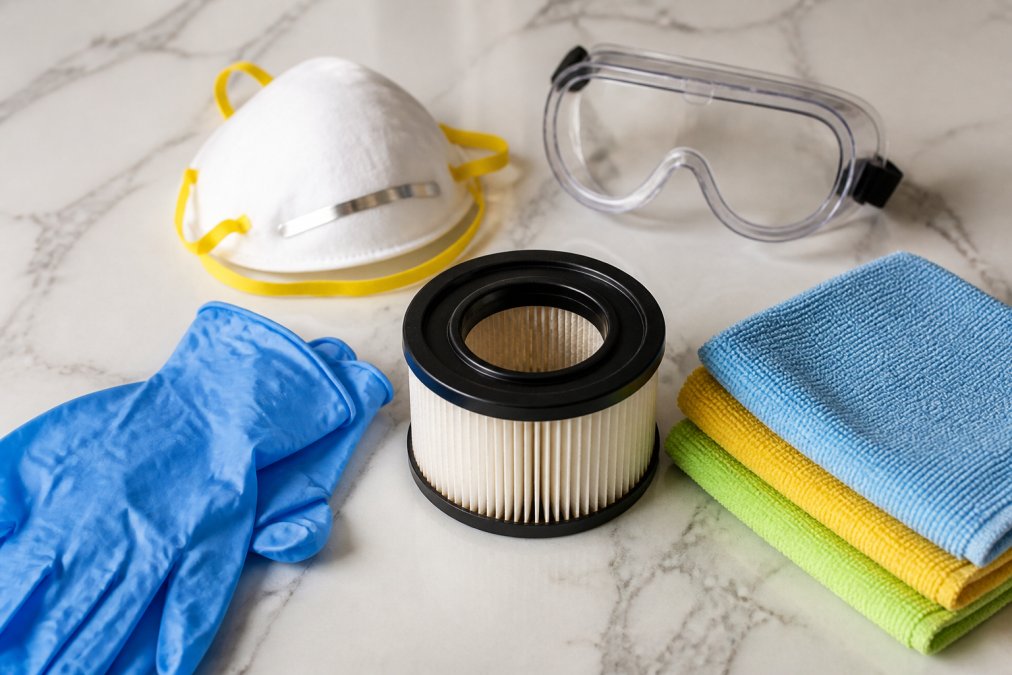
Wear an N95 mask to avoid inhaling disturbed allergens and nitrile gloves to protect your hands from cleaning products and allergen contact.
Goggles keep dust and cleaning spray out of your eyes. If you have respiratory sensitivity, consider a full-face respirator instead of a basic mask.
Best Vacuum for Allergies with HEPA Filter
A HEPA filter traps 99.97% of particles 0.3 microns and larger, keeping dust mites, pollen, and mold spores trapped instead of recirculating into your air (the EPA).
Look for these features in a vacuum:
- True HEPA filter (not “HEPA-type”)
- Sealed system so air exits through the filter only
- Bagless design for easy filter inspection
- Upright or canister style for better suction control
Avoid old vacuums without HEPA filtration, they stir up allergens instead of removing them.
Allergy-Friendly Cleaning Products
Choose fragrance-free, plant-based cleaners that don’t trigger respiratory irritation.
Avoid these ingredients:
- Bleach and ammonia (create harmful fumes)
- Heavy perfumes and synthetic fragrances
- Volatile organic compounds (VOCs)
Safe alternatives include:
- White vinegar and baking soda for deodorizing
- Castile soap for general cleaning
- Hydrogen peroxide for disinfection
- Water-based microfiber cloth cleaning (often requires no chemicals at all)
Microfiber cloths trap dust without chemical sprays, and hot water with mild soap handle most surfaces effectively.
Step 1: Declutter and Reduce Household Dust Traps
Clutter collects dust and becomes a dust trap. Remove unnecessary items from your bedroom and living areas.
Focus on these problem zones:
- Nightstands and dressers
- Shelving units and bookshelves
- Under-bed storage areas
- Closet floors and shelves
- Windowsills and baseboards
Donate, recycle, or store items you don’t use daily. This single step reduces the surface area where dust mites and allergens accumulate.
Wipe down remaining items with a damp cloth in place to avoid spreading dust, creating a cleaner baseline for the rest of your deep clean.
Step 2: Wash Bedding and Soft Furnishings in Hot Water
Dust mites thrive in bedding, feeding on dead skin cells. Hot water kills dust mites and their allergens.
Wash these items weekly in hot water (at least 130°F):
- Sheets and pillowcases
- Blankets and comforters
- Mattress pads
- Pillows (if machine-washable)
- Duvet covers
Dry on high heat for at least 30 minutes. This combination kills remaining dust mites and allergens.
For non-washable items, freeze pillows for 24 hours, use a steam cleaner on mattresses and upholstered furniture, or air dry in direct sunlight.
Wash throw blankets, decorative pillows, and curtains monthly to remove dust and pet dander that regular cleaning misses.
The most important deep cleaning step is washing bedding in hot water weekly. This single action removes the largest concentration of dust mites and their allergens from the place where you spend 8 hours per night.
Step 3: Vacuum with HEPA Filtration and Dust Properly
Vacuuming is only effective with a HEPA filter. Standard vacuums recirculate dust mite allergens back into your air.
Vacuum every surface in your home:
- Carpets and rugs (two passes, slow movement)
- Under furniture and beds
- Upholstered furniture with an upholstery attachment
- Curtains and drapes
- Baseboards and corners
Slow, deliberate passes allow the HEPA filter to capture particles. Empty the canister outside your home to prevent allergens from re-entering.
Maintaining Your Vacuum: The Overlooked Allergen Reservoir
A clogged filter or trapped allergens make a vacuum counterproductive, recirculating allergens instead of capturing them.
HEPA Filter Replacement and Cleaning
Check your HEPA filter monthly during heavy-use seasons. A clogged filter reduces suction and the motor’s ability to capture fine particles.
Gently tap the filter over a trash can outdoors to dislodge dust. Never wash a HEPA filter with water unless the manufacturer permits it.
Replace the HEPA filter every 6-12 months (every 3-6 months in homes with pets). A new filter costs $20-$60 and is essential for maintaining allergen capture effectiveness.
Emptying the Canister Safely
Always empty the canister outside your home, away from windows and doors, wearing your N95 mask to avoid the concentrated cloud of allergens.
For bagged vacuums, replace the bag when it reaches three-quarters full. A full bag reduces suction and forces allergens through the filter more quickly. Dispose of bags in an outdoor trash can, not indoors.
Cleaning Vacuum Attachments and Hoses
Inspect hoses monthly for blockages, rinse the upholstery attachment to remove pet dander, wipe the brush head with a damp cloth, and check the motor intake area for dust accumulation.
Replacing vs. Repairing
If your vacuum is more than 7-10 years old, the motor seal may be compromised, allowing unfiltered air to bypass the HEPA filter entirely.
Using Damp Cloths for Dusting Techniques
Dry dusting spreads allergens into the air. Damp cloth dusting captures particles instead of dispersing them.
Use a slightly damp microfiber cloth for all surfaces:
- Nightstands and dressers
- Shelves and bookcases
- Window sills and frames
- Light fixtures and ceiling fans
- Door frames and handles
Step 4: How to Remove Pet Dander from Furniture
Pet dander is a major allergen source for many people. It settles on furniture, bedding, and carpets where it accumulates and circulates through the air.
For deeper dander removal:
- Steam clean upholstered furniture monthly
- Use a lint roller followed by damp cloth wiping
- Wash removable cushion covers in hot water
- Consider furniture covers that you can wash weekly
Pet dander accumulates fastest on soft surfaces. If you have both pets and allergies, vacuuming once weekly isn’t enough. Plan for twice-weekly HEPA vacuuming of furniture and carpets to keep allergen levels manageable.
Step 5: Deep Cleaning Checklist for Asthma Sufferers
Asthma and allergies often go together. Allergen exposure can trigger asthma symptoms, making deep cleaning especially important for people with both conditions.
Use this checklist during your deep clean:
| Task | Frequency | Why It Matters |
|---|---|---|
| Wash bedding in hot water | Weekly | Kills dust mites and allergens |
| HEPA vacuum all surfaces | 2x weekly | Removes airborne allergen sources |
| Damp dust all surfaces | Weekly | Prevents allergens from becoming airborne |
| Steam clean upholstery | Monthly | Deep allergen removal from soft furnishings |
| Wash curtains and drapes | Monthly | Removes accumulated dust and pollen |
| Clean air filters | Monthly | Maintains air quality |
| Wipe baseboards and corners | Monthly | Removes dust accumulation zones |
| Declutter and organize | Quarterly | Reduces dust trap surfaces |
Managing Indoor Humidity and Air Quality
Dust mites thrive in humidity above 50%. Controlling humidity is one of the easiest ways to reduce their population.
Improve ventilation by:
- Opening windows on dry days
- Running bathroom exhaust fans during showers
- Using kitchen exhaust when cooking
- Installing a whole-home ventilation system if possible
Post-Cleaning Air Purification
After deep cleaning, run an air purifier for several hours. This captures allergens that were disturbed during cleaning and prevents them from settling back on surfaces.
Common Mistakes to Avoid During Deep Cleaning
Using dry dusting methods. Dry cloths, feather dusters, and dry sweeping stir up allergens instead of removing them. Always use damp cloths or HEPA vacuums.
Frequently Asked Questions
Does deep cleaning actually help reduce allergy symptoms?
Yes. Deep cleaning removes dust mites, pet dander, pollen, and mold spores that trigger allergic reactions and asthma symptoms. Regular deep cleaning combined with HEPA filtration and humidity control significantly reduces airborne allergens. Most people notice improvement within 1-2 weeks of consistent deep cleaning, though results vary based on allergen type and home environment.
How often should you deep clean to keep allergens at bay?
Deep clean every 2-4 weeks for allergy relief. Between deep cleans, maintain weekly vacuuming with a HEPA filter, wash bedding in hot water weekly, and dust with damp cloths twice weekly. Homes with pets or asthma sufferers may benefit from more frequent deep cleaning. Your cleaning frequency depends on your specific allergens and symptom severity.
What cleaning products are safest for people with asthma and allergies?
Use fragrance-free, hypoallergenic products without harsh chemicals or bleach fumes. Effective allergy-friendly options include vinegar and water solutions, baking soda, and plant-based cleaners. Avoid aerosol sprays and strong-scented products that irritate airways. Always ventilate well during cleaning, and wear a protective mask when using any chemical cleaner. Test new products on a small area first.
What kills allergens in the air after cleaning?
HEPA air purifiers remove airborne particles after deep cleaning. Run your purifier for 2-3 hours post-cleaning to capture dust and allergens stirred up during the process. Open windows for 15-20 minutes to increase ventilation, and maintain indoor humidity between 30-50% using a dehumidifier if needed. These post-cleaning air purification steps prevent allergens from resettling on surfaces.
Managing allergies at home doesn’t have to mean doing all the work yourself. North Shore Maids specializes in deep cleaning that targets allergen sources, HEPA-filtered vacuuming, hot-water washing of soft furnishings, damp dusting techniques, and humidity management. With flexible weekly, bi-weekly, or monthly plans, you can maintain an allergen-reduced home without the physical strain. Request a free estimate and let our team handle the deep cleaning while you focus on feeling better.