
Last Updated: November 5, 2026
Quick Summary
To prepare for apartment move-in, build a written checklist covering paperwork, cleaning, utilities, and first-night supplies before you pack, and have a landlord conversation about the unit’s condition and damage reporting before signing or picking up keys. Then inspect and photograph every room, clean surfaces, and set up utilities a week ahead.
- Build your checklist in four blocks: paperwork, cleaning, utilities, and first-night supplies.
- Ask the landlord six written questions before you sign or collect keys.
- Photograph each room corner to corner and submit a dated condition report the same day.
- Schedule utility start dates for the day before or the morning you arrive.
- Pack an essentials bag with toiletries, clean clothes, chargers, documents, cash, and medications.
Table of Contents
- Build Your Apartment Move-In Checklist Template Before You Pack a Single Box
- The Apartment Move-In Checklist Landlord Conversation You Need to Have First
- Inspect and Document Every Room Before Unpacking
- Clean and Prep Surfaces Room by Room
- Set Up Utilities, Renters Insurance, and Address Changes
- Your Apartment Move-In Day Timeline, Hour by Hour
- First Apartment Checklist on a Budget: What to Buy and What to Skip
- Book a Move-In Deep Clean Before the Furniture Arrives
- Frequently Asked Questions
Build Your Apartment Move-In Checklist Template Before You Pack a Single Box
The most useful tool for an apartment move-in is a checklist you build before the truck is loaded, not after. A written plan turns a chaotic week into a series of small, finishable tasks. This guide walks through one workable order, from the landlord conversation to the first night.
The apartment move-in is largely decided by what you do before you arrive. Packing is the easy part.
What Belongs in a Move-In Checklist Template
A strong template splits into four blocks: paperwork, cleaning, utilities, and first-night supplies. Build it as a simple document or spreadsheet with columns for task, owner, deadline, and done.
Include these sections:
- Before keys: lease review, inspection scheduling, utility transfers
- Move week: cleaning supplies, box labels, parking or elevator booking
- Move day: hour-by-hour schedule, essentials bag, cash for tips
- First week: address updates, repairs reported, rooms fully set up
Print it. A paper copy on the counter beats an app you forget to open.
The Apartment Move-In Checklist Landlord Conversation You Need to Have First
One conversation with the landlord or property manager prevents most move-in disputes. Have it before you sign anything or collect keys. Ask what condition the unit is in, what was repaired, and how damage gets reported.
Questions to Ask Before You Sign or Pick Up Keys
Bring these questions in writing and note the answers:
- When was the unit last cleaned, and by whom?
- Is there an existing condition report, and can you get a copy?
- How do you want damage reported, in writing or through a portal?
- Which utilities are in your name versus the building’s?
- What are the move-in window, elevator rules, and loading zone limits?
- Who is the contact on move day if something goes wrong?
Get answers by email when possible. A written record protects your security deposit later.
Inspect and Document Every Room Before Unpacking
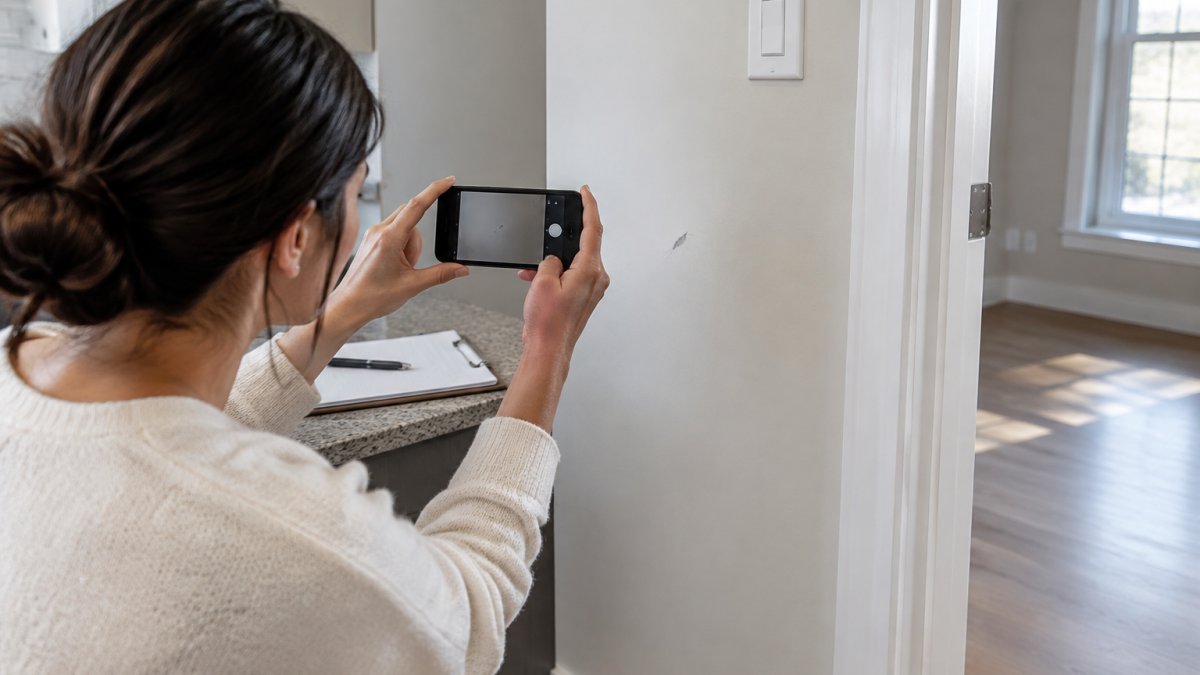
An apartment inspection is a room-by-room walkthrough where you record the unit’s condition before your belongings enter. Do it before a single box crosses the threshold.
Photos, Video, and the Condition Report
Walk the unit in a set order: entry, kitchen, bathroom, bedroom, living space, closets. For each room:
- Take wide photos of every wall, corner to corner, at eye level
- Photograph existing damage up close with something for scale (a coin, a ruler, or your hand) so the size is unambiguous
- Record a slow video pan of each room, narrating the date, the room name, and what you see
- Note scratches, stains, cracks, nail holes, torn screens, and anything that does not work
- Test every outlet, light switch, faucet, drain, toilet flush, and lock, and photograph any that fail
- Open and close every window and door, and note sticking, gaps, or broken hardware
How to Build a Dated Condition Report
A condition report is a simple written record that pairs each photo with a description, a location, and a date. Build it in a spreadsheet or a shared document with these columns: room, item, condition, photo file name, date, and reported-to-landlord date.
- Number your photos in the order you take them and rename the files by room (for example, kitchen-sink-01.jpg) so the report and the images match.
- Write one line per issue in plain language: “Primary bedroom, north wall, 2-inch scuff near closet door, photographed 11/05/2026.”
- Date the report at the top and bottom, and sign it.
- Submit it the same day by email or through the landlord’s portal, and keep the sent copy and any reply.
- Ask the landlord to acknowledge receipt in writing; if they do not, send a follow-up email referencing the original date.
A same-day, dated submission helps make the record useful later, because it establishes the condition before your furniture and traffic could have caused the damage. The U.S. Department of Housing and Urban Development rental guidance explains how documented condition records support deposit returns.
What to Photograph Beyond the Obvious
The damage that causes deposit disputes is usually small and easy to miss. Photograph:
- The inside of the oven, the refrigerator gaskets, and under the sink
- Baseboards, door frames, and the backs of doors
- Window screens, blinds, and curtain rods
- The bathroom caulk line, grout, and the area behind the toilet
- Any furniture or appliance the landlord supplied, including its serial or model plate
Watch out: if the landlord refuses to accept your report or will not sign an acknowledgment, send it anyway by a method that creates a delivery record, and keep a copy in your own files. A report the landlord ignored is still stronger than no report at all.
Clean and Prep Surfaces Room by Room
Cleaning before unpacking is non-negotiable, even in a unit that looks spotless. Focus on the surfaces you touch and the places grime hides: kitchen counters, cabinet interiors, bathroom fixtures, baseboards, and closet shelves.
Work in this order:
- Kitchen: wipe counters, scrub the sink, clean inside cabinets and the fridge
- Bathroom: disinfect the toilet, tub, shower, and vanity
- Bedroom: dust shelves, vacuum floors, wipe closet rods
- Living areas: clean windows, baseboards, and light switches
For a deeper walkthrough of the cleaning sequence, follow this step-by-step move-in cleaning process before the furniture arrives.
Set Up Utilities, Renters Insurance, and Address Changes
Utilities and paperwork should be handled a week before move day, not during it. Schedule service start dates for the day before or the morning you arrive. Confirm each account in writing.
Your move-in admin list:
- Transfer or start electricity, gas, water, and internet
- Buy or update renters insurance and confirm the coverage start date
- File a USPS change of address (Standard Forward Mail & Change of Address)
- Update your bank, employer, and subscription addresses
- Register your vehicle if required
The USPS official change of address service is the fastest way to forward mail and avoid gaps.
Your Apartment Move-In Day Timeline, Hour by Hour
A realistic move-day schedule keeps the day from running away from you. Build in buffer time, because something always slips.
| Time | Task | Owner | Duration | Notes |
|---|---|---|---|---|
| 7:00-7:30 a.m. | Final walkthrough and photos | One person | 30 min | Confirm unit is clean and ready; re-shoot any damage the landlord missed |
| 7:30-8:00 a.m. | Pick up keys, sign condition report | One person | 30 min | Get the building’s move-in rules and elevator reservation in writing |
| 8:00-8:30 a.m. | Stage loading zone and door props | Helper | 30 min | Tape down floor protection, prop doors, confirm freight elevator is held |
| 8:30-11:00 a.m. | Load and unload large furniture | Movers + helper | 2.5 hrs | Direct placement room by room, not a pile in the living room |
| 11:00 a.m.-12:30 p.m. | Set up beds and kitchen essentials | Both | 1.5 hrs | Beds first so the first night works; kitchen second |
| 12:30-1:00 p.m. | Lunch and reset | Both | 30 min | Eat before the afternoon push; keep the essentials bag accessible |
| 1:00-3:30 p.m. | Unpack boxes room by room | Both | 2.5 hrs | Break down empty boxes as you go; keep one box for returns and receipts |
| 3:30-4:30 p.m. | Safety checks and cleanup | Helper | 1 hr | Test smoke and carbon monoxide alarms, locks, outlets, and shutoffs |
| 4:30-5:30 p.m. | Utility and service confirmation | One person | 1 hr | Confirm power, water, internet, and renters insurance are active |
| Evening | First-night setup | Both | As needed | Toiletries, clean clothes, phone chargers, takeout |
Building logistics to confirm the day before: elevator reservation window, loading-zone parking permit, freight versus passenger elevator rules, door width and turn radius for large furniture, and the property manager’s move-day contact.
Watch out: if the freight elevator is shared with another move, your window can shrink by an hour or more.
First Apartment Checklist on a Budget: What to Buy and What to Skip
A first apartment checklist on a budget comes down to buying what you use in week one and delaying everything else. Spend on cleaning supplies, bedding, and basic kitchen tools. Skip decor, extra furniture, and bulk buys until you know the space.
Buy now:
- Cleaning supplies and paper towels
- Toilet paper, toiletries, and shower basics
- Bedding, pillows, and a mattress protector
- A few pots, pans, plates, and utensils
- Trash bags, a trash can, and light bulbs
Skip for now:
- Decorative items and wall art
- Extra furniture before you measure
- Bulk pantry stock
- Matching dishware sets
Pack an essentials bag with toiletries, clean clothes, phone charger, important documents, wallet, cash, and medications. It saves the first night.
Book a Move-In Deep Clean Before the Furniture Arrives
Booking a professional deep clean before furniture arrives is the single biggest time saver in the whole process. A crew handles the interior cabinets, baseboards, and fixtures that eat your first weekend.
North Shore Maids has served residents across Essex County, Massachusetts, for nearly two decades, with bonded and insured teams and a satisfaction guarantee. The company offers flexible weekly, bi-weekly, monthly, and seasonal plans, with green cleaning products available upon request. Free estimates are available.
Before you hire anyone, review what a move-in cleaning service includes and use this checklist for vetting a cleaning provider. When you are ready, here is how to get a move-in cleaning quote, and if you are weighing DIY versus hiring, read whether professional move-in cleaning is worth it.
Frequently Asked Questions
What should I clean before unpacking in a new apartment?
Focus on the surfaces you touch first: kitchen counters, cabinet interiors, the inside of the fridge, bathroom sinks, toilets, tubs, and floors. Wipe down light switches, door handles, and closet shelves too. If the previous tenant left grease or grime, a move-in deep clean before boxes arrive saves you from cleaning around furniture later. Many families book a professional clean for the day before or morning of move-in so the apartment is ready the moment the truck pulls up.
How do I document the condition of an apartment before moving in?
Walk every room with your phone and take wide shots first, then close-ups of any damage: scratches, stains, cracked tiles, torn blinds, or appliance dents. Record a slow video panning each room, and note the date and time. Email the photos and a written list to your landlord or property manager the same day and ask for written confirmation. This record is what protects your security deposit when you move out.
Is it possible to move into an apartment in one day?
Yes, if you plan the apartment move-in day timeline in advance. Reserve the elevator and loading zone, confirm utilities are on, and pack an essentials bag with toiletries, clean clothes, phone charger, medications, and important documents. Start with the bedroom so you have a place to sleep, then the kitchen and bathroom. Expect the first night to be basic; full unpacking usually takes a few more days.
What should I bring on apartment move-in day?
Pack a first-day box with toilet paper, paper towels, all-purpose cleaner, trash bags, a shower curtain, bed linens, toiletries, a change of clothes, snacks, water, and a phone charger. Keep your wallet, ID, lease, and renter’s insurance information with you, not in the moving truck. A small toolkit with a screwdriver and tape helps with bed assembly and minor fixes.
Preparing an apartment for move-in day is a test of sequencing, not stamina. Get the inspection, cleaning, and utilities handled first, and the rest of the move takes care of itself. North Shore Maids offers free estimates, flexible plans, and a satisfaction guarantee so the cleaning is one task you can hand off entirely. Get started with North Shore Maids and walk into a spotless apartment on day one.
