
Last Updated: November 4, 2026
Quick Summary
Deep cleaning vs regular cleaning comes down to scope, not intensity: regular cleaning is routine surface maintenance that keeps a home livable week to week, while deep cleaning is a periodic, top-to-bottom reset that reaches the buildup routine cleaning leaves behind. Regular cleaning covers open surfaces, floors, and bathrooms, while deep cleaning adds baseboards, grout, appliance interiors, and areas under furniture.
- Regular cleaning should run weekly or bi-weekly for most busy households, while deep cleaning fits best once or twice a year.
- Deep cleaning generally costs roughly one and a half to two times the cost of a regular clean.
- A quarterly deep clean suits homes with pets, allergies, or high foot traffic.
- Book a deep clean first if the home has not had professional cleaning in months or if baseboards and grout are visibly soiled.
- After the first deep clean, most households move to a recurring regular-cleaning plan to hold the result.
Table of Contents
- Deep Cleaning vs Regular Cleaning Explained: The Core Difference
- Standard Cleaning vs Deep Cleaning Checklist: What Each Service Covers
- How to Deep Clean Baseboards and Grout: The Tasks Regular Cleaning Skips
- Average Cost of Deep Cleaning vs Regular Cleaning
- How Often Should You Schedule Each Type of Cleaning?
- Which Service Fits Your Home? A Decision Framework
- Request a Free Estimate from North Shore Maids
- Frequently Asked Questions
Deep Cleaning vs Regular Cleaning Explained: The Core Difference
Regular cleaning is routine surface maintenance that keeps a home livable week to week. Deep cleaning is a periodic, top-to-bottom reset that reaches the buildup routine cleaning leaves behind. That single distinction, scope over intensity, decides which service a household actually needs.
The confusion is understandable. Both services use the same crew, the same supplies, and often the same checklist format. The difference sits in the edges: baseboards, grout lines, the inside of the oven, the space under the refrigerator. Regular cleaning touches what guests see. Deep cleaning touches what guests never check.
A practical rule of thumb: if a surface gets wiped during a normal week, regular cleaning covers it. If a surface gets ignored until company visits, it belongs on the deep cleaning list. Below, this guide from North Shore Maids breaks down both services task by task, the cost gap between them, and a simple framework for choosing.
Standard Cleaning vs Deep Cleaning Checklist: What Each Service Covers
The clearest way to compare the two services is a side-by-side list of what each one includes. Standard cleaning maintains a home. Deep cleaning restores it.
Tasks in a Standard Cleaning
- Dusting of open surfaces, shelves, and furniture tops
- Vacuuming of floors and carpets, mopping of hard floors
- Wiping of kitchen counters and appliance exteriors
- Bathroom cleaning: sinks, toilets, tubs, and mirrors
- Emptying trash and replacing liners
- Making beds and tidying visible clutter
Tasks Added in a Deep Cleaning
- Baseboards, door frames, and window sills wiped by hand
- Grout scrubbing in tile floors, showers, and backsplashes
- Inside the oven, refrigerator, and microwave
- Under furniture and behind appliances
- Cabinet fronts, light switches, and vent covers
- Interior window glass and blinds
For a fuller breakdown of exactly what a professional deep clean includes, see how to know what a deep house cleaning service includes.
| Task | Standard Cleaning | Deep Cleaning |
|---|---|---|
| Open surfaces and counters | Yes | Yes |
| Floors and carpets | Yes | Yes |
| Bathrooms | Yes | Yes, plus grout and fixtures detail |
| Baseboards and door frames | No | Yes |
| Inside oven and refrigerator | No | Yes |
| Under furniture and appliances | No | Yes |
| Interior windows and vents | No | Yes |
| Typical frequency | Weekly to monthly | Seasonal or one-time |
How to Deep Clean Baseboards and Grout: The Tasks Regular Cleaning Skips
Baseboards and grout are the two surfaces that expose the gap between the services most plainly. A regular clean wipes around them. A deep clean treats them as the main event.
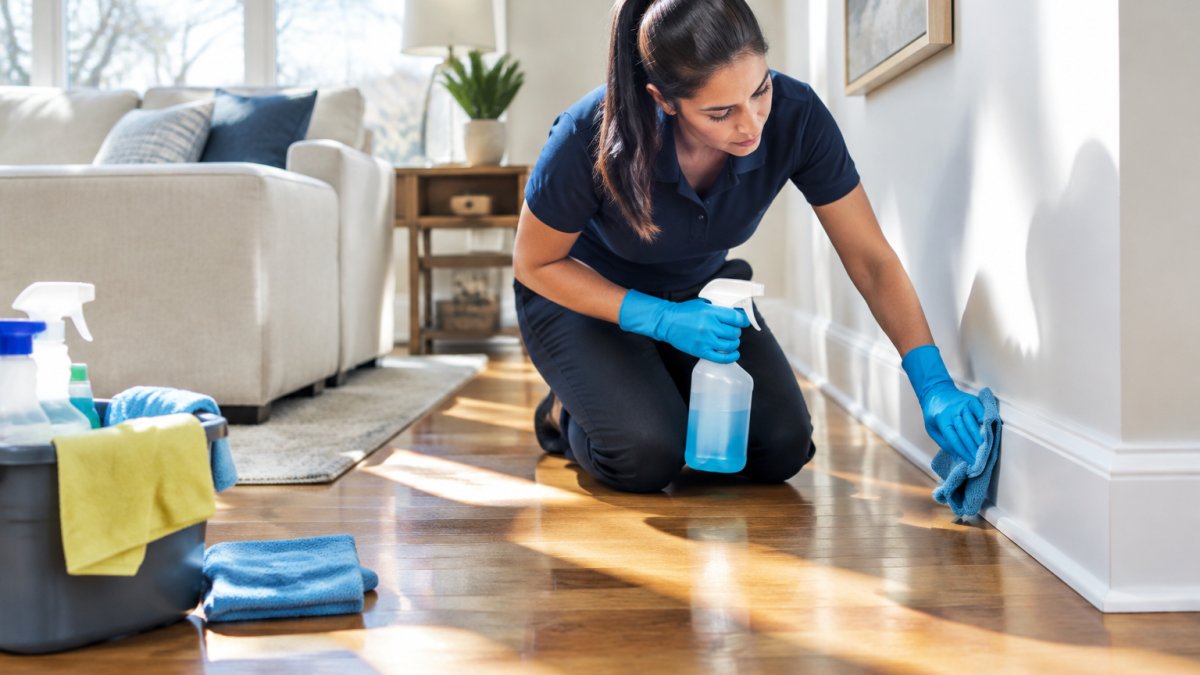
The baseboard process is straightforward but slow. Work top to bottom with a microfiber cloth and a spray bottle of mild cleaner, wiping along the top edge where dust collects, then down the face and along the floor line.
Grout needs more patience. Spray a grout-safe cleaner, let it sit for several minutes, then scrub along the lines with a narrow brush rather than across them.
Watch out: scrubbing grout with a stiff wire brush or undiluted bleach can erode the grout itself, leaving wider lines that trap dirt faster than before.
For step-by-step instructions on both surfaces, read how to deep clean baseboards and grout.
Average Cost of Deep Cleaning vs Regular Cleaning
Deep cleaning generally costs more than regular cleaning because it takes longer and covers more surface area. Pricing depends on quantity, dates, and the scope of work, so contact North Shore Maids or visit the website for current prices or a quote. A commonly cited industry comparison puts deep cleaning at roughly one and a half to two times the cost of a regular clean Tidy’s comparison of deep and regular cleaning costs.
Several factors move the number:
- Home size and layout: more square footage and more bathrooms mean more hours
- Condition at booking: a home that has gone months without service takes longer
- Add-ons: inside cabinets, interior windows, and appliance interiors add time
- Frequency: recurring plans typically lower the per-visit rate
For detailed 2026 pricing on both service types, see deep cleaning vs regular cleaning cost.
How Estimates Are Built
Estimates for North Shore Maids depend on the home’s size, its current condition, and any add-ons requested. For current pricing, contact North Shore Maids or request a free estimate.
What Insurance and Coverage Usually Do, and Do Not, Cover
Before booking, confirm the scope of work in writing so the final invoice matches the estimate. North Shore Maids is bonded and insured.
Comparing the Two Costs Side by Side
| Cost factor | Regular cleaning | Deep cleaning |
|---|---|---|
| Pricing model | Flat recurring rate | Flat one-time rate or hourly range |
| Typical labor time | Shorter, checklist-based | Longer, detail-based |
| Add-ons | Limited | Common (oven, fridge, windows) |
| Frequency effect | Lower per-visit rate with plans | Higher per-visit rate, less frequent |
| Insurance coverage | Generally not covered | Generally not covered |
How Often Should You Schedule Each Type of Cleaning?
Regular cleaning should run weekly or bi-weekly for most busy households, while deep cleaning fits best once or twice a year. That rhythm keeps a home maintained without paying deep-clean rates every month.
A quarterly deep clean suits homes with pets, allergies, or high foot traffic. Seasonal timing works well: a spring reset and a fall refresh cover the two points when buildup accumulates fastest. Households that host often may prefer three deep cleans a year.
Between visits, small habits carry most of the load. Wiping counters nightly, rinsing shower walls after use, and vacuuming high-traffic paths weekly all stretch the value of a scheduled service. For habits that hold a home together between appointments, see best ways to maintain a clean apartment.
How to Tell When a Deep Clean Is Actually Due
Frequency should follow condition, not the calendar alone. A few observable signals indicate that routine cleaning is no longer keeping up:
- Baseboards and door frames leave a gray residue on a white cloth after a normal wipe
- Grout lines in tile floors or showers have darkened and no longer respond to routine mopping
- The oven, refrigerator interior, or microwave has visible buildup that routine wiping does not remove
- Dust returns to shelves and vent covers within days of a regular clean
- The home has gone more than a few months without professional service, or is about to be listed, rented, or occupied by new residents
When two or more of these signals are present, a deep clean is the more efficient starting point. Booking regular cleaning first in that situation usually produces a disappointing result, because the crew is working the same hours against a larger backlog.
What Follow-Up Looks Like After a Deep Clean
A deep clean is a reset, not a permanent state. After the first deep clean, most households move to a recurring regular-cleaning plan to hold the result.
A practical pattern many services recommend is a deep clean first, then a recurring plan, then a seasonal deep clean to address the areas routine visits do not reach. That sequence matches the scope of each service to the condition of the home at each stage.
Watch out: stretching the interval too far between regular visits to save money often costs more overall, because the next visit becomes a deep clean rather than a maintenance clean. The cheaper per-visit rate is offset by the larger reset that follows.
Which Service Fits Your Home? A Decision Framework
Choose regular cleaning for ongoing upkeep and deep cleaning for a reset. The right answer depends on the state of the home and what prompted the booking.
Use this framework:
- Book a deep clean first if the home has not had professional cleaning in months, if moving in or out, if baseboards and grout are visibly soiled, or if a seasonal change is due.
- Book regular cleaning if the home is already in good shape and the goal is keeping it that way.
- Book both if the home needs a reset and the household wants ongoing maintenance; most services recommend starting with a deep clean, then moving to a recurring plan.
Booking regular cleaning for a home that needs a deep clean can leave visible buildup in place, so matching the service to the home’s condition helps set accurate expectations.
Best for: households that want a maintained baseline without a large one-time cost. Skip if: the home has visible buildup in corners, grout, or appliances, which calls for a deep clean first.
Request a Free Estimate from North Shore Maids
Choosing between the two services comes down to scope, and a professional assessment removes the guesswork. North Shore Maids has served households across Essex County for nearly two decades, with bonded and insured crews and flexible weekly, bi-weekly, monthly, or seasonal plans.
The team offers free estimates, so a homeowner can find out which service fits before committing. Green cleaning products are available on request.
Before requesting an estimate, the residential cleaning price guide gives a clear picture of what each service costs.
Frequently Asked Questions
Is deep cleaning better than regular cleaning?
Neither is better; they serve different purposes. Regular cleaning maintains a home week to week by wiping surfaces, vacuuming, and sanitizing bathrooms and kitchens. Deep cleaning resets a home by tackling built-up grime in places routine visits skip, like baseboards, grout, inside appliances, and behind furniture. Most households need regular cleaning for upkeep and a deep cleaning a few times a year, or before move-in, after a renovation, or when dirt has accumulated.
Can you get a regular cleaning if your home really needs a deep cleaning?
You can book a regular cleaning, but results may disappoint if heavy buildup exists. A standard visit covers surface maintenance, not the scrubbing of grout lines, baseboard edges, or inside cabinets. Many cleaning companies recommend starting with a deep cleaning so the home reaches a baseline, then switching to a recurring regular plan. Ask your provider to assess your home first so you book the service that matches its actual condition.
What is the main difference between a regular cleaning and a deep cleaning?
The main difference is scope and detail. Regular cleaning handles the visible, frequently used surfaces: counters, floors, sinks, toilets, and dusting at eye level. Deep cleaning includes those tasks plus the neglected areas: baseboards, grout, vents, inside the oven and fridge, door frames, and behind furniture. Deep cleaning takes longer and usually costs more because it addresses accumulated dirt that routine visits do not target.
How often should you schedule a deep cleaning for your home?
Most homes benefit from a deep cleaning every three to six months, depending on household size, pets, allergies, and whether anyone smokes indoors. Homes with shedding pets, young children, or allergy sufferers may need one quarterly. Between deep cleans, weekly or bi-weekly regular cleaning keeps surfaces maintained. If you are moving in or out, or finishing a renovation, schedule a one-time deep clean regardless of the calendar.
Does a deep cleaning include tasks that a regular cleaning misses?
Yes. Deep cleaning adds tasks regular cleaning typically skips: scrubbing baseboards, cleaning grout lines, wiping inside cabinets and drawers, cleaning behind and under furniture, dusting ceiling fans and vents, and cleaning inside appliances like the oven and refrigerator. These areas collect dust, grease, and grime slowly, so they need periodic attention rather than weekly upkeep. Confirm the exact task list with your provider before booking.
The gap between a maintained home and a genuinely clean one is usually the tasks nobody schedules. North Shore Maids builds plans around that gap, with nearly two decades of local experience, bonded and insured staff, and a satisfaction guarantee behind every visit. Get started with North Shore Maids and book a free estimate that matches the right service to your home.
