
Last Updated: October 23, 2026
Quick Summary
Non-toxic home cleaning is worth it for households with young children, pets, allergy sufferers, or anyone sensitive to fragrance and volatile compounds, where reduced chemical exposure during routine cleaning is a real, repeatable benefit. It is optional for light-cleaning households with no sensitive occupants and a tight budget, provided they ventilate well and read labels.
- The word green is a marketing term, not a regulated one, so verify specific certifications like EPA Safer Choice.
- Non-toxic cleaners clean but usually do not disinfect, so high-risk areas need a registered disinfectant used per label.
- Non-toxic cleaning costs more per bottle but often less per task once you buy concentrates and refills.
- Test products on grease, soap scum, glass, and everyday wiping in one session and score each 1 to 3.
- Ask a cleaning service for product names and ingredient lists in writing before the first visit.
Table of Contents
- The Real Question: Is Non-Toxic Home Cleaning Worth It?
- Green Cleaning vs Conventional Cleaning: What the Labels Don’t Tell You
- The Benefits of Green Cleaning: Health, Air Quality, and Peace of Mind
- Non-Toxic Cleaning Products for Home: A Practical Comparison
- Cleaning vs Disinfecting: Why Non-Toxic Products Need a Different Routine
- Cost Per Use: Does Non-Toxic Home Cleaning Cost More?
- Non-Toxic House Cleaning Services: What to Ask Before You Hire
- Verdict: Who Should Choose Non-Toxic Home Cleaning (and Who Can Skip It)
- Frequently Asked Questions
The Real Question: Is Non-Toxic Home Cleaning Worth It?
Whether non-toxic home cleaning is worth it depends on your household.
Non-toxic home cleaning is the practice of cleaning household surfaces with products formulated without ingredients linked to respiratory or skin irritation, using methods that reduce chemical exposure rather than simply replacing one bottle with another.
The stakes are practical, not abstract. The American Lung Association’s guidance on cleaning and indoor air notes that many conventional cleaners release volatile compounds into the air during routine use, and the EPA’s Safer Choice program exists specifically because ingredient transparency in household products has historically been poor.
Below, this review breaks down what the labels actually mean, where non-toxic products underperform, and which households get real value from the switch.
Green Cleaning vs Conventional Cleaning: What the Labels Don’t Tell You
The word “green” on a bottle is a marketing term, not a regulated one. Green cleaning refers to cleaning practices designed to reduce environmental impact and chemical exposure, but no federal standard governs the phrase itself.
The FTC’s Green Guides set rules for environmental marketing claims, and they are stricter than most shoppers assume. A product labeled “chemical-free” is almost always mislabeled, since water is a chemical.
What to verify instead:
- Specific certifications, such as the EPA Safer Choice label, which reviews ingredient lists against health and environmental criteria
- Full ingredient disclosure on the brand’s own site, not just the front label
- Fragrance listings, since “fragrance” can hide dozens of undisclosed compounds
A bottle that says “non-toxic” with no certification and no full ingredient list is a claim, not a guarantee. Treat it as unverified until the brand publishes what is inside.
The Benefits of Green Cleaning: Health, Air Quality, and Peace of Mind
The benefits of green cleaning cluster around three areas: reduced chemical exposure, better indoor air quality, and fewer irritation triggers for sensitive household members.
Indoor air matters more than most people expect. The EPA’s research on indoor air quality has long found that indoor pollutant levels can exceed outdoor levels, and cleaning products are one contributor.
The honest caveat: non-toxic products reduce exposure, they do not eliminate risk. Anyone with diagnosed allergies or respiratory conditions should treat product claims as one factor among several.
The strongest case for non-toxic home cleaning is cumulative exposure reduction across hundreds of routine cleaning sessions per year, not any single product choice.
Non-Toxic Cleaning Products for Home: A Practical Comparison
Non-toxic cleaning products for home fall into two camps: ready-to-use sprays and concentrated systems you dilute yourself. Concentrates cost less per use and cut plastic packaging waste; sprays win on convenience. The useful comparison is not which brand sounds greenest, but which format and formula actually perform on the surfaces you clean most.
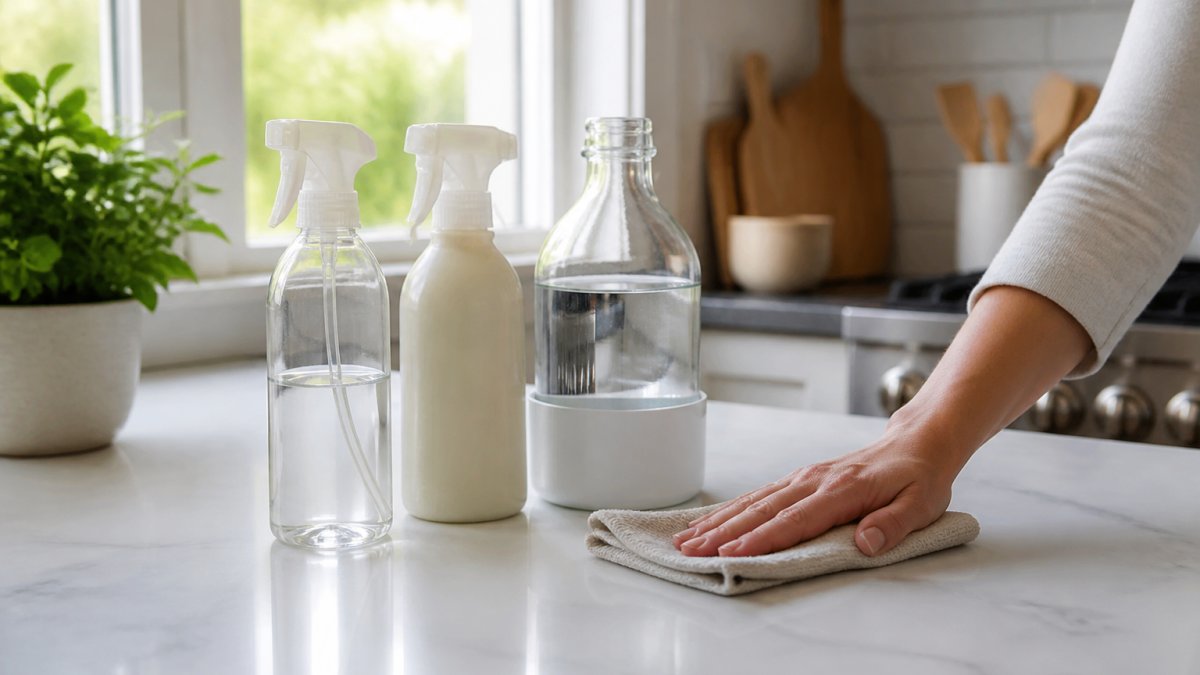
Brands frequently named in natural cleaners roundups include Branch Basics, Blueland, Koala Eco, and ECOS. Each takes a different approach, and none is right for every household.
| Brand | Format | Best For | Watch Out For |
|---|---|---|---|
| Branch Basics | Concentrate system | Households replacing many bottles at once | Upfront kit cost; dilution required |
| Blueland | Refillable tablets | Reducing plastic packaging | Tablet dissolution takes time |
| Koala Eco | Ready-to-use sprays | All-purpose cleaning, gifting | Smaller bottles run out fast |
| ECOS | Ready-to-use, widely stocked | Budget-conscious shoppers | Fewer concentrate options |
A Transparent Way to Compare Performance by Task
Broad claims that a product “works” hide the real differences. A practical side-by-side method is to test each product on the same four tasks, on the same surface type, with the same cloth and the same dwell time:
- Grease (stovetop, range hood): apply, wait the label’s recommended time, wipe once with moderate pressure, and note whether a second pass is needed.
- Soap scum (shower tile, glass): check for film or haze after a single wipe and rinse.
- Glass and mirrors: look for streaks and residue under raking light.
Run the test in the same session so humidity and temperature do not skew results, and score each product on a simple 1-3 scale per task. Most practitioners find that concentrates and ready-to-use sprays diverge most on grease and soap scum, where surfactant strength and dwell time matter more than the “non-toxic” label. A product that wins on glass may lose on grease; that is normal, and it is why one bottle rarely covers every task well.
Verify the Label Before You Trust the Claim
Greenwashing is the main risk in this category, and the fix is a short verification routine rather than brand loyalty:
- Look for a specific certification, such as the EPA Safer Choice label, which reviews ingredient lists against health and environmental criteria.
- Check full ingredient disclosure on the brand’s own site, not just the front label. A brand that publishes its ingredients is easier to evaluate than one that does not.
- Read the fragrance line. “Fragrance” can hide dozens of undisclosed compounds, so fragrance-free options are the safer default for sensitive households.
Pros and Cons of Leading Non-Toxic Brands
Branch Basics. One concentrate replaces glass cleaner, surface cleaners, and laundry detergent.
Blueland. Tablets dissolved in water mean no shipping liquid and far less plastic.
Koala Eco. Plant-based ingredients and a genuinely pleasant scent profile.
ECOS. The accessible option, stocked in mainstream stores at lower prices.
For readers who want concrete alternatives beyond this shortlist, these eco-friendly house cleaning alternatives for families cover additional options with practical use notes.
Cleaning vs Disinfecting: Why Non-Toxic Products Need a Different Routine
Cleaning and disinfecting are different jobs, and confusing them is the most common mistake in non-toxic home cleaning. Cleaning removes soil and germs from a surface; disinfecting kills germs, and it requires a product registered with the EPA’s disinfectant registration process plus the labeled contact time, often several minutes of visible wetness.
Most non-toxic surface cleaners are cleaners, not disinfectants. That is fine for day-to-day wiping, but it changes the routine:
- Routine cleaning: non-toxic all-purpose spray on counters, tables, and handles
- High-risk areas such as raw-meat prep surfaces: a registered disinfectant, used per label
- Contact time: read it, because most people wipe it away far too early
Check the label for an EPA registration number before trusting any product with disinfection. No registration number means it cleans, it does not disinfect, regardless of what the front of the bottle implies.
Cost Per Use: Does Non-Toxic Home Cleaning Cost More?
Per bottle, non-toxic home cleaning usually costs more than conventional cleaners. Per use, the gap narrows sharply, and concentrates can close it entirely.
The math that matters is cost per cleaning task, not cost per bottle. A practical way to compare without inventing numbers is to track three figures for each product you buy:
- Purchase price for the bottle or kit
- Number of uses you actually get from it, based on how much you spray per task
- Refill or dilution cost for the next round
Divide purchase price by uses to get cost per task, then repeat with the refill cost.
Three ways to control cost:
- Buy concentrates for the tasks you do most often, and dilute exactly per the label so you do not waste product
- Skip specialty cleaners where one all-purpose product works, since each specialty bottle adds a fixed cost per task
- Compare against professional service if your time has a real dollar value, because the true cost per task includes your labor
Refill options change the math too.
For households weighing DIY against hiring help, residential cleaning services prices lay out what professional visits actually run, which makes the cost-per-use comparison concrete.
The honest answer is that non-toxic cleaning costs more per bottle and often less per task once you buy concentrates and refills, so the switch pays off in proportion to how often you actually clean.
Non-Toxic House Cleaning Services: What to Ask Before You Hire
Non-toxic house cleaning services vary widely in what “non-toxic” actually means on their supply list. Ask directly, and ask for specifics.
Questions worth putting in writing:
- Which products do you use, and can you share the ingredient lists?
- Do you use the same cloths and equipment across homes, and how are they cleaned?
- Can a household request fragrance-free products?
North Shore Maids offers green cleaning products upon request, alongside nearly two decades of experience and bonded, insured staff, so a household can specify its preference before the first visit.
Before signing anything, verify that the service is bonded and insured, and use a vetting guide for finding reliable house cleaners to check the answers hold up. Readers who want the full selection process can follow how to choose a reliable house cleaning service in 2026.
A verbal promise of “eco-friendly products” is not verification. Ask for the product names in writing before the first cleaning, because switching products after a reaction is more expensive than asking upfront.
Verdict: Who Should Choose Non-Toxic Home Cleaning (and Who Can Skip It)
Non-toxic home cleaning is worth it for households with young children, pets, allergy sufferers, or anyone sensitive to fragrance and volatile compounds.
It is optional for households with light cleaning needs, no sensitive occupants, and a tight budget, provided they ventilate well and read labels carefully.
The deciding factor is not the label. It is whether the products are certified, the routine separates cleaning from disinfecting, and the cost per use pencils out for how often you actually clean.
Frequently Asked Questions
Are non-toxic cleaning products as effective as conventional cleaners?
For routine cleaning like dusting, wiping counters, and light grease, non-toxic products perform well when you follow label directions and allow adequate contact time. Heavier tasks such as soap scum or baked-on stains may need more scrubbing or a second application. The key difference is that many non-toxic cleaners rely on plant-based surfactants and enzymes rather than harsh solvents, so they work best with a little patience. For disinfection, check whether the product carries an EPA-registered claim; most non-toxic sprays clean but do not disinfect.
Does non-toxic home cleaning cost more than conventional cleaning?
It can, but not always. Concentrated non-toxic products often cost more per bottle yet last longer because you dilute them, bringing cost per use closer to conventional cleaners. Ready-to-use non-toxic sprays tend to be pricier per ounce. The best way to compare is to calculate cost per use rather than sticker price, and ask for a free estimate from any service you consider.
How can I tell whether a cleaning product is genuinely safer?
Look beyond front-label words like ‘natural’ or ‘green.’ Check the ingredient list for transparency, and look for third-party certifications such as EPA Safer Choice or Green Seal. These programs review ingredient safety and require verification. Be skeptical of ‘chemical-free’ claims, since everything is a chemical. Also note that fragrance-free is not the same as non-toxic; some products add masking scents. If a company does not disclose ingredients, treat safety claims as marketing until proven otherwise.
Is hiring a non-toxic house cleaning service worth the cost?
It depends on your priorities and budget. A non-toxic house cleaning service is worth it if you want reduced chemical exposure for children or pets, have allergies or respiratory sensitivities, or simply prefer not to manage product choices yourself. You pay for trained staff, insured and bonded service, and vetted green supplies. If budget is tight, you can achieve many of the same benefits by buying certified products and cleaning yourself. Request a quote to compare the cost against your time and peace of mind.
Are natural cleaning products always safer?
No. ‘Natural’ is not a regulated safety term, and some natural ingredients, such as essential oils or vinegar in high concentrations, can irritate skin or damage certain surfaces. Some plant-based products also lack preservatives that prevent bacterial growth. Safety depends on the specific formulation, concentration, and how you use it. Always follow dilution and ventilation instructions, keep products out of reach of children and pets, and choose certified options when you want independent verification.
The hardest part of switching to non-toxic home cleaning is not choosing products; it is keeping the routine consistent enough to matter. North Shore Maids supports that consistency with flexible weekly, bi-weekly, monthly, or seasonal plans, green cleaning products available on request, and bonded, insured staff backed by nearly two decades of local experience. Request a free estimate and a satisfaction-guaranteed clean tailored to your household.
