
Last Updated: October 29, 2026
Quick Summary
The risks of traditional cleaning products come from corrosive chemicals, solvents, and volatile organic compounds that can harm through skin and eye contact, inhalation, or accidental ingestion. Repeated small exposures add up over months, and children, people with asthma, pregnant people, and older adults face higher risk. Never mix bleach with ammonia or acid cleaners, and call Poison Help at 1-800-222-1222 for any suspected ingestion.
- Corrosive chemicals and strong detergents strip skin oils, causing redness, dryness, cracking, and allergic contact dermatitis over time.
- Spraying is the highest-inhalation task because it aerosolizes the product into fine droplets that stay suspended.
- Never induce vomiting after swallowing a cleaner; call Poison Help at 1-800-222-1222 first and follow their instructions.
- Bleach plus ammonia produces chloramine gas, and bleach plus vinegar or acid cleaner produces chlorine gas.
- Locking products in original labeled containers out of reach is the single highest-value step for protecting children.
Table of Contents
- What Makes Traditional Cleaning Products Risky
- Health Effects of Household Cleaning Products: What the Exposure Routes Tell You
- Cleaning Product Ingredients to Avoid on the Label
- Why Children and Vulnerable Household Members Face Higher Risk
- Chemical Mixing and Emergency Response: What to Do Before Help Arrives
- The Environmental Impact of Cleaning Products
- Cleaning Product Safety Tips for Everyday Use
- Request a Quote for a Safer Professional Clean
- Frequently Asked Questions
What Makes Traditional Cleaning Products Risky
The risks of traditional cleaning products come down to three factors: what is in them, how often they are used, and who is in the room. Many conventional cleaners contain corrosive chemicals, solvents, and volatile organic compounds that can harm through skin contact, inhalation, or accidental ingestion. This guide breaks down those risks by exposure route, flags the ingredients that deserve the most caution, and gives families a practical protocol for safer use.
A common mistake is treating cleaning day as a single risk window. Small, repeated exposures add up over months, and label warnings that seem overcautious on one bottle become far more relevant when that bottle comes out several times a week.
Why Frequency of Use Matters More Than You Think
Most safety discussions focus on a single spill or strong fume. The bigger issue for households is repetition: a bathroom disinfectant used twice a week for years produces a very different exposure profile than the same product used once a season.
People who clean frequently, including stay-at-home parents and anyone doing daily upkeep, inhale more fumes and make more skin contact than occasional cleaners. That repeated contact is where irritation becomes a pattern rather than an incident.
Health Effects of Household Cleaning Products: What the Exposure Routes Tell You
The health effects of household cleaning products depend almost entirely on how the chemical enters the body, how much gets in, and how long the exposure lasts.
A useful frame is dose × route × duration. A splash of diluted all-purpose cleaner on intact skin is a very different event from undiluted drain cleaner in the eye.
Skin and Eye Contact
Skin contact is the most common exposure route in household cleaning.
Eyes react faster and with less warning. Splashes from bleach, drain cleaner, or oven cleaner can cause chemical burns within seconds.
Exposure is not uniform across tasks. Spraying sends fine droplets onto skin and into the air; scrubbing increases contact time and friction; wiping with a saturated cloth keeps skin wet longer.
Inhalation and Respiratory Effects
Inhalation affects the respiratory system and is the route most sensitive to room size, ventilation, and application method. According to American Lung Association guidance on cleaning products and indoor air, cleaning activities can raise indoor levels of volatile organic compounds and irritate the respiratory tract, which matters most in small, poorly ventilated rooms like bathrooms.
Spraying is the highest-inhalation task because it aerosolizes the product. Pump sprays and aerosol cans produce fine droplets that stay suspended and are easily inhaled; pouring or wiping a diluted solution onto a cloth produces far less airborne exposure.
People with asthma or COPD react at lower concentrations than others, and symptoms can lag exposure by hours.
Poisoning and Accidental Ingestion
Ingestion is less frequent but far more dangerous. Poisoning from household cleaners typically involves a child drinking from an unmarked bottle or a product stored in a food container. The American Association of Poison Control Centers maintains the national Poison Help line at 1-800-222-1222, and calling that number immediately is the right first move for any suspected ingestion.
Never induce vomiting after swallowing a cleaner. Corrosive products can cause additional injury on the way back up. Call Poison Help at 1-800-222-1222 first and follow their instructions. Call 911 if the person is unconscious, having trouble breathing, or seizing.
Matching the Response to the Route
The right response depends on the route, not just the product. Skin: remove contaminated clothing and rinse thoroughly. Eye: flush for at least 15 minutes and seek care. Inhalation: move to fresh air, open windows if safe, and call Poison Help or 911 if breathing is affected. Ingestion: call Poison Help before doing anything else. Knowing these four responses in advance is more useful than memorizing a list of ingredients.
Cleaning Product Ingredients to Avoid on the Label
The cleaning product ingredients to avoid tend to fall into a few recognizable groups. Scanning the label for these names before buying is the single most effective habit a household can build:
- Bleach (sodium hypochlorite): corrosive, a strong respiratory irritant, and dangerous when mixed
- Ammonia: irritates eyes, throat, and lungs; never combine with bleach
- Quaternary ammonium compounds: common in disinfectants and linked to skin and respiratory irritation
Watch out: many bottles list “fragrance” without disclosing what is in it. Fragrance is a leading cause of allergic reactions to cleaning products, and ingredient disclosure remains voluntary for many formulations.
Why Children and Vulnerable Household Members Face Higher Risk
Risk is not evenly distributed across a household. The same bottle of bathroom disinfectant poses very different hazards to a toddler on the floor, an adult with asthma, a pregnant person, an older adult with reduced lung capacity, and a professional cleaner using the product eight hours a day. Treating “vulnerable groups” as a single category hides the practical differences that should change how each group is protected.
Children
Children face higher risk for simple physical reasons. They are smaller, their bodies are still developing, and they spend more time on the floor where residues settle and where spilled product pools.
The practical distinctions that matter most for children are storage and residue. Locking products in original labeled containers out of reach is the single highest-value step.
People With Asthma and Other Respiratory Conditions
People with asthma, COPD, or other chronic respiratory conditions react to fumes at lower concentrations than others, and symptoms can lag exposure by hours. Fragrance is a frequent trigger, and so are aerosol sprays and chlorine-based products. The practical distinction is that “fragrance-free” and “spray-free” matter more for this group than “green” or “natural” marketing claims, which do not reliably predict respiratory tolerability.
Pregnant People
Pregnant people are commonly advised to limit exposure to solvents and to avoid tasks that produce strong fumes, particularly in small, unventilated spaces. The practical distinction is task-based: delegating oven cleaning, drain work, and solvent-heavy degreasing to someone else, or postponing them, reduces exposure during a period when caution is warranted. Routine diluted cleaning with ventilation is a different category from concentrated solvent use.
Older Adults
Older adults may have reduced lung capacity and slower recovery from respiratory irritation, and some may have skin that is more fragile and more prone to dermatitis from repeated wet work. The practical distinction is that ventilation and gloves matter more, and that heavy scrubbing tasks may be better delegated or broken into shorter sessions.
Professional and Occupational Exposure
Older adults may have reduced lung capacity and slower recovery from respiratory irritation, and some have skin that is more fragile and prone to dermatitis from repeated wet work. Ventilation and gloves matter more, and heavy scrubbing tasks may be better delegated or broken into shorter sessions.
The practical rule for vulnerable groups is to reduce the concentration, the aerosolization, and the residue, in that order. Product marketing labels are a weaker guide than ventilation, dilution, gloves, and locked storage.
Chemical Mixing and Emergency Response: What to Do Before Help Arrives
Mixing cleaners is where routine cleaning turns into a genuine hazard. Bleach plus ammonia produces chloramine gas. Bleach plus vinegar or an acid-based cleaner produces chlorine gas.
If a mixing reaction creates strong fumes, get everyone out of the room and into fresh air immediately, open windows if it is safe to do so, and call Poison Help at 1-800-222-1222 or 911 if breathing is affected.
The EPA Safer Choice program is a useful reference for identifying products formulated to reduce these hazards.
The Environmental Impact of Cleaning Products
The environmental impact of cleaning products shows up after the bottle is empty. Many conventional cleaners send phosphates, chlorine, and synthetic compounds into wastewater systems, where they can contribute to water pollution and harm aquatic life.
Environmental contamination also happens indoors. VOCs released during cleaning degrade indoor air quality and linger on surfaces. Choosing concentrated products, avoiding unnecessary disinfectants, and switching to plant-based formulations reduces both the volume of chemicals used and the load on wastewater treatment.
Cleaning Product Safety Tips for Everyday Use
Cleaning product safety tips start with three habits: ventilate, protect, and store well. Run a fan or open a window while cleaning, wear gloves for anything corrosive, and keep every product in its original labeled container. Never transfer cleaner into a water bottle or food jar.
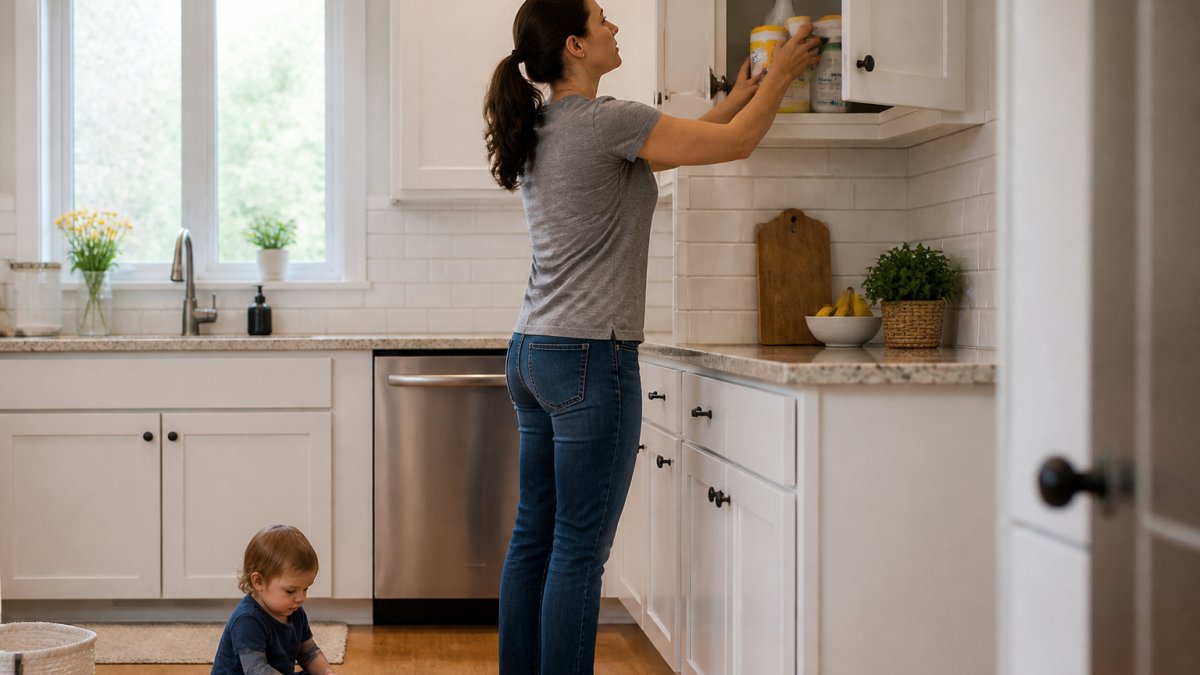
Buy only what is needed, follow dilution instructions exactly, and never mix products. For households weighing whether to keep cleaning in-house or hand it off, a comparison of professional cleaning versus DIY for wellness can help clarify the tradeoffs.
How to Evaluate Safer Alternatives
Evaluating safer alternatives means reading the full ingredient list, not just the front label. Look for products that disclose all ingredients, carry a recognized certification such as EPA Safer Choice, and avoid the groups listed earlier.
Families starting the switch can review eco-friendly house cleaning alternatives for families for concrete swaps. Readers weighing whether the effort pays off will find a fuller analysis in whether non-toxic home cleaning is worth it.
| Risk Area | Common Culprit | Safer Habit |
|---|---|---|
| Skin and eye irritation | Bleach, drain cleaner | Gloves and eye protection |
| Respiratory irritation | Ammonia, solvents, fragrance | Ventilation and fragrance-free products |
| Poisoning | Unlabeled or transferred products | Original containers, locked storage |
| Chemical gas | Bleach mixed with ammonia or acid | Never mix cleaners |
| Environmental harm | Phosphates, chlorine | Concentrated, plant-based formulas |
Request a Quote for a Safer Professional Clean
Handing off cleaning does not remove the need to know what is being used in the home. It shifts the question to who is doing the work and with what.
Readers who want to see what professional help looks like for a busy household can read about the benefits of hiring professional house cleaners for busy families, and local residents can review the benefits of professional home cleaning in Essex County before deciding.
Frequently Asked Questions
Can traditional cleaning products irritate your skin or lungs?
Yes. Many conventional cleaners contain corrosive chemicals, solvents, and volatile organic compounds (VOCs) that can cause skin irritation, eye irritation, and respiratory irritation on contact or inhalation. Symptoms range from a mild rash or stinging eyes to coughing and throat irritation. Wearing gloves, opening a window, and switching to fragrance-free or eco-friendly alternatives lowers that exposure, especially during long cleaning sessions.
What two chemicals should never be mixed?
Bleach and ammonia are the classic dangerous pair. Together they release chloramine vapors that can cause severe respiratory irritation and breathing problems. Bleach and vinegar is another combination to avoid: it produces chlorine gas. Never combine bleach with acids, ammonia, or other cleaners, and never pour one product on top of another in the same bucket. Use one product at a time, rinse surfaces between products, and store containers separately to prevent accidental mixing.
How do traditional cleaning products affect water quality in streams and rivers?
When cleaners go down the drain, their ingredients can survive wastewater treatment and reach local waterways. Phosphates and nitrogen compounds feed algae blooms that strip oxygen from streams, while surfactants and solvents can harm fish and aquatic plants. Disinfectants and drain cleaners are especially tough on water ecosystems. Using measured amounts, avoiding unnecessary disinfectant use, and choosing eco-friendly alternatives reduces the environmental impact of cleaning products and keeps runoff cleaner.
How can you reduce exposure to cleaning product fumes at home?
Ventilation does most of the work. Open windows and run exhaust fans while cleaning, and keep the door open in small bathrooms. Choose fragrance-free products where possible, since fragrance is a common source of VOCs and allergic reactions. Never mix products, wear gloves, and step away from the room while surfaces dry. North Shore Maids offers green cleaning products upon request.
The hardest part of reducing cleaning risk is not knowing what to avoid; it is keeping up with the work without reaching for the harshest product on the shelf. North Shore Maids offers bonded and insured teams, green cleaning products available on request, and flexible package plans built around a family’s schedule. Get started with North Shore Maids and keep a cleaner home with fewer chemicals in the routine.
